Skip to content
Industrial UWB RTLS for Real-Time Visibility
Menu

Warehouse & Logistics Personnel Real-Time Location System (UWB RTLS)

Modern warehouses and logistics centers run at high speed: pickers walk tens of kilometres per shift, forklifts shuttle between high-bay racks, and loading teams work around trucks and dock doors. Yet supervisors still rely on radios, CCTV and manual head-counts to understand where people are and whether they are safe.

The Warehouse & Logistics Personnel RTLS uses high-precision UWB anchors and worker wearables to provide real-time visibility of staff in every aisle, mezzanine and loading zone. Anchors such as SN2 and SW are installed on ceilings or rack structures and deliver better than 30 cm positioning accuracy, even in dense steel environments.

Solution Details

Category
People RTLS & Safety
Industries
Manufacturing Warehousing & Logistics
Environments
Factory Warehouse Yard
Implementation
moderate

Overview

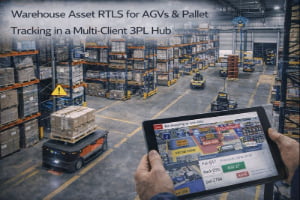
Modern warehouses and logistics centers run at high speed: pickers walk tens of kilometres per shift, forklifts shuttle between high-bay racks, and loading teams work around trucks and dock doors. Yet supervisors still rely on radios, CCTV and manual head-counts to understand where people are and whether they are safe.

The Warehouse & Logistics Personnel RTLS uses high-precision UWB anchors and worker wearables to provide real-time visibility of staff in every aisle, mezzanine and loading zone. Anchors such as SN2 and SW are installed on ceilings or rack structures and deliver better than 30 cm positioning accuracy, even in dense steel environments.

Workers carry UWB wristbands, cards or hybrid safety helmets. The GridRTLS platform shows where pickers, supervisors and dock teams are, highlights congestion around busy aisles, and links with safety rules for forklift interaction zones, restricted areas and emergency exits. Historical tracks and heatmaps help operations teams optimise layout, picking routes and manpower allocation, while safety teams gain a complete record of who was where during an incident or drill.
Pain Points

No real-time visibility of workers across aisles and docks

Supervisors only see scan events or camera snapshots. They cannot easily answer simple questions such as “who is working in aisle A3 now?” or “how many people are near dock doors 5–8?”, especially in multi-level, large-footprint warehouses.

High risk of people–forklift interactions in narrow aisles

Pickers, pallet jacks and forklifts share the same lanes. When visibility is blocked by racks or pallets, drivers may not see pedestrians in time, and traditional mirrors or warning signs cannot adapt to dynamic traffic.

Inefficient manpower allocation and long walking distances

Without objective data on worker movement and dwell time, it is difficult to optimise picking routes, zoning, and staffing. Some teams walk excessive distances while others wait at idle, hurting throughput and increasing fatigue.

Limited evidence for incident investigation and customer audits

When an accident or near-miss happens in the warehouse, it is hard to reconstruct who was present, where they were standing, and how long they stayed there. This makes internal lessons learned and customer audits harder to support.

System Architectures & Topology

Wired UWB RTLS for Indoor Warehouses

Architecture ID: Wired UWB RTLS for Indoor Warehouses

Warehouse
  • SN2 and SW UWB anchors are mounted on ceilings or rack structures to cover all aisles, cross-aisles and work zones.
  • Anchors are powered via industrial PoE switches and connected over Ethernet back to the RTLS server, with no dependency on public networks.
  • Workers wear SH wristbands or GP badges; the RTLS engine calculates 2D positions and derives zone occupancy, walking paths and congestion hot spots.
  • The same anchors support later extensions such as forklift tags and asset tracking without changing the basic layout.

Key Advantages

  • Highest accuracy and stability for indoor warehouse environments
  • Uses standard PoE and Ethernet; easy to integrate with existing industrial networks
  • Supports high tag density for large teams and 24/7 shifts
  • Provides a strong base for later forklift and asset tracking functions

Limitations / When Not To Use

  • Requires cabling and mounting on ceilings or racks
  • Less suitable for very small or temporary warehouses where infrastructure investment is limited Notes (Optional)

Notes: Recommended as the primary architecture for medium to large warehouses where long-term RTLS coverage is required.

Architecture Components / Layers

Sensing layer – Worker wristbands and badges

SH wristbands and GP employee badges provide UWB positioning, SOS and motion detection for all warehouse staff. Tags are robust and comfortable for daily use in high-activity environments.

Anchor layer – SN2/SW UWB anchors

SN2 and SW anchors are installed on ceilings, trusses or rack tops, providing reliable 2D positioning in aisles and open areas. Anchor spacing and height are designed to minimise blind spots caused by steel racks and stacked pallets.

Network layer – PoE switches and backbone

Industrial PoE switches supply power and network connectivity to the anchors. Data is carried over a dedicated backbone or VLAN to the RTLS server or to a virtualised environment in the data centre.

RTLS platform layer – Maps, alarms and analytics

The GridRTLS platform renders the warehouse map, applies zone rules, triggers alerts and provides dashboards for utilisation, walking distance and historical track playback.

Hybrid Warehouse & Yard RTLS with Wireless Beacons

Architecture ID: wh_uwb_wireless

Warehouse Cross passages
  • Indoors, the system reuses the same wired anchors as the primary warehouse architecture.
  • Outdoors, battery-powered WX wireless beacons are installed in loading yards and temporary staging areas, extending coverage without new cabling.
  • Workers use the same tags across warehouse and yard; the RTLS platform presents a unified map and history for both environments.
  • Optional hybrid GPS/UWB badges provide coarse positioning in very large yards where dense anchor coverage is not required.

Key Advantages

  • Extends indoor RTLS coverage to yards and temporary zones without pulling cables
  • Same tags used everywhere; minimal behaviour change for workers
  • Flexible – beacons can be moved when yard layout changes
  • Good stepping stone for adding vehicle tracking later

Limitations / When Not To Use

  • Wireless beacons depend on suitable backhaul (Wi‑Fi, private LTE or gateway)
  • Battery maintenance is required on a medium-term schedule
  • For extremely large yards, GPS-only solutions may be more economical for pure outdoor coverage

Notes: Often used together with the wired warehouse architecture, especially where there is significant truck traffic or outdoor staging next to the main building.

Architecture Components / Layers

Sensing layer – Shared tag family

Workers carry the same SH wristbands, GP badges or hybrid GPS/UWB badges throughout the warehouse and yard, avoiding tag swaps and simplifying charging and maintenance.

Wired anchor layer – Indoor coverage

Indoors, SN2/SW anchors provide high-accuracy position data exactly as in the wired warehouse architecture, covering aisles and cross-aisles.

Wireless beacon layer – Yard and temporary zones

WX wireless beacons are mounted on building walls, light poles or temporary structures around the yard. They are battery-powered and communicate wirelessly, making them ideal for truck waiting areas, temporary storage zones and overflow yards.

RTLS platform layer – Unified warehouse & yard view

The RTLS platform merges indoor and outdoor data, giving supervisors one view of all workers across warehouse and yard, including zone occupancy, last-seen locations and historical tracks.

Workflow

This workflow applies to all architecture options above. Specific hardware selection varies depending on the chosen architecture.

1

Warehouse Survey & Layout Modelling

Survey the warehouse layout including rack rows, aisle widths, mezzanines, staging zones and dock doors. Import or draw the floor plan, mark high-bay racks and blind corners, and decide which areas need continuous RTLS coverage. Determine mounting options on ceilings, rack tops or structural beams, and plan how to cover mezzanine floors or pick towers.

Estimated time: 2–4 days per site
2

UWB Anchor Deployment in Aisles and Zones

Install SN2 and SW UWB anchors on ceilings or rack structures at calculated intervals to cover all aisles and work zones. Use more dense anchor spacing in high-bay or multi-level areas to avoid NLOS issues from steel racks. For yard-side loading zones or areas without easy cabling, consider adding wireless beacons to extend coverage without pulling new cables. Verify accuracy and refresh rate using test tags along typical picker routes.

Estimated time: 1–2 weeks depending on size and rack density
3

Tag Assignment to Workers and Supervisors

Assign SH wristbands or GP employee badges to warehouse associates, supervisors and visitors. Map each tag ID to employee ID, team, shift and role. For contracted teams or third-party logistics providers, use separate tag ranges or groups so their activity can be analysed independently while still sharing the same infrastructure.

Estimated time: 1–3 days including registration
4

Safety Rules, Zones and Reporting Configuration

Define electronic zones for picking aisles, cross-aisles, forklift-only lanes, dock doors, staging areas and battery charging rooms. Configure safety rules such as “no pedestrians in fast forklift lanes”, “maximum headcount in narrow aisles”, and “panic/SOS near docks”. Set up standard dashboards and reports for heatmaps, walking distance statistics and time-in-zone analytics per team.

Estimated time: 3–5 days including review with operations and safety
5

Go-Live, Optimisation and Scale-Out

Run a pilot in one zone or one building first. Validate positioning in busy aisles, check alarm behaviour during forklift traffic, and collect feedback from supervisors and workers. Fine-tune refresh rates, alarm thresholds and layouts if necessary. Once stable, roll out to the remaining warehouse areas and link RTLS data to WMS/ERP for continuous improvement.

Estimated time: 1–2 weeks for pilot and adjustments

Key Outcomes

-30% reduction
Emergency response and muster time
Faster locating of workers during incidents or drills
-20–40% reduction
People–forklift interaction incidents
When combined with zoning and driver awareness programmes
-10–25% reduction
Average walking distance per picker
After using heatmaps and tracks to optimise routes
-15–30% reduction
Time spent in high-congestion zones
By adjusting work allocation and slotting based on RTLS data

Recommended Products

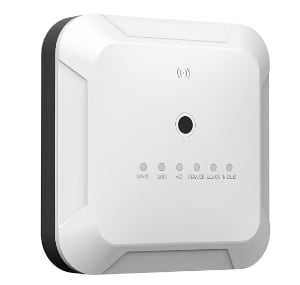
Side view of UWB base station with status indicators.

SN2 UWB PoE Anchor

The SN2 is an industrial‑grade UWB positioning anchor designed for high‑accuracy real‑time location systems. It supports Standard PoE or 12–24 V DC power, delivers sub‑meter performance (<30 cm LoS), and features an IP66 enclosure for harsh indoor/outdoor environments. Multiple mounting options (ceiling, wall, pole clamp) make deployment easy in factories, warehouses, and tunnels. Optional 4G/Wi‑Fi backhaul, AI video add‑on, and sound‑light alarm extend the anchor’s capability for safety and analytics. (Actual performance depends on anchor density, layout, and site RF conditions.)

View Product
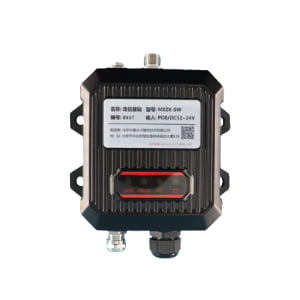
A black SW UWB Anchor device with labeled ports and a sticker showing specs, featuring indicator lights for LWB, GNSS, and 4G.

SW UWB Anchor

The SW UWB Positioning Base Station is an industrial-grade device designed for sub-meter accuracy tracking of personnel, vehicles, and assets in factories, tunnels, and other complex environments.

View Product
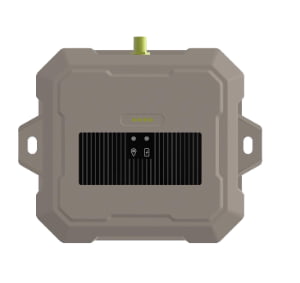
Gray rectangular electronic device with a black panel, LED indicators, and two side mounting flanges; a yellow cable extends from the top—designed as a WX UWB Beacon for advanced positioning applications.

WX UWB Wireless Positioning Beacon

The WX UWB Wireless Positioning Beacon is a battery-powered industrial-grade UWB device designed for wireless deployment without cable installation.

View Product
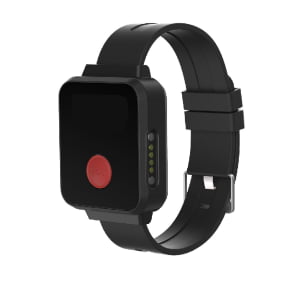
A black smartwatch with a rectangular face, black band, and a prominent red SOS button on the front.

SH UWB Positioning Wristband Tag

The SH UWB Positioning Wristband Tag is a high-precision wearable device designed for real-time personnel tracking and safety monitoring in industrial environments such as factories, construction sites, and tunnels.

View Product
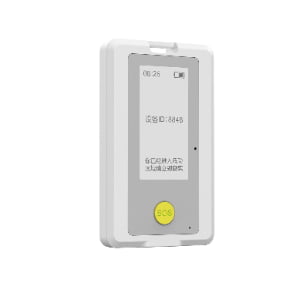
A rectangular white device with a screen displaying Chinese text, a time reading 08:26, an ID number, and a yellow SOS button below the display.

GP UWB Positioning Employee Card

The GP UWB Positioning Employee Card is a compact, intelligent badge-style positioning device designed for industrial personnel management and safety monitoring. Built on UWB (Ultra-Wideband) technology, it achieves 10–30 cm accuracy, supports real-time location tracking, and enables instant SOS alerts via a one-touch button. The device includes vibration reminders, motion/static detection, and optional NFC/RFID, E-ink display, and LoRa communication modules. With an IP66-rated enclosure and 900 mAh rechargeable battery, it operates continuously in demanding environments such as factories, construction sites, logistics parks, and tunnels.

View Product
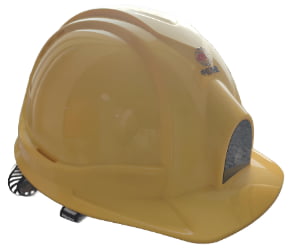
A yellow construction hard hat with a small transparent window on the front and an adjustable strap at the back.

AQM Hybrid Positioning Safety Helmet

The AQM Hybrid Positioning Safety Helmet is an industrial-grade smart helmet integrating UWB high-precision positioning, RTK centimeter-level positioning, GPS outdoor positioning, and 4G full-network communication. Designed for worker safety and real-time visibility, it features SOS emergency alerts, TTS voice, motion/static detection, low-battery warnings, and optional NFC / LoRa / 5G communication. With an IP56 rugged rating and a built-in 3000mAh rechargeable battery, the AQM helmet is ideal for construction sites, tunnels, factories, mining, ports, and hazardous environments requiring precise personnel tracking and safety protection.

View Product
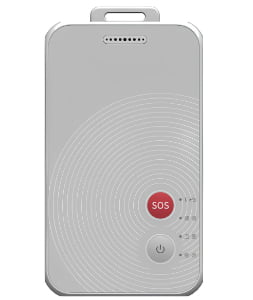
A white emergency alert device with a large red SOS button, a power button, indicator lights, and a speaker grille at the top.

UBK UWB + GPS Hybrid Positioning Badge

The UBK UWB + GPS Hybrid Positioning Badge is a rugged industrial-grade personnel tracking card designed for high-precision positioning in factories, warehouses, tunnels, and other demanding environments. It integrates UWB centimeter-level positioning with GPS outdoor positioning, features SOS emergency button, motion detection, TTS voice broadcast, 4G cellular communication, and optional NFC functionality. Equipped with a 3000mAh rechargeable battery and an IP66 protection rating, the UBK badge ensures reliable real-time personnel visibility and safety monitoring both indoors and outdoors.

View Product

Bill of Materials

Example BOM (based on the recommended architecture above)

ModelSummary
SN2 UWB PoE AnchorThe SN2 is an industrial‑grade UWB positioning anchor designed for high‑accuracy real‑time location systems. It supports Standard PoE or 12–24 V DC power, delivers sub‑meter performance (<30 cm LoS), and features an IP66 enclosure for harsh indoor/outdoor environments. Multiple mounting options (ceiling, wall, pole clamp) make deployment easy in factories, warehouses, and tunnels. Optional 4G/Wi‑Fi backhaul, AI video add‑on, and sound‑light alarm extend the anchor’s capability for safety and analytics. (Actual performance depends on anchor density, layout, and site RF conditions.)
SW UWB AnchorThe SW UWB Positioning Base Station is an industrial-grade device designed for sub-meter accuracy tracking of personnel, vehicles, and assets in factories, tunnels, and other complex environments.
WX UWB Wireless Positioning BeaconThe WX UWB Wireless Positioning Beacon is a battery-powered industrial-grade UWB device designed for wireless deployment without cable installation.
SH UWB Positioning Wristband TagThe SH UWB Positioning Wristband Tag is a high-precision wearable device designed for real-time personnel tracking and safety monitoring in industrial environments such as factories, construction sites, and tunnels.
GP UWB Positioning Employee CardThe GP UWB Positioning Employee Card is a compact, intelligent badge-style positioning device designed for industrial personnel management and safety monitoring. Built on UWB (Ultra-Wideband) technology, it achieves 10–30 cm accuracy, supports real-time location tracking, and enables instant SOS alerts via a one-touch button. The device includes vibration reminders, motion/static detection, and optional NFC/RFID, E-ink display, and LoRa communication modules. With an IP66-rated enclosure and 900 mAh rechargeable battery, it operates continuously in demanding environments such as factories, construction sites, logistics parks, and tunnels.
AQM Hybrid Positioning Safety HelmetThe AQM Hybrid Positioning Safety Helmet is an industrial-grade smart helmet integrating UWB high-precision positioning, RTK centimeter-level positioning, GPS outdoor positioning, and 4G full-network communication. Designed for worker safety and real-time visibility, it features SOS emergency alerts, TTS voice, motion/static detection, low-battery warnings, and optional NFC / LoRa / 5G communication. With an IP56 rugged rating and a built-in 3000mAh rechargeable battery, the AQM helmet is ideal for construction sites, tunnels, factories, mining, ports, and hazardous environments requiring precise personnel tracking and safety protection.
UBK UWB + GPS Hybrid Positioning BadgeThe UBK UWB + GPS Hybrid Positioning Badge is a rugged industrial-grade personnel tracking card designed for high-precision positioning in factories, warehouses, tunnels, and other demanding environments. It integrates UWB centimeter-level positioning with GPS outdoor positioning, features SOS emergency button, motion detection, TTS voice broadcast, 4G cellular communication, and optional NFC functionality. Equipped with a 3000mAh rechargeable battery and an IP66 protection rating, the UBK badge ensures reliable real-time personnel visibility and safety monitoring both indoors and outdoors.

Example Configuration

SN2 UWB PoE Anchor (Mounted on ceilings or rack tops to cover aisles and cross-aisles in the main warehouse)
Qty: 36
SW UWB Anchor (Used in mezzanines, staging areas and loading docks where additional robustness is required)
Qty: 12
WX UWB Wireless Positioning Beacon (Optional; extends coverage to yard staging or temporary overflow areas without new cabling)
Qty: 8
SH UWB Positioning Wristband Tag (Assigned to warehouse associates and picking teams)
Qty: 260
GP UWB Positioning Employee Card (Supervisors, visitors and maintenance staff)
Qty: 60

Compliance & Regulations

Support for warehouse safety and pedestrian–vehicle policies

Traceable records for incidents and audits

Data privacy and access control

🌍 Industries using this solution

Related Technical Resources

FAQs

Ready to Deploy?

Running a busy warehouse or distribution center? Share your floor plan, rack layout and headcount, and we’ll propose a UWB anchor design and RTLS architecture tailored to your picking model and safety goals.

Contact Sales
Procurement (Device & Data Layer)

Shortlisting devices? Get an RFQ-ready BOM path.

Move from product selection to an actionable RFQ: scope boundaries, terms, lead time, and deliverables.

Contact Sales

Ready to Deploy RTLS?

Share your site layout and accuracy needs--we'll suggest a practical setup.

Contact Us