Skip to content
Industrial UWB RTLS for Real-Time Visibility
Menu

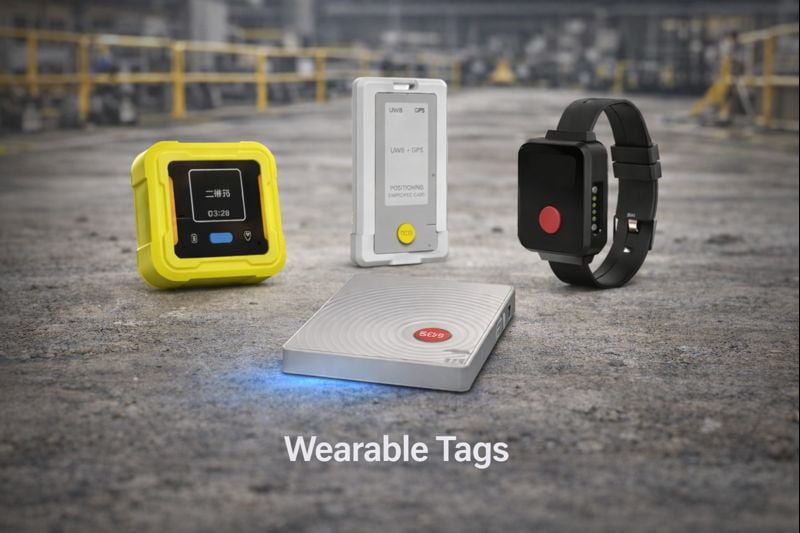
Wearables Tags

Wearable tags (badges, wristbands) for personnel tracking and safety. Enable geofencing, muster, alarms and long-battery operation.

Filter Products

Select a category and/or industry to narrow results.

Clear all
Product Category
Locked: Wearables Tags
Industries

Supplier / Manufacturer Overview

GridRTLS supplies industrial UWB wearables and tags for personnel, vehicle, and asset tracking in factories, tunnels, mines, and hazardous sites.
This category focuses on the field endpoint: what workers wear and what you mount on assets—built for repeatable ranging, daily charging workflows, and long-term maintenance.

FOCUS AREA

Wearables & tags are where RTLS projects usually fail in real sites: low battery life, poor wearing compliance, weak mounting, and inconsistent alerts.
Our approach is to keep the endpoint simple to deploy, predictable to operate, and easy for SI teams to integrate into an existing platform.

Typical functions include SOS / motion detection / station (zone) events, plus optional features such as
vibration or buzzer prompts, NFC/RFID, e-ink display, and LoRa communication depending on the tag model and project scope.

WHO WE WORK WITH

We primarily support system integrators and engineering teams who already have a positioning engine / platform and need reliable endpoints for pilot → rollout.
Typical deployments include PPE wearables for workers, work badges for site access & attendance workflows, and asset tags for tools/materials and mobile equipment.

WEARABLE / TAG PORTFOLIO (WHAT YOU CAN EXPECT)

  • UWB wristband / bracelet tags with vibration prompts, motion detection and optional heart rate / OLED / NFC (site-dependent).
  • Work badge tags designed for lanyard/ID workflows; optional buzzer, e-ink display, NFC/RFID, and optional LoRa depending on deployment constraints.
  • Asset / material tags with strong mounting options (including magnetic attachment) and “find item” buzzer behavior for maintenance operations.
  • Industrial protection expectations: common targets are IP66–IP67 class designs and multi-month to multi-year duty cycles depending on refresh rate and power strategy.

If you are building or upgrading a worker / asset RTLS project, this page is intended to help you
select endpoint form factors, define RFQ inputs (refresh rate, alarms, wearing method, charging strategy),
and move toward an RFQ-ready BOM without re-quoting later.

Capability highlights

Industrial duty cycles (refresh-rate aware)

Endpoints are specified around the actual refresh rate (e.g., 1–20Hz) and site routines (shift length, charging windows), not marketing-only “battery life” claims.

Worker compliance: wearability first

Strap comfort, helmet-wear options, and simple interaction (SOS / one button) reduce “device not worn” failures in the field.

Alarm behaviors that matter on site

Vibration / buzzer prompts and low-battery warnings support closed-loop operations (workers feel alerts even in noisy environments).

ID & access workflow options

Work badge formats support optional NFC/RFID and optional e-ink displays for identification, attendance, and site access procedures.

Asset tag mounting & retrieval

Strong mounting options (including magnetic attachment on certain asset tags) plus “find item” beeping helps maintenance teams recover tools/materials quickly.

Pilot → rollout consistency

Stable configuration management (firmware parameters, labeling, charging accessories) so multi-batch deployments behave the same across months.

Selection criteria (what to specify in an RFQ)

1 Target output level & zones

Presence / 1D corridor / 2D area determines endpoint density, station planning, and whether you need vibration/buzzer events for zone control.

2 Refresh rate (Hz) and duty cycle

Specify 1–20Hz requirement and expected on-body hours/day. Battery sizing and charging workflow depend on this more than anything.

3 Wearing method & compliance

Wristband vs badge vs helmet integration; define if PPE rules require helmet-wear, lanyard-only, or anti-removal behaviors.

4 Alert & interaction requirements

SOS button, buzzer, vibration, low-battery alerts; define who receives alarms and what “acknowledge” flow looks like on your platform.

5 Environmental & protection requirements

Target IP level, temperature range, dust/water exposure, and whether the site is hazardous (intrinsic safety / Ex scope if applicable).

6 Identity & access workflow

Need NFC/RFID? Need e-ink display? Any binding workflow (person-card binding, shift change, charging rack routines).

7 Charging & fleet management

Central charging racks vs individual charging; define number of endpoints, shift turnover speed, and whether charging contact must be magnetic/Type-C.

8 Data/interface expectations

Define how your platform expects to ingest tag events (raw ranging vs solved position; event types like station enter/leave, SOS, low battery).

Customization / OEM / ODM

For Wearables & Tags projects, customization is usually practical when you already passed pilot and want rollout consistency:
branding, labeling, strap/wearing accessories, and a controlled set of firmware parameters.
We recommend keeping the endpoint behavior stable and pushing “business logic” to your platform where possible.

Typical OEM scope includes logo/label printing, packaging, accessory choices (lanyards/straps/charging docks),
and controlled firmware parameters (refresh rate, alert patterns). Deeper ODM scope (new enclosure, new sensors,
or special hazardous compliance) should be confirmed early because it affects tooling, certification scope, and lead time.

Branding & labeling

Logo, label format, asset numbering rules, QR codes.

Typical impact: low / fast
Wearing accessories

Strap material, lanyard accessories, helmet-wear fixtures.

Typical impact: low–medium
Alert patterns

Vibration/buzzer patterns, SOS behavior, low-battery thresholds (within supported firmware).

Typical impact: medium
NFC/RFID enablement (where supported)

Define card/badge workflow and supported tag types.

Typical impact: medium
E-ink display (badge use cases)

Define fields to display (ID, role, shift) and update rules.

Typical impact: medium
LoRa communication add-on (where supported)

Used when local infrastructure limits public network access; confirm architecture and gateway expectations.

Typical impact: medium–high.
Anti-tamper / anti-removal behavior

Required for restricted areas or compliance workflows; clarify detection method and alarm routing.

Typical impact: high (scope-dependent).
Hazardous / Ex scope confirmation

Confirm zone requirements early; affects enclosure, approvals, and batch traceability.

Typical impact: high / long lead

Integration & architecture

Wired PoE / Ethernet Cellular 4G/5G Backhaul Gateway Relay (Local / Private Net) LPWAN / Long-range Low Power Indoor–Outdoor Fusion (UWB + GNSS/RTK)

Wearables & tags are deployed as field endpoints in a UWB RTLS system.
From an SI perspective, you should treat them as: (1) a ranging endpoint, and (2) an event generator (SOS / motion / zone events).

  • Define your data expectation: do you need raw ranging + timestamps, or solved coordinates + event streams?
  • Agree on refresh rate and alert behavior: battery life and charging routines must match the site’s shift schedule.
  • Plan fleet operations: centralized charging, ID binding (badge workflows), and replacement/maintenance process.
  • Hazardous sites: confirm compliance scope early (intrinsic safety / Ex) and keep multi-batch traceability aligned.
Supplier proof

Factory, delivery discipline & real deployments

Evidence that matters to SI teams: how we lock BOMs, keep batch consistency, and ship integration-ready hardware.

Config-first quoting
Align output level + site constraints before locking BOM to prevent re-quoting.
Batch consistency
Configuration and revision control across pilot → rollout to reduce maintenance risk.
Integration-ready delivery
Clear integration notes and commissioning expectations—no “mystery behavior” in the field.
QA & traceability
Pre-shipment verification + traceability mindset for multi-batch projects.
Read full supplier proof
Endpoint-first delivery discipline
For wearables, the “real cost” is not the unit price—it’s replacement cycles, charging routines, and inconsistent behaviors between batches.
We align refresh rate, alarm behaviors, and accessories before locking the shipment configuration.

Batch consistency (pilot → rollout)
We keep configuration and labeling consistent across batches so SI teams don’t face “same model, different behavior” issues during rollout.

Scope boundaries
  • We supply endpoints and integration-ready documentation; we do not operate a turnkey RTLS platform.
  • Site delivery (installation, cabling, platform integration) is handled by SI / partners.
Scope boundaries (important)
  • Hardware + integration-ready documentation supplied; no on-site cabling / civil construction.
  • No turnkey RTLS platform operation for end customers; platform & site delivery handled by SI / partners.
Real deployments
Installation patterns & environments
Ceiling / wall mounting examples and industrial conditions.
Upload photos in pcat_factory_photos to show real installation proof.
Ingress protection target

IP66/IP67 class for typical industrial wearables (project-dependent).

Operating temperature

confirm site range (e.g., sub-zero tunnels vs hot workshops).

Hazardous area scope

intrinsic safety / Ex scope confirmation if required.

RMA & warranty flow

replacement policy aligned with fleet operations.

Pre-shipment functional check (power/charging, button/SOS, vibration/buzzer)

RF validation for UWB communication in typical site conditions

Configuration verification: refresh rate, alert thresholds, event types

Batch traceability: labeling + revision control for multi-batch rollouts

FAQ

Which wearable form factor should we choose: wristband or badge?

Use wristbands when you need high wearing compliance and “always-on body” behavior (alerts, vibration). Use badges when your workflow depends on ID, lanyards, attendance, or optional NFC/e-ink.

How do we decide the refresh rate (1–20Hz)?

Start from the use case: worker safety & fast movement needs higher refresh; attendance/zone presence can be lower. Refresh rate drives battery strategy and charging routines.

Do tags provide raw ranging or solved position?

Tags are endpoints. Your platform typically consumes event streams and/or position data depending on the architecture (positioning engine, gateway, server responsibilities).

What alarms are practical in noisy industrial environments?

Vibration is usually the most reliable for workers. Buzzer is useful for asset finding and some badge workflows.

What should we specify for hazardous sites?

Confirm hazardous area scope early (zone requirement). This affects enclosure, certification scope, and batch traceability expectations.

What charging approach works for large deployments?

Central charging is recommended for badges and some wearables: it reduces lost devices and enforces consistent readiness at shift start.

Can we add NFC / e-ink / LoRa later?

Only if the selected model supports it. Confirm at RFQ stage to avoid redesign or re-certification later.

How do we prevent “same model, different behavior” in rollout?

Lock the configuration set (refresh rate, alert rules, labeling, accessories) before pilot ends and keep revision control across batches.

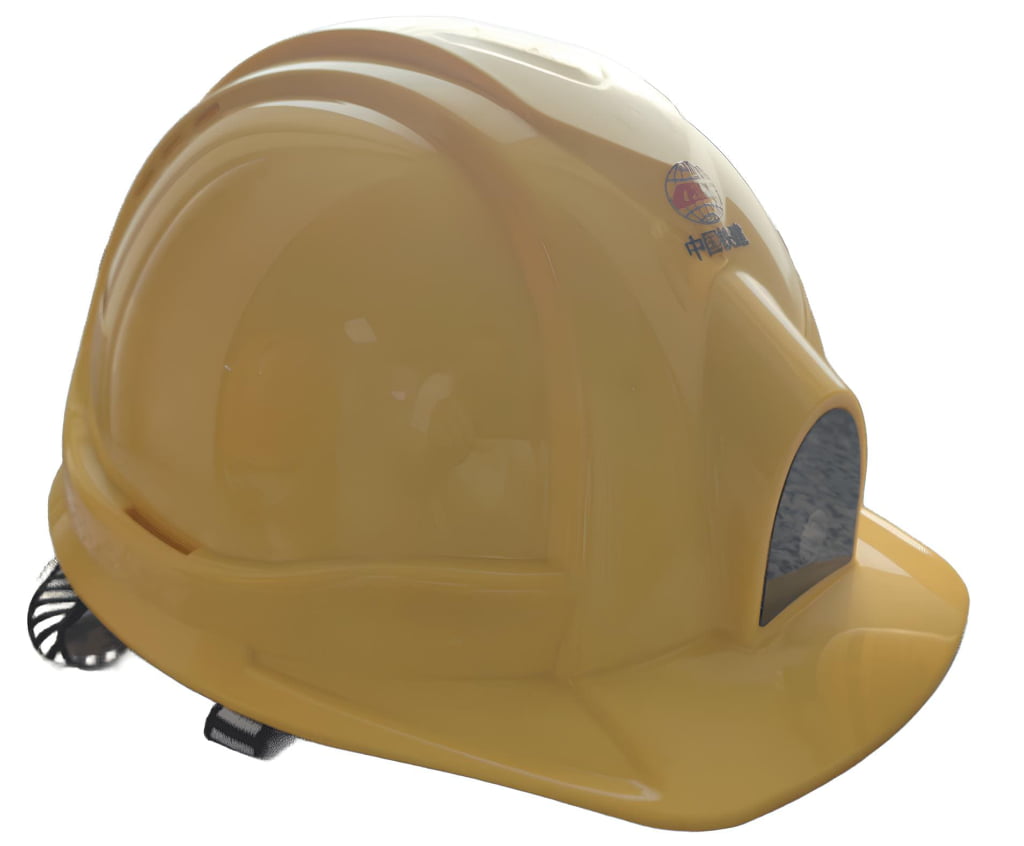
A yellow construction hard hat with a small transparent window on the front and an adjustable strap at the back.
Fusion TerminalsWearables TagsConstruction

AQM Hybrid Positioning Safety Helmet

The AQM Hybrid Positioning Safety Helmet is an industrial-grade smart helmet integrating UWB high-precision positioning, RTK centimeter-level positioning, GPS outdoor positioning, and 4G full-network communication. Designed for worker safety and real-time visibility, it features SOS emergency alerts, TTS voice, motion/static detection, low-battery warnings, and optional NFC / LoRa / 5G communication. With an IP56 rugged rating and a built-in 3000mAh rechargeable battery, the AQM helmet is ideal for construction sites, tunnels, factories, mining, ports, and hazardous environments requiring precise personnel tracking and safety protection.
View Product
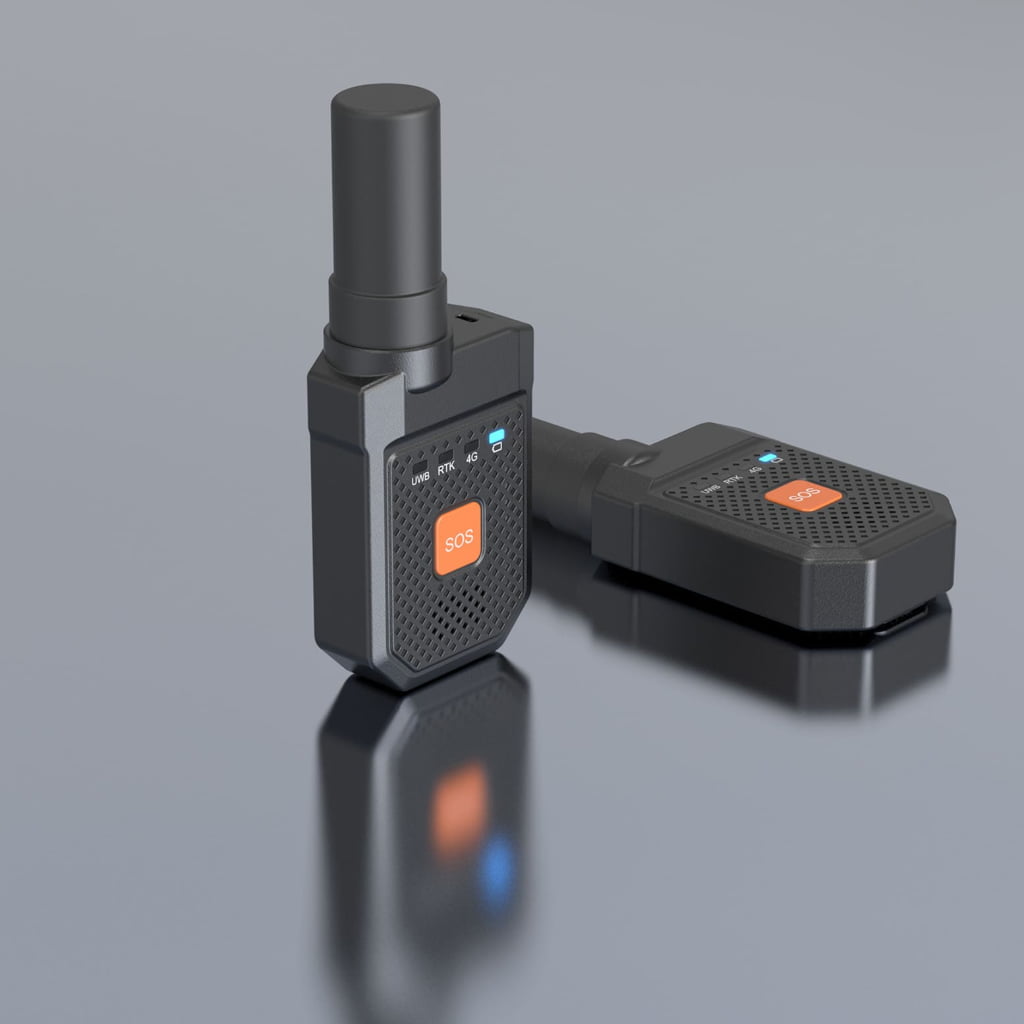
Two black handheld communication devices with visible SOS buttons and indicator lights are placed on a reflective gray surface.
Fusion TerminalsWearables TagsAviation & Airports

URT Hybrid Positioning Terminal

The URT Hybrid Positioning Terminal is an industrial-grade wearable tracking device that integrates UWB high-precision positioning, RTK centimeter-level positioning, GPS outdoor positioning, and 4G wireless communication. It provides real-time personnel tracking, SOS emergency alerts, TTS voice broadcasting, motion detection, and optional NFC/Lora/5G expansion. With an IP66 rugged design and a 3000mAh magnetic-charging battery, the URT terminal is ideal for complex industrial environments such as factories, tunnels, construction sites, rail transit, and energy facilities.
View Product
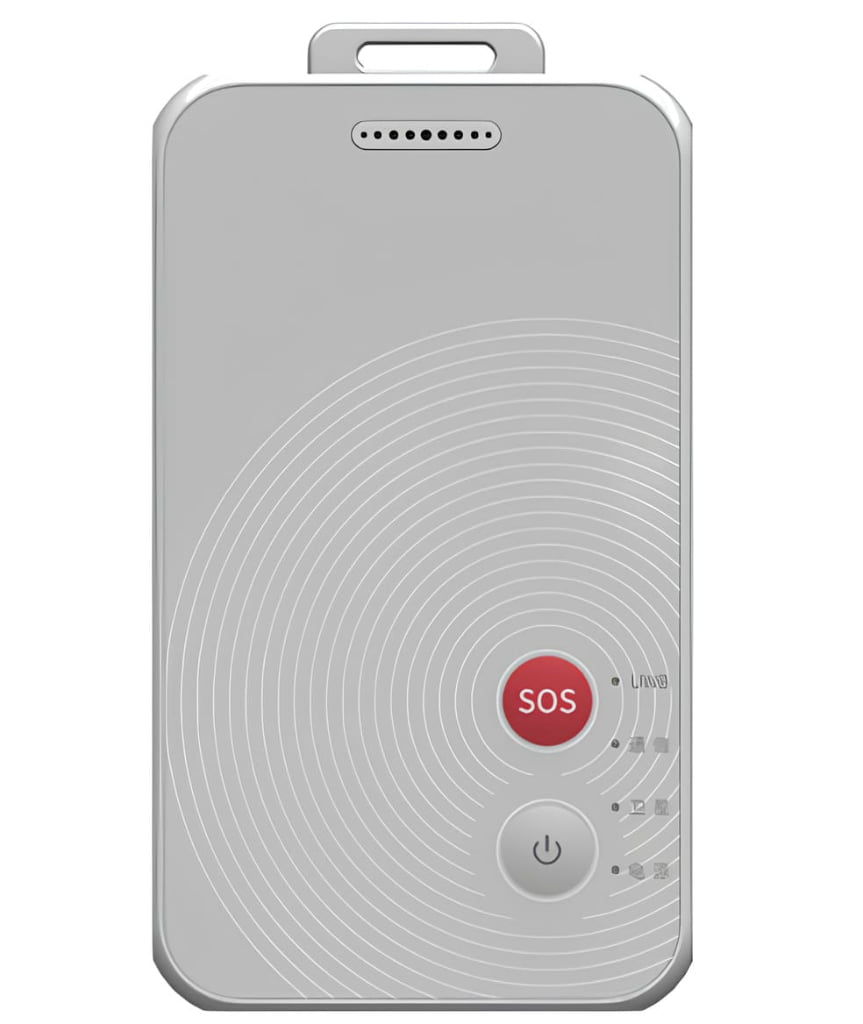
A white emergency alert device with a large red SOS button, a power button, indicator lights, and a speaker grille at the top.
Fusion TerminalsWearables TagsAviation & Airports

UBK UWB + GPS Hybrid Positioning Badge

The UBK UWB + GPS Hybrid Positioning Badge is a rugged industrial-grade personnel tracking card designed for high-precision positioning in factories, warehouses, tunnels, and other demanding environments. It integrates UWB centimeter-level positioning with GPS outdoor positioning, features SOS emergency button, motion detection, TTS voice broadcast, 4G cellular communication, and optional NFC functionality. Equipped with a 3000mAh rechargeable battery and an IP66 protection rating, the UBK badge ensures reliable real-time personnel visibility and safety monitoring both indoors and outdoors.
View Product
A small, square, yellow electronic device with a black display screen showing Chinese characters and the ID:1234. The device has rounded edges and minimal buttons.
Wearables TagsIndustrial Maintenance & Utilities

WZ UWB Asset Positioning Tag

The WZ UWB Asset Positioning Tag is a high-precision industrial tracking device designed for vehicles, tools, pallets, and other assets. It features a built-in 1800mAh rechargeable battery, powerful magnetic mounting, IP67 protection, and UWB sub-meter (<30cm) positioning accuracy. With a wireless communication range of over 100 meters, smart sleep mode, beeping alerts, and low-battery alarm, the WZ tag enables reliable asset visibility and loss prevention across factories, logistics hubs, rail workshops, and heavy-equipment environments.
View Product
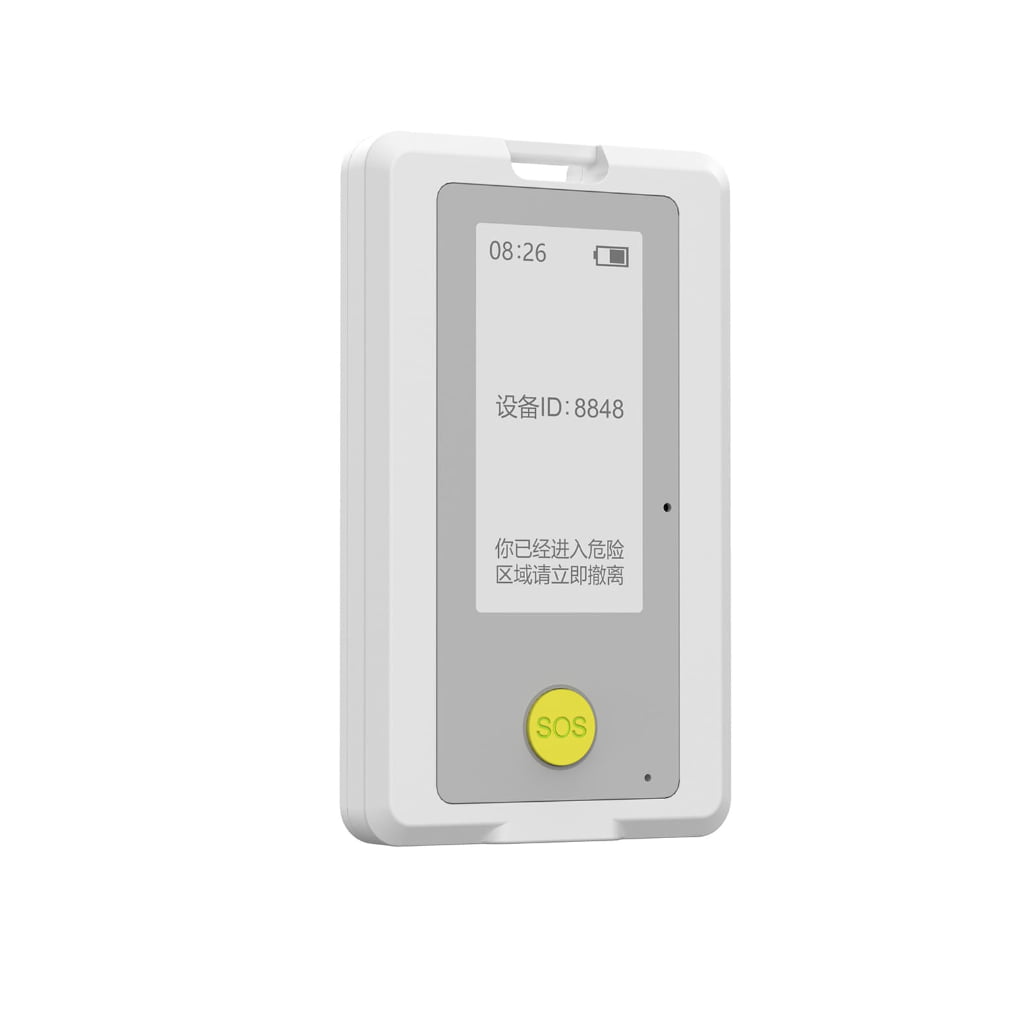
A rectangular white device with a screen displaying Chinese text, a time reading 08:26, an ID number, and a yellow SOS button below the display.
Wearables TagsAviation & Airports

GP UWB Positioning Employee Card

The GP UWB Positioning Employee Card is a compact, intelligent badge-style positioning device designed for industrial personnel management and safety monitoring. Built on UWB (Ultra-Wideband) technology, it achieves 10–30 cm accuracy, supports real-time location tracking, and enables instant SOS alerts via a one-touch button. The device includes vibration reminders, motion/static detection, and optional NFC/RFID, E-ink display, and LoRa communication modules. With an IP66-rated enclosure and 900 mAh rechargeable battery, it operates continuously in demanding environments such as factories, construction sites, logistics parks, and tunnels.
View Product
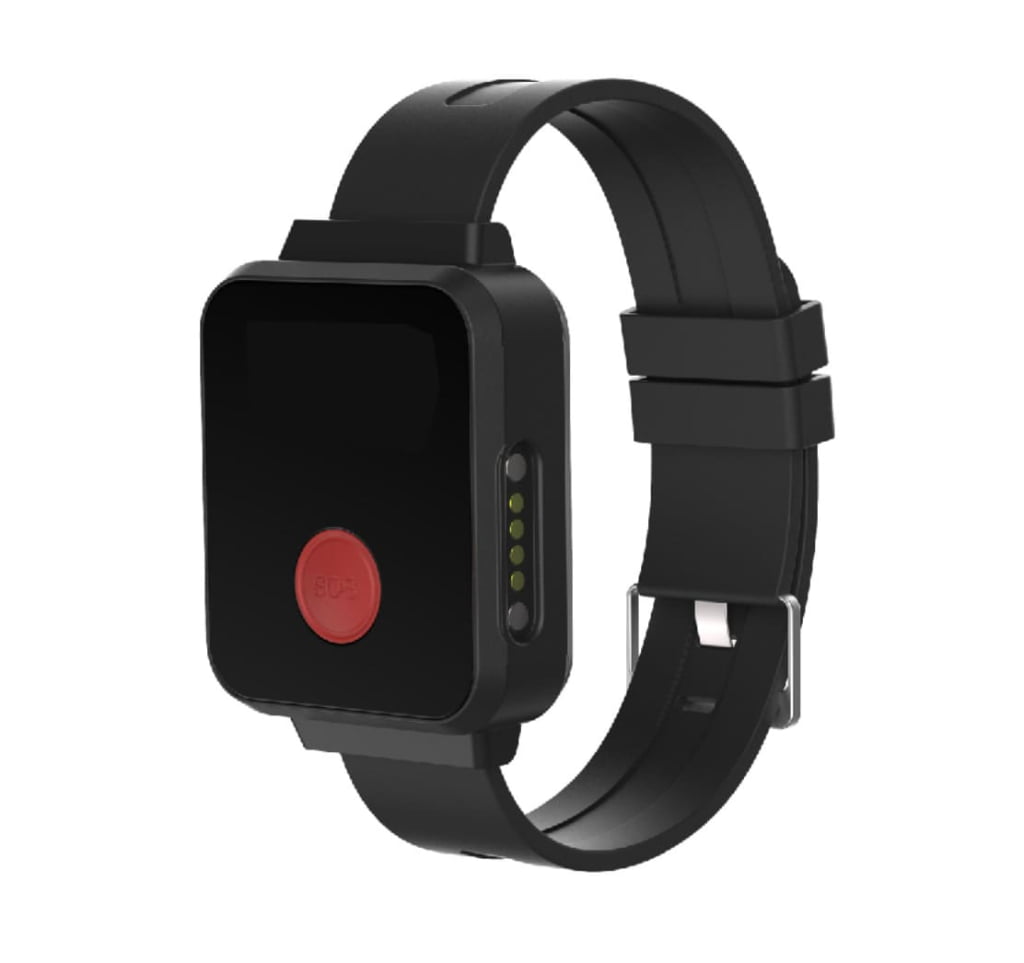
A black smartwatch with a rectangular face, black band, and a prominent red SOS button on the front.
Wearables TagsAviation & Airports

SH UWB Positioning Wristband Tag

The SH UWB Positioning Wristband Tag is a high-precision wearable device designed for real-time personnel tracking and safety monitoring in industrial environments such as factories, construction sites, and tunnels.
View Product
Procurement (Device & Data Layer)

Shortlisting UWB wearables or tags? Get an RFQ-ready endpoint configuration.<br />

Define endpoint form factor, refresh rate, alert behavior, and charging workflow before RFQ.<br /> This path helps SI teams lock wearable/tag configuration early and avoid re-quoting during rollout.<br />

Ready to Deploy RTLS?

Share your site layout and accuracy needs--we'll suggest a practical setup.

Contact Us