Skip to content
Industrial UWB RTLS for Real-Time Visibility
Menu

Warehouse Asset RTLS for AGVs & Pallet Tracking

Modern warehouses and logistics centres are under pressure to ship faster, handle more SKUs and support both manual operations and automated equipment such as AGVs. WMS and barcode systems give good transactional data, but they only know where a pallet was last scanned — not where it is right now. When an urgent order is released, supervisors still rely on radio calls and walking the aisles to find the right pallet, cage or cart.

At the same time, AGVs, forklifts and manual pallet jacks are sharing the same aisles and staging zones. A single stalled AGV in a narrow aisle can block several others. Busy loading docks easily become congested when trailers, pallets and empty racks are not in the expected locations. Cycle counts and investigations into inventory discrepancies consume valuable time for warehouse managers.

Solution Details

Category
Asset RTLS & Anti-Collision
Industries
Transportation & Rail Warehousing & Logistics
Environments
Warehouse Yard
Implementation
moderate

Overview

Modern warehouses and logistics centres are under pressure to ship faster, handle more SKUs and support both manual operations and automated equipment such as AGVs. WMS and barcode systems give good transactional data, but they only know where a pallet was last scanned — not where it is right now. When an urgent order is released, supervisors still rely on radio calls and walking the aisles to find the right pallet, cage or cart.

At the same time, AGVs, forklifts and manual pallet jacks are sharing the same aisles and staging zones. A single stalled AGV in a narrow aisle can block several others. Busy loading docks easily become congested when trailers, pallets and empty racks are not in the expected locations. Cycle counts and investigations into inventory discrepancies consume valuable time for warehouse managers.

The Warehouse Asset RTLS solution uses UWB anchors and wireless beacons installed along aisles, staging areas and dock doors, together with rugged UWB asset tags mounted on pallets, cages, returnable containers and mobile racks. AGVs and forklifts carry vehicle terminals that provide precise position and heading. The RTLS platform shows live locations of vehicles and assets on a warehouse map, with search tools, geofenced zones, dwell-time analytics and simple alerts.

This approach gives the operations team a dynamic picture of where inventory, carriers and material-handling equipment actually are — not just where they were scanned. It helps to cut search time, keep AGVs flowing, improve dock utilisation and support safer mixed operations between people, forklifts and automated vehicles.
Pain Points

Hard to locate specific pallets, cages and returnable containers

Even with a good WMS, it is common to spend precious minutes looking for a particular pallet, cage or returnable container that was scanned somewhere “near” a zone. Over time, assets drift from their planned locations, are parked on the ends of aisles or temporarily staged in the wrong zone, making it difficult to fulfil urgent orders efficiently.

Limited visibility on AGV and forklift movements

Warehouse teams often lack a live overview of how AGVs and forklifts are actually moving. Dispatchers see tasks in the WMS but cannot quickly identify blocked aisles, idle vehicles or unexpected routes. This leads to lower fleet utilisation and makes it difficult to diagnose bottlenecks or near-miss situations.

Congested docks and staging areas

Inbound and outbound docks are constantly changing: trailers arrive early, loads are re-staged, and empty pallets accumulate in corners. Without real-time information on where trailers, dollies and staging pallets are, dock planners have to make decisions based on incomplete or outdated information, increasing the risk of congestion and re-handling.

Time‑consuming cycle counts and poor inventory confidence

Cycle counts and investigations into inventory discrepancies require teams to walk the warehouse and visually confirm pallet IDs and locations. This manual work is slow, often performed at night or on weekends, and still may leave blind spots in high-bay or mixed indoor–yard environments.

Difficult to coordinate mixed manual and automated operations

AGVs, manual forklifts and pedestrians share the same aisles and crosswalks. Without accurate, time-aligned data on who and what is moving where, it is hard to tune AGV routes, speed limits and priorities while also supporting safety initiatives for forklift–pedestrian separation and better use of designated walkways.

System Architectures & Topology

Wired UWB RTLS for High-Bay Warehouses

Architecture ID: warehouse_uwb_wired

Factory Warehouse
  • PoE-powered UWB anchors are installed along warehouse aisles, cross-aisles and dock doors, mounted on ceiling trusses or high side-walls. Forklifts and AGVs carry UWB vehicle terminals, while pallets, cages and mobile racks are equipped with reusable UWB asset tags. All anchors are connected via industrial Ethernet switches to the RTLS server in the control room. The RTLS platform calculates positions, displays a live warehouse map and exposes data to WMS and AGV control systems.

Key Advantages

  • High positioning accuracy and low latency across critical aisles and docks
  • Robust infrastructure suitable for 24/7 high-throughput warehouses
  • Shares the same wired backbone as other industrial systems where available
  • Well suited for large, long-term facilities with stable layouts

Limitations / When Not To Use

  • Requires Ethernet cabling and switch capacity in most covered areas
  • Less flexible when warehouse layouts or rack configurations change frequently
  • Initial installation effort is higher than purely wireless architectures

Notes: Recommended for new or renovated warehouses where structured cabling is already planned, or for flagship sites that require the most stable and precise RTLS foundation.

Architecture Components / Layers

Infrastructure layer – PoE UWB anchors and industrial switches

Provides dense and stable UWB coverage for high-bay aisles, mezzanines and docks. Anchors are powered by PoE or DC and connected through aggregation switches back to the RTLS server, following the wired architecture proven in many industrial deployments.

Vehicle layer – UWB / GNSS vehicle terminals

Forklifts, reach trucks and AGVs are equipped with vehicle positioning terminals. These devices provide position and heading information at a high refresh rate, enabling traffic monitoring, congestion analysis and optional collision-avoidance applications.

Asset layer – pallet and carrier tags

Reusable UWB asset tags are mounted on pallets, cages, dollies and mobile racks. Tags periodically transmit UWB signals to nearby anchors, allowing the system to compute their positions and dwell time in each zone.

Application layer – RTLS server and integrations

The RTLS server hosts floor maps, zones, rules and APIs. It provides user interfaces for live tracking, search and analytics, and exchanges data with WMS, TMS and AGV control systems to support operational decisions.

Hybrid Warehouse & Yard RTLS (UWB + Wireless Beacons + GNSS)

Architecture ID: warehouse_hybrid_indoor_yard

Warehouse Yard Outdoor
  • Inside the warehouse, PoE UWB anchors or wireless UWB beacons provide location coverage for pallets, cages and vehicles. In the external yard, vehicle-mounted GNSS/RTK terminals provide lane-level accuracy for trailers, shuttle vehicles and yard tractors. Wireless communication gateways backhaul data from beacons and yard devices to the RTLS server. The system presents a continuous view of inventory and vehicle movements from indoor racks to outdoor staging lanes and parking positions.

Key Advantages

  • Provides continuous visibility from indoor racks to outdoor yard lanes and parking spots
  • Flexible deployment using a mix of wired anchors and wireless beacons
  • Well suited for brownfield warehouses and logistics parks with existing yards
  • Allows phased rollout, starting indoors and later extending to the yard

Limitations / When Not To Use

  • Requires good outdoor GNSS visibility; very dense canopies or indoor-only docks may need alternative designs
  • Battery-powered beacons and tags require periodic maintenance and replacement
  • Integration with WMS and yard management is important to fully realise the benefits

Notes: This architecture is ideal for logistics parks and cross-dock facilities where a significant share of inventory time is spent in outdoor staging lanes, trailer yards or buffer areas between buildings.

Architecture Components / Layers

Indoor layer – UWB anchors and wireless beacons

Combines PoE anchors in high-density aisles with battery-powered UWB beacons in mezzanines, temporary staging zones and areas where cabling is impractical. Provides flexible coverage that can adapt to layout changes.

Yard layer – GNSS / RTK vehicle terminals

Yard tractors, shuttle vehicles or outdoor forklifts are equipped with GNSS/RTK-enabled vehicle terminals. These devices provide lane-level position in the yard and at trailer parking spots, complementing indoor UWB coverage.

Asset layer – pallets, containers and carriers

UWB asset tags mounted on pallets, containers and stillages support tracking from indoor storage to outdoor staging lanes. Dwell-time analytics reveal how long inventory stays in buffers or is waiting for loading.

Gateway & server layer

Communication gateways receive data from wireless beacons and yard devices and forward it to the RTLS server. The server merges indoor and outdoor positions into a single map and provides APIs for WMS/TMS integration.

Workflow

This workflow applies to all architecture options above. Specific hardware selection varies depending on the chosen architecture.

1

Warehouse process and data mapping

Start with a joint workshop involving warehouse operations, engineering, IT and safety. Map key processes: inbound staging, put-away, replenishment, picking, AGV routes and dock operations. Identify which assets are most critical to track in real time — pallets, cages, trolleys, AGVs, forklifts, trailers or stillages — and align RTLS identifiers with existing WMS or TMS codes.

Estimated time: 1–2 weeks
2

UWB coverage design for aisles, docks and yard

Design the RTLS coverage using a combination of PoE UWB anchors for indoor aisles and staging areas, and wireless UWB beacons or GNSS/RTK receivers for external yard lanes if required. Pay particular attention to high racks, narrow aisles and busy docks, where accurate positioning and reliable coverage directly influence throughput and safety.

Estimated time: 2–3 weeks including site survey
3

Tagging strategy for pallets, racks and vehicles

Define how pallets, cages, pushcarts and mobile racks will be tagged using reusable UWB asset tags. Decide which vehicles will carry dedicated vehicle terminals, and how tags and terminals will be charged and maintained. Run a pilot in one or two representative zones to validate mounting methods, read rates and tag reuse workflows.

Estimated time: 3–5 weeks for a pilot zone
4

RTLS platform setup and integration with WMS / AGV control

Configure the RTLS platform with warehouse maps, zones, aisles, docks and yard lanes. Create role-based views for supervisors, dispatchers and control-room staff. Integrate key data flows with WMS and AGV control: for example, exposing live AGV locations, validating that pallets are in the correct zone for a given task, and feeding dwell-time or congestion indicators into planning dashboards.

Estimated time: 4–8 weeks depending on integrations
5

Rollout, tuning and continuous improvement

Extend coverage and tagging to additional aisles, mezzanines and dock areas in phases. Use RTLS analytics — such as average search time, AGV idle time and dwell time in staging zones — to tune routing rules, zoning and stocking strategies. Combine RTLS information with safety observations to refine speed limits, one‑way aisles and pedestrian separation measures.

Estimated time: Ongoing; typically 3–6 months for a full site

Key Outcomes

-40–70% reduction
Time spent searching for pallets, cages and equipment
Locating tagged pallets, cages and mobile racks becomes a matter of seconds using map search and filters, instead of walking aisles or relying on radio calls.
-30–60% reduction
Inventory investigation and cycle-count effort
RTLS provides a near-real-time view of where tagged inventory and returnable containers actually are, reducing the amount of manual checking required for audits and discrepancy investigations.
+10–25% increase
AGV and forklift utilisation
Better visibility of idle vehicles, blocked aisles and congested staging areas supports route optimisation, more balanced task assignment and fewer unplanned stops.
+10–20% improvement
Dock and staging efficiency
Knowing where trailers, inbound pallets and outbound loads are staged — in real time — allows dock planners to make more confident decisions and reduce re-handling.

Recommended Products

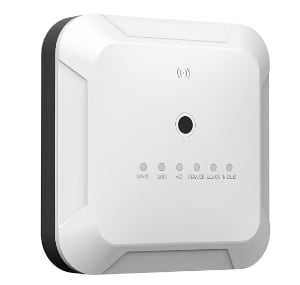
Side view of UWB base station with status indicators.

SN2 UWB PoE Anchor

The SN2 is an industrial‑grade UWB positioning anchor designed for high‑accuracy real‑time location systems. It supports Standard PoE or 12–24 V DC power, delivers sub‑meter performance (<30 cm LoS), and features an IP66 enclosure for harsh indoor/outdoor environments. Multiple mounting options (ceiling, wall, pole clamp) make deployment easy in factories, warehouses, and tunnels. Optional 4G/Wi‑Fi backhaul, AI video add‑on, and sound‑light alarm extend the anchor’s capability for safety and analytics. (Actual performance depends on anchor density, layout, and site RF conditions.)

View Product
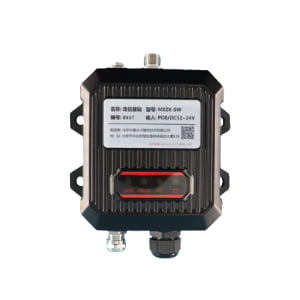
A black SW UWB Anchor device with labeled ports and a sticker showing specs, featuring indicator lights for LWB, GNSS, and 4G.

SW UWB Anchor

The SW UWB Positioning Base Station is an industrial-grade device designed for sub-meter accuracy tracking of personnel, vehicles, and assets in factories, tunnels, and other complex environments.

View Product
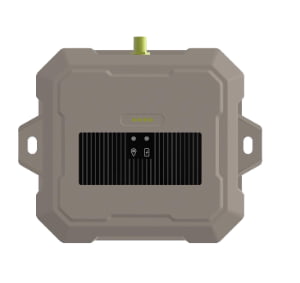
Gray rectangular electronic device with a black panel, LED indicators, and two side mounting flanges; a yellow cable extends from the top—designed as a WX UWB Beacon for advanced positioning applications.

WX UWB Wireless Positioning Beacon

The WX UWB Wireless Positioning Beacon is a battery-powered industrial-grade UWB device designed for wireless deployment without cable installation.

View Product
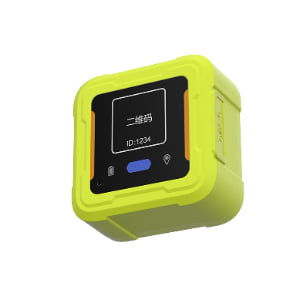
A small, square, yellow electronic device with a black display screen showing Chinese characters and the ID:1234. The device has rounded edges and minimal buttons.

WZ UWB Asset Positioning Tag

The WZ UWB Asset Positioning Tag is a high-precision industrial tracking device designed for vehicles, tools, pallets, and other assets. It features a built-in 1800mAh rechargeable battery, powerful magnetic mounting, IP67 protection, and UWB sub-meter (<30cm) positioning accuracy. With a wireless communication range of over 100 meters, smart sleep mode, beeping alerts, and low-battery alarm, the WZ tag enables reliable asset visibility and loss prevention across factories, logistics hubs, rail workshops, and heavy-equipment environments.

View Product
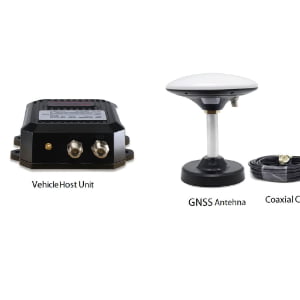
A vehicle host unit, GNSS antenna, and coaxial cable are displayed separately on a white background with labels.

URTC Vehicle-Mounted Hybrid Positioning Terminal

The URTC Vehicle-Mounted Hybrid Positioning Terminal integrates RTK centimeter-level positioning, optional UWB <30 cm indoor positioning, and a GNSS full-constellation system, enabling high-precision positioning for industrial vehicles, engineering machinery, cranes, and fleet applications. With a separated-module design using coaxial cable connection, the URTC terminal achieves RTK accuracy of ±3 cm, supports 4G full-netcom communication, anti-collision functions, and performs reliably in harsh industrial environments with IP67 protection, wide temperature tolerance, and strong signal reception.

View Product
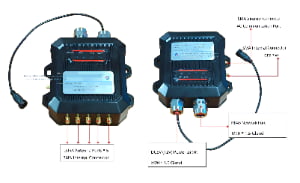
English-labeled diagram showing TXWG communication gateway ports including SMA, 4G, GPS, RJ45, LORA antenna ports, and power input.

TXWG Industrial Communication Gateway

A high-performance LPWAN-based industrial communication gateway designed for long-distance, low-power IoT communication. It supports LORA self-organizing networking, 4G cloud transmission, GPS time sync, multi-channel data forwarding, and explosion-proof applications.

View Product

Bill of Materials

Example BOM (based on the recommended architecture above)

ModelSummary
SN2 UWB PoE AnchorThe SN2 is an industrial‑grade UWB positioning anchor designed for high‑accuracy real‑time location systems. It supports Standard PoE or 12–24 V DC power, delivers sub‑meter performance (<30 cm LoS), and features an IP66 enclosure for harsh indoor/outdoor environments. Multiple mounting options (ceiling, wall, pole clamp) make deployment easy in factories, warehouses, and tunnels. Optional 4G/Wi‑Fi backhaul, AI video add‑on, and sound‑light alarm extend the anchor’s capability for safety and analytics. (Actual performance depends on anchor density, layout, and site RF conditions.)
SW UWB AnchorThe SW UWB Positioning Base Station is an industrial-grade device designed for sub-meter accuracy tracking of personnel, vehicles, and assets in factories, tunnels, and other complex environments.
WX UWB Wireless Positioning BeaconThe WX UWB Wireless Positioning Beacon is a battery-powered industrial-grade UWB device designed for wireless deployment without cable installation.
WZ UWB Asset Positioning TagThe WZ UWB Asset Positioning Tag is a high-precision industrial tracking device designed for vehicles, tools, pallets, and other assets. It features a built-in 1800mAh rechargeable battery, powerful magnetic mounting, IP67 protection, and UWB sub-meter (<30cm) positioning accuracy. With a wireless communication range of over 100 meters, smart sleep mode, beeping alerts, and low-battery alarm, the WZ tag enables reliable asset visibility and loss prevention across factories, logistics hubs, rail workshops, and heavy-equipment environments.
URTC Vehicle-Mounted Hybrid Positioning TerminalThe URTC Vehicle-Mounted Hybrid Positioning Terminal integrates RTK centimeter-level positioning, optional UWB <30 cm indoor positioning, and a GNSS full-constellation system, enabling high-precision positioning for industrial vehicles, engineering machinery, cranes, and fleet applications. With a separated-module design using coaxial cable connection, the URTC terminal achieves RTK accuracy of ±3 cm, supports 4G full-netcom communication, anti-collision functions, and performs reliably in harsh industrial environments with IP67 protection, wide temperature tolerance, and strong signal reception.
TXWG Industrial Communication GatewayA high-performance LPWAN-based industrial communication gateway designed for long-distance, low-power IoT communication. It supports LORA self-organizing networking, 4G cloud transmission, GPS time sync, multi-channel data forwarding, and explosion-proof applications.

Example Configuration

SN2 UWB PoE Anchor (Ceiling-mounted along main warehouse aisles, cross-aisles and dock doors to provide dense UWB coverage for pallets, cages and vehicles.)
Qty: 60
WX UWB Wireless Positioning Beacon (Battery-powered beacons used in mezzanines, temporary staging zones and outdoor loading areas where running Ethernet is difficult or expensive.)
Qty: 30
WZ UWB Asset Positioning Tag (Reusable tags mounted on high-value pallets, cages, dollies and mobile racks to enable pallet-level and carrier-level tracking across warehouse and yard.)
Qty: 600
BQ Vehicle-Mounted Positioning Terminal (Installed on forklifts and AGVs to provide precise position and heading information, supporting traffic monitoring, route analysis and optional collision-avoidance functions.)
Qty: 20
URTC Vehicle-Mounted Hybrid Positioning Terminal (Used on yard tractors or shuttle vehicles operating between warehouse and yard, combining GNSS and UWB for seamless indoor–yard localisation.)
Qty: 6
TXWG Industrial Communication Gateway (Collects data from wireless UWB beacons and external yard devices, forwarding it securely to the RTLS server where direct connectivity is not available.)
Qty: 3

Compliance & Regulations

Support for warehouse safety and traffic management policies

Traceability for high-value and controlled goods

Data to support continuous improvement and lean initiatives

🌍 Industries using this solution

Related Technical Resources

FAQs

Ready to Deploy?

Planning to introduce AGVs or struggling with missing pallets and cages in your warehouse? Share a layout and a short description of your flows, and our engineers will prepare a sample RTLS design and BOM tailored to your storage aisles, docks and yard.

Contact Sales
Procurement (Device & Data Layer)

Shortlisting devices? Get an RFQ-ready BOM path.

Move from product selection to an actionable RFQ: scope boundaries, terms, lead time, and deliverables.

Contact Sales

Ready to Deploy RTLS?

Share your site layout and accuracy needs--we'll suggest a practical setup.

Contact Us