Skip to content
Industrial UWB RTLS for Real-Time Visibility
Menu

Smart Construction Site Personnel RTLS (UWB Real-Time Location System)

Construction sites are some of the most dynamic and hazardous work environments. Crews move between floors, scaffolds, lift shafts, temporary offices and material yards. Subcontractors come and go on short notice. Heavy machinery, tower cranes, trucks and lifting operations share the same spaces with workers on foot. Site managers need a clear, real-time picture of who is on site, where they are and whether they are working in safe conditions.

The Smart Construction Site Personnel RTLS uses UWB real-time location technology to build a live digital view of the job site. Anchors are installed on key floors, stair cores, perimeter structures and yard lighting poles, while workers carry compact tags integrated into helmets, badges or wristbands. The system provides zone-level or room-level accuracy in building structures and detailed coverage in high-risk areas such as crane envelopes, hoists, edge protection zones and deep excavations.

Solution Details

Category
People RTLS & Safety
Industries
Construction
Environments
Yard Underground Outdoor
Implementation
complex

Overview

Construction sites are some of the most dynamic and hazardous work environments. Crews move between floors, scaffolds, lift shafts, temporary offices and material yards. Subcontractors come and go on short notice. Heavy machinery, tower cranes, trucks and lifting operations share the same spaces with workers on foot. Site managers need a clear, real-time picture of who is on site, where they are and whether they are working in safe conditions.

The Smart Construction Site Personnel RTLS uses UWB real-time location technology to build a live digital view of the job site. Anchors are installed on key floors, stair cores, perimeter structures and yard lighting poles, while workers carry compact tags integrated into helmets, badges or wristbands. The system provides zone-level or room-level accuracy in building structures and detailed coverage in high-risk areas such as crane envelopes, hoists, edge protection zones and deep excavations.

On top of this, the RTLS platform supports practical safety and management workflows: automatic headcounts, electronic geofences for danger zones, lone-worker alerts, evacuation mustering and traceable records of who entered which area and when. Over the life of the project, location history helps analyse unsafe patterns, optimise access routes and document compliance for owners, general contractors and regulators.
Pain Points

No reliable real-time headcount on a changing job site

With multiple subcontractors, day hires and visitors, it is difficult to know exactly who is on site at any moment. Traditional gate logs or badge swipes only show who entered the site, not who is still working at height, in basements or in remote areas.

High-risk areas are hard to supervise continuously

Elevator shafts, leading edges, crane working zones, deep excavations and confined spaces require strict controls. Relying solely on manual spot checks and paper permits makes it difficult to detect unauthorised presence or over-stay in these areas.

Slow and chaotic evacuation drills and incident response

When a fire alarm, structural concern or gas incident occurs, supervisors must quickly confirm whether everyone has left the building or excavation. Manual roll calls and phone calls between foremen slow down decisions and can leave people unaccounted for.

Limited data for safety improvement and claims handling

After an incident or near-miss, it is hard to reconstruct who was working nearby, how long they were exposed and whether procedures were followed. This makes it difficult to improve safety plans, answer owner questions or support legitimate claims.

System Architectures & Topology

Building-Centric UWB RTLS for Multi-Level Construction Sites

Architecture ID: site_building_uwb

Yard Outdoor
  • UWB anchors are installed on structural elements such as columns, stair cores and perimeter beams on active floors, with additional anchors around high-risk zones like lift shafts and edges. Basements and service areas receive anchors where workers spend significant time. All wired anchors are connected via PoE switches and temporary riser cables back to a site office or container hosting the RTLS server. Workers carry helmet tags, badges or wristbands that communicate with nearby anchors. The system provides floor-level and zone-level visibility, enabling headcounts, hazard zone monitoring and rapid evacuation checks.

Key Advantages

  • Designed for multi-level building projects with frequent layout changes
  • Provides clear floor-level headcounts and visibility of people in risky structural areas
  • Uses on-site network only, independent from public mobile networks
  • Forms a strong base for adding equipment tracking or crane-related safety functions in later phases

Limitations / When Not To Use

  • Requires basic cabling and mounting work on structures, which must be planned around construction activities
  • Best suited for medium to large projects; for very small sites a simpler layout may be sufficient
  • Coverage must be periodically adjusted as floors open and walls/finishes are installed

Notes: Recommended as the default architecture for high-rise buildings and complex structures where visibility across floors and high-risk zones is critical.

Architecture Components / Layers

Sensing layer – Helmet tags, badges and wristbands

Workers and supervisors use tags integrated with safety helmets, badges or wristbands. Helmet tags are ideal for trades that must always wear head protection, while badges work well for engineers and visitors. Devices support SOS and can be configured with appropriate refresh rates.

Indoor anchor layer – Structural mounting points

SN2 and SW anchors are mounted on structural elements on each active floor, covering work areas, stair cores and main circulation routes. Extra anchors are used around cores and high-risk rooms to improve accuracy and robustness.

Perimeter and excavation layer – Edge and pit coverage

STD dual-channel anchors are placed along deep excavations and leading edges to track presence close to drop hazards and in access ramps. They provide linear coverage where long, narrow zones need monitoring.

Network & server layer – Site network and RTLS platform

Anchors connect to temporary PoE switches and riser cables back to the site office. The RTLS server runs on a ruggedised on-site appliance or virtual machine, accessible via secure web dashboards for site management and safety teams.

Hybrid UWB/GPS RTLS for Large and Civil Construction Sites

Architecture ID: site_civil_hybrid

Yard Outdoor
  • For large, open construction sites such as infrastructure projects, industrial plants or large campus developments, the RTLS combines fixed UWB anchors in key zones with wireless beacons and optional GPS-enabled badges. UWB anchors and beacons cover high-risk and high-activity areas such as excavation zones, laydown yards, bridge decks and plant rooms, while GPS provides coarse positioning for workers moving over wide open areas between these zones. Data from anchors, beacons and GPS badges is unified in the same RTLS platform, providing a continuous view of personnel across the entire project area.

Key Advantages

  • Suitable for large horizontal or mixed building + civil projects
  • Combines precise control in high-risk zones with broader awareness across the whole site
  • Wireless beacons and GPS reduce the need for extensive cabling over large areas
  • Highly flexible as work fronts move and the site layout evolves

Limitations / When Not To Use

  • Design and configuration are more complex than a purely building-centric UWB layout
  • GPS accuracy is lower than UWB and can be affected by obstructions in some areas
  • Battery-powered devices (beacons and some tags) require planned maintenance

Notes: Recommended for large-scale construction and infrastructure projects where personnel work across wide, changing outdoor areas in addition to concentrated high-risk zones.

Architecture Components / Layers

Hybrid tag layer – UWB/GPS badges and wristbands

Workers and supervisors carry tags capable of UWB and, where needed, GPS. UWB is used for precise zone detection near anchors or beacons, while GPS provides approximate positions when workers move across uninstrumented open ground.

Fixed UWB anchor layer – High-risk and high-activity zones

Anchors such as SN2, SW and STD units are installed in and around excavations, bridge works, precast yards, plant rooms and other areas where detailed zone-level control is required.

Wireless beacon layer – Temporary and remote work fronts

WX wireless beacons are deployed at temporary work fronts, remote laydown areas or along linear work sections, such as road or pipeline segments. They provide localised UWB coverage without requiring permanent cabling and can be moved as work progresses.

Gateway & RTLS server layer

Gateways and routers carry data from wireless beacons and GPS-enabled badges back to the RTLS server, which aggregates all signals into one map. Site managers use this view to monitor presence in critical zones and overall distribution of personnel.

Workflow

This workflow applies to all architecture options above. Specific hardware selection varies depending on the chosen architecture.

1

Site survey and risk zoning

Walk the site with the general contractor, HSE and key subcontractors. Review site layout, planned building phases, access routes, crane positions, storage yards and temporary offices. Identify high-risk areas such as leading edges, hoists, shafts, deep excavations, crane swing areas and utility corridors. Decide which zones require full RTLS coverage from the start and which can be added later as the project progresses.

Estimated time: 3–7 days depending on project complexity
2

UWB anchor and beacon deployment

Install UWB anchors on structural elements such as columns, stair cores, perimeter beams and tower crane masts. On multi-storey buildings, typically each active floor receives anchors to cover working areas and circulation routes. In material yards and laydown areas, mount outdoor anchors or wireless beacons on lighting poles or site cabins. Connect wired anchors via PoE switches and temporary fibre or wireless bridges back to the site office or data container.

Estimated time: 1–3 weeks for initial phases, with incremental additions
3

Tag assignment to workers, supervisors and visitors

Issue helmet-mounted tags, wristbands or badge tags to all workers, foremen, engineers and authorised visitors. Map each tag ID to a person, company and trade (for example concrete, steel, MEP, facade, finishing). Define tag types for permanent staff, subcontractors and visitors, and configure which groups are included in headcount and safety statistics.

Estimated time: 1–2 weeks including registration and orientation
4

Safety rules, e-fences and reporting

Configure electronic geofences around high-risk zones identified in the risk assessment. Set up rules for unauthorised entry, maximum dwell time, no-movement (man-down) and must-wear PPE areas if combined with helmet tags. Configure dashboards for live headcount by zone, trade and subcontractor, and set up daily and weekly reports for safety meetings and toolbox talks.

Estimated time: 1–2 weeks including pilot testing
5

Pilot, training and phased extension as construction progresses

Start with a pilot area, for example one core and a few floors or a single excavation zone and yard. Validate positioning quality, alarm behaviour and usability for site managers. Train supervisors and safety officers on using RTLS views during daily briefings and emergency drills. As the building grows or the site layout changes, extend and relocate anchors and beacons to follow the active work areas, updating zoning and rules accordingly.

Estimated time: Throughout the construction lifecycle, with initial pilot over 4–8 weeks

Key Outcomes

-40–60% reduction
Time to confirm site headcount during alarms
Digital muster lists and live zone views reduce the time needed to confirm whether everyone has left the affected areas.
+70–90% events detected
Detected entries into high-risk zones without approval
Electronic geofences detect presence in leading edges, crane zones and restricted areas that would otherwise rely on occasional patrols.
-60–80% reduction
Manual effort for attendance and site access logs
Automatic records of who was on site and in each main zone reduce paper logs and manual reconciliations.
-30–50% reduction
Time spent investigating incidents and near-misses
Location history and time-in-zone data provide a clear timeline, shortening investigations and allowing more focus on corrective actions.

Recommended Products

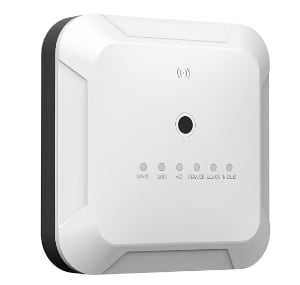
Side view of UWB base station with status indicators.

SN2 UWB PoE Anchor

The SN2 is an industrial‑grade UWB positioning anchor designed for high‑accuracy real‑time location systems. It supports Standard PoE or 12–24 V DC power, delivers sub‑meter performance (<30 cm LoS), and features an IP66 enclosure for harsh indoor/outdoor environments. Multiple mounting options (ceiling, wall, pole clamp) make deployment easy in factories, warehouses, and tunnels. Optional 4G/Wi‑Fi backhaul, AI video add‑on, and sound‑light alarm extend the anchor’s capability for safety and analytics. (Actual performance depends on anchor density, layout, and site RF conditions.)

View Product
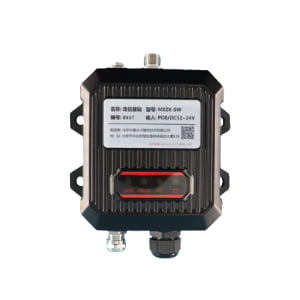
A black SW UWB Anchor device with labeled ports and a sticker showing specs, featuring indicator lights for LWB, GNSS, and 4G.

SW UWB Anchor

The SW UWB Positioning Base Station is an industrial-grade device designed for sub-meter accuracy tracking of personnel, vehicles, and assets in factories, tunnels, and other complex environments.

View Product
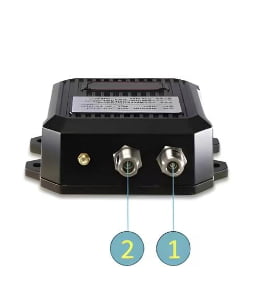
A black STD Dual channel base station with two ports on the front, each labeled with blue circles containing numbers 1 and 2.

STD UWB Dual Channel Base Station

The STD UWB Dual-Channel Base Station is an industrial-grade positioning device designed for tunnel, mining, and underground environments.

View Product
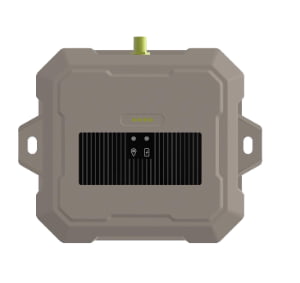
Gray rectangular electronic device with a black panel, LED indicators, and two side mounting flanges; a yellow cable extends from the top—designed as a WX UWB Beacon for advanced positioning applications.

WX UWB Wireless Positioning Beacon

The WX UWB Wireless Positioning Beacon is a battery-powered industrial-grade UWB device designed for wireless deployment without cable installation.

View Product
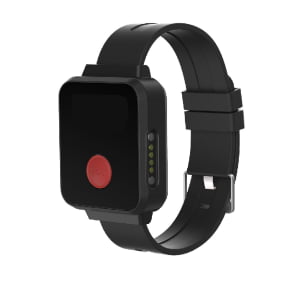
A black smartwatch with a rectangular face, black band, and a prominent red SOS button on the front.

SH UWB Positioning Wristband Tag

The SH UWB Positioning Wristband Tag is a high-precision wearable device designed for real-time personnel tracking and safety monitoring in industrial environments such as factories, construction sites, and tunnels.

View Product
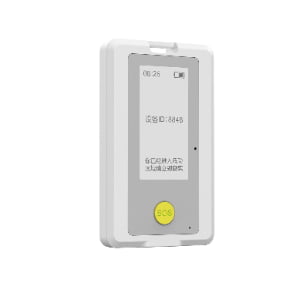
A rectangular white device with a screen displaying Chinese text, a time reading 08:26, an ID number, and a yellow SOS button below the display.

GP UWB Positioning Employee Card

The GP UWB Positioning Employee Card is a compact, intelligent badge-style positioning device designed for industrial personnel management and safety monitoring. Built on UWB (Ultra-Wideband) technology, it achieves 10–30 cm accuracy, supports real-time location tracking, and enables instant SOS alerts via a one-touch button. The device includes vibration reminders, motion/static detection, and optional NFC/RFID, E-ink display, and LoRa communication modules. With an IP66-rated enclosure and 900 mAh rechargeable battery, it operates continuously in demanding environments such as factories, construction sites, logistics parks, and tunnels.

View Product
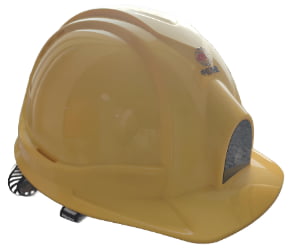
A yellow construction hard hat with a small transparent window on the front and an adjustable strap at the back.

AQM Hybrid Positioning Safety Helmet

The AQM Hybrid Positioning Safety Helmet is an industrial-grade smart helmet integrating UWB high-precision positioning, RTK centimeter-level positioning, GPS outdoor positioning, and 4G full-network communication. Designed for worker safety and real-time visibility, it features SOS emergency alerts, TTS voice, motion/static detection, low-battery warnings, and optional NFC / LoRa / 5G communication. With an IP56 rugged rating and a built-in 3000mAh rechargeable battery, the AQM helmet is ideal for construction sites, tunnels, factories, mining, ports, and hazardous environments requiring precise personnel tracking and safety protection.

View Product
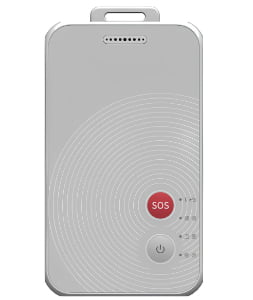
A white emergency alert device with a large red SOS button, a power button, indicator lights, and a speaker grille at the top.

UBK UWB + GPS Hybrid Positioning Badge

The UBK UWB + GPS Hybrid Positioning Badge is a rugged industrial-grade personnel tracking card designed for high-precision positioning in factories, warehouses, tunnels, and other demanding environments. It integrates UWB centimeter-level positioning with GPS outdoor positioning, features SOS emergency button, motion detection, TTS voice broadcast, 4G cellular communication, and optional NFC functionality. Equipped with a 3000mAh rechargeable battery and an IP66 protection rating, the UBK badge ensures reliable real-time personnel visibility and safety monitoring both indoors and outdoors.

View Product
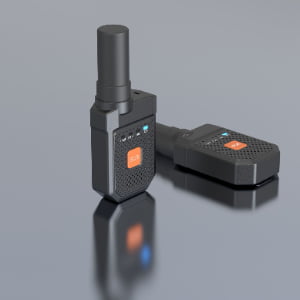
Two black handheld communication devices with visible SOS buttons and indicator lights are placed on a reflective gray surface.

URT Hybrid Positioning Terminal

The URT Hybrid Positioning Terminal is an industrial-grade wearable tracking device that integrates UWB high-precision positioning, RTK centimeter-level positioning, GPS outdoor positioning, and 4G wireless communication. It provides real-time personnel tracking, SOS emergency alerts, TTS voice broadcasting, motion detection, and optional NFC/Lora/5G expansion. With an IP66 rugged design and a 3000mAh magnetic-charging battery, the URT terminal is ideal for complex industrial environments such as factories, tunnels, construction sites, rail transit, and energy facilities.

View Product

Bill of Materials

Example BOM (based on the recommended architecture above)

ModelSummary
SN2 UWB PoE AnchorThe SN2 is an industrial‑grade UWB positioning anchor designed for high‑accuracy real‑time location systems. It supports Standard PoE or 12–24 V DC power, delivers sub‑meter performance (<30 cm LoS), and features an IP66 enclosure for harsh indoor/outdoor environments. Multiple mounting options (ceiling, wall, pole clamp) make deployment easy in factories, warehouses, and tunnels. Optional 4G/Wi‑Fi backhaul, AI video add‑on, and sound‑light alarm extend the anchor’s capability for safety and analytics. (Actual performance depends on anchor density, layout, and site RF conditions.)
SW UWB AnchorThe SW UWB Positioning Base Station is an industrial-grade device designed for sub-meter accuracy tracking of personnel, vehicles, and assets in factories, tunnels, and other complex environments.
STD UWB Dual Channel Base StationThe STD UWB Dual-Channel Base Station is an industrial-grade positioning device designed for tunnel, mining, and underground environments.
WX UWB Wireless Positioning BeaconThe WX UWB Wireless Positioning Beacon is a battery-powered industrial-grade UWB device designed for wireless deployment without cable installation.
SH UWB Positioning Wristband TagThe SH UWB Positioning Wristband Tag is a high-precision wearable device designed for real-time personnel tracking and safety monitoring in industrial environments such as factories, construction sites, and tunnels.
GP UWB Positioning Employee CardThe GP UWB Positioning Employee Card is a compact, intelligent badge-style positioning device designed for industrial personnel management and safety monitoring. Built on UWB (Ultra-Wideband) technology, it achieves 10–30 cm accuracy, supports real-time location tracking, and enables instant SOS alerts via a one-touch button. The device includes vibration reminders, motion/static detection, and optional NFC/RFID, E-ink display, and LoRa communication modules. With an IP66-rated enclosure and 900 mAh rechargeable battery, it operates continuously in demanding environments such as factories, construction sites, logistics parks, and tunnels.
AQM Hybrid Positioning Safety HelmetThe AQM Hybrid Positioning Safety Helmet is an industrial-grade smart helmet integrating UWB high-precision positioning, RTK centimeter-level positioning, GPS outdoor positioning, and 4G full-network communication. Designed for worker safety and real-time visibility, it features SOS emergency alerts, TTS voice, motion/static detection, low-battery warnings, and optional NFC / LoRa / 5G communication. With an IP56 rugged rating and a built-in 3000mAh rechargeable battery, the AQM helmet is ideal for construction sites, tunnels, factories, mining, ports, and hazardous environments requiring precise personnel tracking and safety protection.
UBK UWB + GPS Hybrid Positioning BadgeThe UBK UWB + GPS Hybrid Positioning Badge is a rugged industrial-grade personnel tracking card designed for high-precision positioning in factories, warehouses, tunnels, and other demanding environments. It integrates UWB centimeter-level positioning with GPS outdoor positioning, features SOS emergency button, motion detection, TTS voice broadcast, 4G cellular communication, and optional NFC functionality. Equipped with a 3000mAh rechargeable battery and an IP66 protection rating, the UBK badge ensures reliable real-time personnel visibility and safety monitoring both indoors and outdoors.
URT Hybrid Positioning TerminalThe URT Hybrid Positioning Terminal is an industrial-grade wearable tracking device that integrates UWB high-precision positioning, RTK centimeter-level positioning, GPS outdoor positioning, and 4G wireless communication. It provides real-time personnel tracking, SOS emergency alerts, TTS voice broadcasting, motion detection, and optional NFC/Lora/5G expansion. With an IP66 rugged design and a 3000mAh magnetic-charging battery, the URT terminal is ideal for complex industrial environments such as factories, tunnels, construction sites, rail transit, and energy facilities.

Example Configuration

SN2 UWB PoE Anchor (Installed on selected floors, stair cores and circulation routes to cover main indoor working areas and access paths.)
Qty: 60
SW UWB Anchor (Mounted at exposed locations (e.g. open floors, temporary shelters, site offices) and around crane masts or major access points where robust housing is required.)
Qty: 24
STD UWB Dual Channel Base Station (Installed along deep excavations, perimeter edges or long corridors/ramps to provide linear coverage for personnel in these zones.)
Qty: 12
WX UWB Wireless Positioning Beacon (Used in remote laydown areas, temporary storage zones and satellite work fronts where cabling is difficult or layouts frequently change.)
Qty: 16
SH UWB Positioning Wristband Tag (Assigned to workers from all major trades (concrete, steel, formwork, MEP, finishing etc.).)
Qty: 400
GP UWB Positioning Employee Card (For supervisors, engineers, HSE officers, surveyors and key visitors who need to be included in headcount and safety monitoring.)
Qty: 80

Compliance & Regulations

Support for construction site safety and access control policies

Audit trail for incidents, near-misses and toolbox talks

Privacy and subcontractor data separation

🌍 Industries using this solution

FAQs

Ready to Deploy?

Managing safety and headcount on a complex construction site? Share your site layout, phasing plan and key risk areas, and our engineers will propose a practical RTLS design, architecture options and example BOM tailored to your project.

Contact Sales
Procurement (Device & Data Layer)

Shortlisting devices? Get an RFQ-ready BOM path.

Move from product selection to an actionable RFQ: scope boundaries, terms, lead time, and deliverables.

Contact Sales

Ready to Deploy RTLS?

Share your site layout and accuracy needs--we'll suggest a practical setup.

Contact Us