Skip to content
Industrial UWB RTLS for Real-Time Visibility
Menu

Power Plant Personnel Real-Time Location System (RTLS)

Power plants are high-risk industrial environments. Operators, maintenance teams and contractors work around high-voltage equipment, rotating machinery, boilers, chemical treatment plants and confined spaces. A single mistake in the wrong area can have serious consequences, so knowing who is on site, where they are and how long they have stayed in hazardous zones is critical.

The Power Plant Personnel RTLS uses UWB positioning to provide real-time visibility of workers across the plant. Anchors are installed in control buildings, turbine halls, boiler houses, cable tunnels, switchyards and tank areas, while staff wear compact UWB tags integrated into badges, wristbands or safety helmets. The system continuously tracks positions indoors and in key outdoor areas, enabling precise geofencing of danger zones, digital inspection tracking and fast emergency mustering.

Solution Details

Category
People RTLS & Safety
Industries
Industrial Maintenance & Utilities
Environments
Factory Tunnel Yard Underground Outdoor
Implementation
complex

Overview

Power plants are high-risk industrial environments. Operators, maintenance teams and contractors work around high-voltage equipment, rotating machinery, boilers, chemical treatment plants and confined spaces. A single mistake in the wrong area can have serious consequences, so knowing who is on site, where they are and how long they have stayed in hazardous zones is critical.

The Power Plant Personnel RTLS uses UWB positioning to provide real-time visibility of workers across the plant. Anchors are installed in control buildings, turbine halls, boiler houses, cable tunnels, switchyards and tank areas, while staff wear compact UWB tags integrated into badges, wristbands or safety helmets. The system continuously tracks positions indoors and in key outdoor areas, enabling precise geofencing of danger zones, digital inspection tracking and fast emergency mustering.

RTLS does not replace DCS, SCADA or access control—it adds a live personnel layer on top. Location data feeds into safety workflows such as lone-worker protection, hazardous zone entry control, evacuation management and post-incident analysis. The platform is typically deployed on the plant intranet and designed to operate 24/7 without relying on external networks, in line with power plant confidentiality and cybersecurity requirements.
Pain Points

Limited real-time visibility of staff and contractors across the plant

Power plants cover large, complex areas: turbine halls, boiler units, electrical rooms, cable tunnels, chemical treatment areas, cooling infrastructure and outdoor switchyards. Control rooms often know who is on shift, but not exactly where workers and contractors are at any given moment, especially during outages or major maintenance.

Hazardous zones are hard to monitor continuously

High-voltage rooms, rotating machinery areas, confined spaces, chemical dosing rooms and tank farms all require strict access control. Conventional badge readers and manual permits cannot show in real time who is still inside a danger zone or whether someone has stayed longer than allowed.

Slow and uncertain emergency headcounts**

In the event of a fire, gas leak, arc flash, turbine issue or external threat, safety teams must quickly confirm who is still inside affected units and cable tunnels and who has reached muster points. Manual roll calls and radio check-ins are slow and may overlook contractors or visitors working away from main buildings.

Insufficient evidence for inspections, audits and learning

Inspection routes, time spent near critical assets and exposure to hazardous zones are often documented on paper or in basic systems. When incidents or near-misses occur, it is difficult to reconstruct who was present, how long they stayed in a particular area and whether inspection routes were completed as planned.

System Architectures & Topology

Wired UWB RTLS for Main Power Plant Buildings and Units

Architecture ID: power_plant_core_uwb

Factory Indoor
  • Indoor UWB anchors are installed throughout the main plant buildings: control rooms, turbine halls, boiler houses, electrical rooms and key corridors. Outdoor anchors and dual-channel base stations cover adjacent process areas and near-field yards. All anchors are powered via PoE switches and connected over the plant intranet to an on-prem RTLS server. Workers carry badge, wristband or helmet tags, enabling continuous real-time tracking across the core production units without relying on external networks.

Key Advantages

  • High accuracy and reliability in main production buildings and adjacent process areas
  • All data kept inside the plant intranet, with no dependency on public networks
  • Strong foundation for safety-critical use cases such as hazard zone control and emergency mustering
  • Supports high tag density during outages and large maintenance campaigns

Limitations / When Not To Use

  • Does not by itself cover remote switchyards, distant pump houses or wide auxiliary areas
  • Requires cabling and power for anchors, which must be coordinated with plant engineering and maintenance

Notes: Recommended as the default architecture for conventional and nuclear power plant main units where high availability and strict network segregation are required.

Architecture Components / Layers

Sensing layer – Personnel tags

Operators, maintenance staff, inspection teams and contractors wear UWB-enabled badges, wristbands or helmet tags. Devices provide location, SOS and motion data that is used for hazard zone monitoring, mustering and inspection tracking.

Indoor anchor layer – Control buildings and main halls

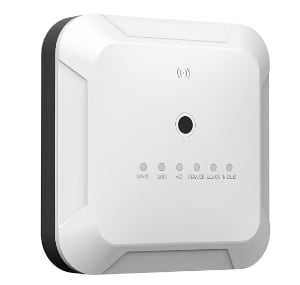
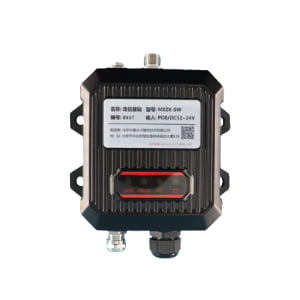
SN2 and SW anchors are installed in control buildings, turbine halls, boiler houses and plant corridors. They provide sub-metre accuracy for tracking personnel in and around critical equipment and control areas.

Network & intranet layer

Anchors connect to industrial PoE switches and aggregation points on the plant intranet. RTLS traffic is isolated via VLANs or dedicated network segments to comply with plant cybersecurity practices.

RTLS server & safety application layer

The on-prem RTLS server hosts the location engine, zone logic, alarms and dashboards. It integrates with safety systems, radios or messaging tools, giving control rooms and HSE teams a live view of personnel distribution and alarm status.

Hybrid UWB RTLS for Switchyards, Tank Farms and Remote Plant Areas

Architecture ID: power_plant_hybrid_yard

Yard Outdoor
  • The hybrid architecture extends the core wired RTLS into remote outdoor and auxiliary areas. Dual-channel UWB base stations are installed along switchyards and long access routes. Battery-powered wireless beacons are deployed in difficult-to-cable locations such as remote pump houses, cooling areas and far-end cable tunnels. Where necessary, hybrid UWB/GPS badges provide coarse positioning in wide open yards and precise UWB positioning near anchors and beacons. Data from beacons and hybrid badges is sent via industrial gateways and routers to the same on-prem RTLS server used by the main plant.

Key Advantages

  • Extends personnel visibility beyond main units into switchyards, tank farms, cooling and auxiliary facilities
  • Reduces the need for extensive cabling in remote or difficult-to-reach locations
  • Uses the same RTLS platform and tag family as the core plant, simplifying operations and maintenance
  • Well-suited to phased roll-outs, starting with core units and expanding outward as required

Limitations / When Not To Use

  • Depends on reliable backhaul paths from gateways to the RTLS server
  • Battery-powered devices and GPS-enabled tags require planned maintenance and power management
  • Ultra-high availability or regulatory constraints in some critical areas may still favour fully wired solutions

Notes: Recommended as a complement to the wired core plant architecture where personnel regularly work in extended switchyards, tank areas and remote auxiliary facilities.

Architecture Components / Layers

Hybrid tag layer – UWB/GPS badges and wristbands

Hybrid badges and wristbands provide UWB positioning near anchors and beacons and GPS-based coarse positions across wide yards and access roads, ensuring continuity of awareness for roaming staff such as patrols and field maintenance.

Outdoor anchor and base station layer

STD and SW anchors are installed on structures in switchyards, tank farms and long corridors to provide robust outdoor coverage in key hazard zones and along main walkways.

Wireless beacon layer – Remote and temporary areas

WX/XB wireless beacons are deployed at remote pump houses, cooling towers, cable tunnel ends and other auxiliary sites where laying cables is impractical. They create localised UWB coverage cells and can be moved or redeployed as plant layouts evolve.

Gateway & RTLS server layer

Industrial gateways and routers connect wireless beacons and hybrid badge traffic back to the RTLS server over the plant network, radio links or dedicated connections. The server fuses data from all sources into one map so plant managers can see personnel across main units and remote areas in one place.

Workflow

This workflow applies to all architecture options above. Specific hardware selection varies depending on the chosen architecture.

1

Plant survey and risk zoning

Work with operations, maintenance and HSE teams to map units, buildings and outdoor areas: turbine halls, boiler houses, control rooms, cable tunnels, MCC rooms, chemical treatment areas, tank farms, cooling towers and switchyards. Identify high-risk zones such as high-voltage rooms, rotating equipment areas, confined spaces and chemical handling zones. Define where continuous RTLS coverage is required and which areas only need entry/exit monitoring.

Estimated time: 1–2 weeks depending on plant size and complexity
2

UWB anchor and network deployment

Install indoor UWB anchors in control buildings, turbine and boiler areas, key corridors and electrical rooms. Deploy robust outdoor anchors or dual-channel base stations in switchyards, tank farms, coal yards and cooling areas. In remote or difficult-to-cable spots such as long cable tunnels or remote pump houses, use wireless UWB beacons powered by batteries. Connect wired anchors through PoE switches and the plant intranet to the on-prem RTLS server, and validate coverage with commissioning walks in critical zones.

Estimated time: 3–6 weeks including commissioning
3

Tag assignment to staff, contractors and visitors

Issue badge-style or wristband UWB tags to operators, maintenance technicians, inspection teams and regular contractors. Use helmet-mounted tags in areas where head protection is mandatory. Map each tag ID to person, department, company and role (for example operations, I&C, electrical, mechanical, cleaning, security). Define profiles for permanent staff, outage teams and visitors, including whether they are included in muster lists and which zones they may enter.

Estimated time: 1–3 weeks including registration and briefings
4

Safety rules, electronic fences and integration

Configure electronic geofences for high-voltage rooms, rotating equipment areas, chemical plants, tank bunds and restricted cable tunnels. Define rules for unauthorised entry, over-stay in danger zones, lone-worker protection and no-movement alarms. Link RTLS with existing alarm servers, radios or messaging systems so that location-enriched alerts reach control rooms and emergency response teams quickly. Where appropriate, integrate inspection workflows so that route completion and dwell times around critical assets are visible.

Estimated time: 2–4 weeks including testing and integration
5

Pilot, optimisation and full 24/7 operation

Start with a pilot in one unit or area—for example, a turbine hall plus associated switchgear and control rooms. Validate positioning, test alarms under normal operation and simulate emergency mustering. Gather feedback from supervisors, operators and maintenance teams, then refine zones, anchor positions and tag settings. Once accepted, extend coverage to additional units, outdoor systems and common areas, and embed RTLS dashboards into daily shift meetings and safety reviews.

Estimated time: 4–8 weeks from pilot to full roll-out

Key Outcomes

-40–60% reduction
Emergency muster and headcount time
Digital muster lists and real-time maps shorten the time needed to confirm who is still inside affected plant zones and who has reached assembly points.
+80–95% events captured
Detected unauthorised or prolonged presence in hazard zones
Geofencing and dwell-time rules reveal more safety breaches around high-voltage, rotating and chemical areas than manual patrols alone.
-60–80% reduction
Manual effort for attendance and inspection logging
Automatic personnel and route histories reduce paperwork for shift logs, contractor attendance and inspection reports.
-30–50% reduction
Time to reconstruct incidents or near-misses
Location and time-in-zone history provide a clear timeline for investigations and safety committee reviews.

Recommended Products

Side view of UWB base station with status indicators.

SN2 UWB PoE Anchor

The SN2 is an industrial‑grade UWB positioning anchor designed for high‑accuracy real‑time location systems. It supports Standard PoE or 12–24 V DC power, delivers sub‑meter performance (<30 cm LoS), and features an IP66 enclosure for harsh indoor/outdoor environments. Multiple mounting options (ceiling, wall, pole clamp) make deployment easy in factories, warehouses, and tunnels. Optional 4G/Wi‑Fi backhaul, AI video add‑on, and sound‑light alarm extend the anchor’s capability for safety and analytics. (Actual performance depends on anchor density, layout, and site RF conditions.)

View Product
A black SW UWB Anchor device with labeled ports and a sticker showing specs, featuring indicator lights for LWB, GNSS, and 4G.

SW UWB Anchor

The SW UWB Positioning Base Station is an industrial-grade device designed for sub-meter accuracy tracking of personnel, vehicles, and assets in factories, tunnels, and other complex environments.

View Product
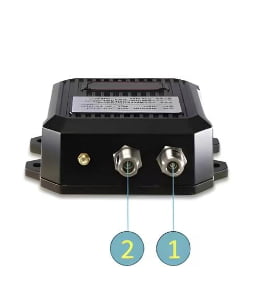
A black STD Dual channel base station with two ports on the front, each labeled with blue circles containing numbers 1 and 2.

STD UWB Dual Channel Base Station

The STD UWB Dual-Channel Base Station is an industrial-grade positioning device designed for tunnel, mining, and underground environments.

View Product
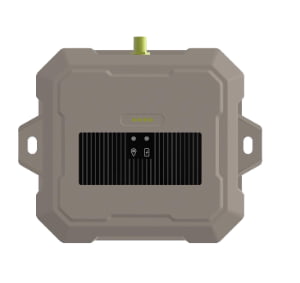
Gray rectangular electronic device with a black panel, LED indicators, and two side mounting flanges; a yellow cable extends from the top—designed as a WX UWB Beacon for advanced positioning applications.

WX UWB Wireless Positioning Beacon

The WX UWB Wireless Positioning Beacon is a battery-powered industrial-grade UWB device designed for wireless deployment without cable installation.

View Product
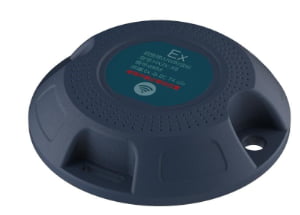
A dark gray, dome-shaped electronic device with a circular label featuring Chinese text and a Wi-Fi signal icon on the top surface.

XB UWB Wireless Positioning Beacon

The XB UWB Wireless Positioning Beacon is a compact, fully wireless, and battery-powered UWB device designed for high-precision positioning without cable deployment.

View Product
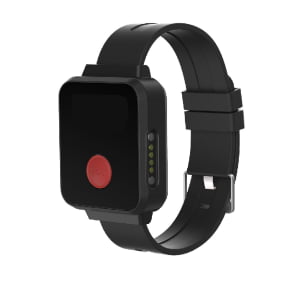
A black smartwatch with a rectangular face, black band, and a prominent red SOS button on the front.

SH UWB Positioning Wristband Tag

The SH UWB Positioning Wristband Tag is a high-precision wearable device designed for real-time personnel tracking and safety monitoring in industrial environments such as factories, construction sites, and tunnels.

View Product
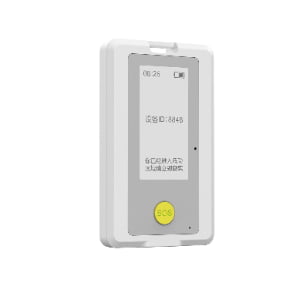
A rectangular white device with a screen displaying Chinese text, a time reading 08:26, an ID number, and a yellow SOS button below the display.

GP UWB Positioning Employee Card

The GP UWB Positioning Employee Card is a compact, intelligent badge-style positioning device designed for industrial personnel management and safety monitoring. Built on UWB (Ultra-Wideband) technology, it achieves 10–30 cm accuracy, supports real-time location tracking, and enables instant SOS alerts via a one-touch button. The device includes vibration reminders, motion/static detection, and optional NFC/RFID, E-ink display, and LoRa communication modules. With an IP66-rated enclosure and 900 mAh rechargeable battery, it operates continuously in demanding environments such as factories, construction sites, logistics parks, and tunnels.

View Product
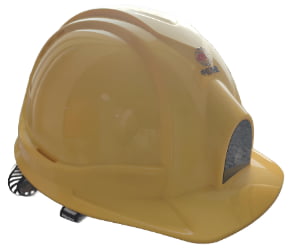
A yellow construction hard hat with a small transparent window on the front and an adjustable strap at the back.

AQM Hybrid Positioning Safety Helmet

The AQM Hybrid Positioning Safety Helmet is an industrial-grade smart helmet integrating UWB high-precision positioning, RTK centimeter-level positioning, GPS outdoor positioning, and 4G full-network communication. Designed for worker safety and real-time visibility, it features SOS emergency alerts, TTS voice, motion/static detection, low-battery warnings, and optional NFC / LoRa / 5G communication. With an IP56 rugged rating and a built-in 3000mAh rechargeable battery, the AQM helmet is ideal for construction sites, tunnels, factories, mining, ports, and hazardous environments requiring precise personnel tracking and safety protection.

View Product
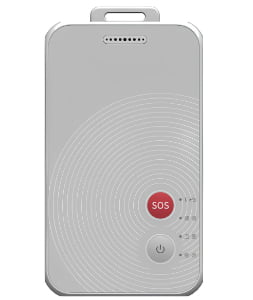
A white emergency alert device with a large red SOS button, a power button, indicator lights, and a speaker grille at the top.

UBK UWB + GPS Hybrid Positioning Badge

The UBK UWB + GPS Hybrid Positioning Badge is a rugged industrial-grade personnel tracking card designed for high-precision positioning in factories, warehouses, tunnels, and other demanding environments. It integrates UWB centimeter-level positioning with GPS outdoor positioning, features SOS emergency button, motion detection, TTS voice broadcast, 4G cellular communication, and optional NFC functionality. Equipped with a 3000mAh rechargeable battery and an IP66 protection rating, the UBK badge ensures reliable real-time personnel visibility and safety monitoring both indoors and outdoors.

View Product
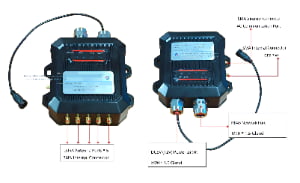
English-labeled diagram showing TXWG communication gateway ports including SMA, 4G, GPS, RJ45, LORA antenna ports, and power input.

TXWG Industrial Communication Gateway

A high-performance LPWAN-based industrial communication gateway designed for long-distance, low-power IoT communication. It supports LORA self-organizing networking, 4G cloud transmission, GPS time sync, multi-channel data forwarding, and explosion-proof applications.

View Product

Bill of Materials

Example BOM (based on the recommended architecture above)

ModelSummary
SN2 UWB PoE AnchorThe SN2 is an industrial‑grade UWB positioning anchor designed for high‑accuracy real‑time location systems. It supports Standard PoE or 12–24 V DC power, delivers sub‑meter performance (<30 cm LoS), and features an IP66 enclosure for harsh indoor/outdoor environments. Multiple mounting options (ceiling, wall, pole clamp) make deployment easy in factories, warehouses, and tunnels. Optional 4G/Wi‑Fi backhaul, AI video add‑on, and sound‑light alarm extend the anchor’s capability for safety and analytics. (Actual performance depends on anchor density, layout, and site RF conditions.)
SW UWB AnchorThe SW UWB Positioning Base Station is an industrial-grade device designed for sub-meter accuracy tracking of personnel, vehicles, and assets in factories, tunnels, and other complex environments.
STD UWB Dual Channel Base StationThe STD UWB Dual-Channel Base Station is an industrial-grade positioning device designed for tunnel, mining, and underground environments.
WX UWB Wireless Positioning BeaconThe WX UWB Wireless Positioning Beacon is a battery-powered industrial-grade UWB device designed for wireless deployment without cable installation.
XB UWB Wireless Positioning BeaconThe XB UWB Wireless Positioning Beacon is a compact, fully wireless, and battery-powered UWB device designed for high-precision positioning without cable deployment.
SH UWB Positioning Wristband TagThe SH UWB Positioning Wristband Tag is a high-precision wearable device designed for real-time personnel tracking and safety monitoring in industrial environments such as factories, construction sites, and tunnels.
GP UWB Positioning Employee CardThe GP UWB Positioning Employee Card is a compact, intelligent badge-style positioning device designed for industrial personnel management and safety monitoring. Built on UWB (Ultra-Wideband) technology, it achieves 10–30 cm accuracy, supports real-time location tracking, and enables instant SOS alerts via a one-touch button. The device includes vibration reminders, motion/static detection, and optional NFC/RFID, E-ink display, and LoRa communication modules. With an IP66-rated enclosure and 900 mAh rechargeable battery, it operates continuously in demanding environments such as factories, construction sites, logistics parks, and tunnels.
AQM Hybrid Positioning Safety HelmetThe AQM Hybrid Positioning Safety Helmet is an industrial-grade smart helmet integrating UWB high-precision positioning, RTK centimeter-level positioning, GPS outdoor positioning, and 4G full-network communication. Designed for worker safety and real-time visibility, it features SOS emergency alerts, TTS voice, motion/static detection, low-battery warnings, and optional NFC / LoRa / 5G communication. With an IP56 rugged rating and a built-in 3000mAh rechargeable battery, the AQM helmet is ideal for construction sites, tunnels, factories, mining, ports, and hazardous environments requiring precise personnel tracking and safety protection.
UBK UWB + GPS Hybrid Positioning BadgeThe UBK UWB + GPS Hybrid Positioning Badge is a rugged industrial-grade personnel tracking card designed for high-precision positioning in factories, warehouses, tunnels, and other demanding environments. It integrates UWB centimeter-level positioning with GPS outdoor positioning, features SOS emergency button, motion detection, TTS voice broadcast, 4G cellular communication, and optional NFC functionality. Equipped with a 3000mAh rechargeable battery and an IP66 protection rating, the UBK badge ensures reliable real-time personnel visibility and safety monitoring both indoors and outdoors.
TXWG Industrial Communication GatewayA high-performance LPWAN-based industrial communication gateway designed for long-distance, low-power IoT communication. It supports LORA self-organizing networking, 4G cloud transmission, GPS time sync, multi-channel data forwarding, and explosion-proof applications.

Example Configuration

SN2 UWB PoE Anchor (Installed in control buildings, turbine halls, main corridors and key indoor work areas to provide high-accuracy indoor coverage.)
Qty: 80
SW UWB Anchor (Deployed in large open industrial spaces such as boiler houses, turbine decks, pump rooms and large electrical halls to ensure robust coverage around critical equipment.)
Qty: 30
STD UWB Dual Channel Base Station (Mounted on masts or structures in switchyards, tank farms and along long access routes or pipe corridors to provide linear outdoor coverage for personnel.)
Qty: 20
WX UWB Wireless Positioning Beacon (Battery-powered beacons used in remote pump houses, cable tunnel ends, cooling areas or temporary work sites where cabling is difficult.)
Qty: 18
SH UWB Positioning Wristband Tag (Assigned to operators, maintenance technicians, inspection staff and contractors who work regularly in plant areas.)
Qty: 350
GP UWB Positioning Employee Card (Used by supervisors, engineers, HSE staff and authorised visitors who need to be included in muster and access reporting.)
Qty: 80

Compliance & Regulations

Support for power plant safety and access control policies

Audit-ready records for inspections and incidents

Intranet deployment and data security

🌍 Industries using this solution

Related Technical Resources

FAQs

Ready to Deploy?

Running a conventional or renewable power plant and want better visibility of personnel in hazardous areas? Share your plant layout, key units and risk zones with us, and our engineers will propose a practical RTLS design, anchor layout and example BOM tailored to your safety goals.

Contact Sales
Procurement (Device & Data Layer)

Shortlisting devices? Get an RFQ-ready BOM path.

Move from product selection to an actionable RFQ: scope boundaries, terms, lead time, and deliverables.

Contact Sales

Ready to Deploy RTLS?

Share your site layout and accuracy needs--we'll suggest a practical setup.

Contact Us