Skip to content
Industrial UWB RTLS for Real-Time Visibility
Menu

Mine Personnel & Vehicle RTLS and Dispatch

Open-pit and underground mines run 24/7 with mixed operations: haul trucks, shovels, drills and light vehicles share the same haul roads and benches with supervisors, contractors and maintenance crews on foot. Visibility can be limited by dust, weather and terrain. Dispatch centres often rely on radio calls and manual logs, and it is difficult to know exactly where people and vehicles are at any moment.

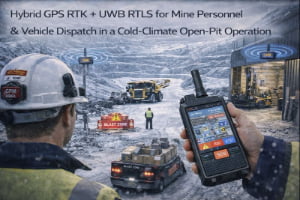
The Mine Personnel & Vehicle RTLS and Dispatch solution combines GPS/GNSS RTK with UWB to build a real-time location and dispatch layer for mining operations. In open-pit areas, a site RTK base station provides centimetre-level corrections to vehicle-mounted positioning terminals on haul trucks, loaders and service vehicles. Underground and tunnel sections use UWB anchors or wireless beacons installed along ramps and headings; personnel wear UWB or hybrid tags integrated into helmets or ID badges.

Solution Details

Category
Asset RTLS & Anti-Collision
Industries
Mining
Environments
Tunnel Yard Underground Outdoor
Implementation
complex

Overview

Open-pit and underground mines run 24/7 with mixed operations: haul trucks, shovels, drills and light vehicles share the same haul roads and benches with supervisors, contractors and maintenance crews on foot. Visibility can be limited by dust, weather and terrain. Dispatch centres often rely on radio calls and manual logs, and it is difficult to know exactly where people and vehicles are at any moment.

The Mine Personnel & Vehicle RTLS and Dispatch solution combines GPS/GNSS RTK with UWB to build a real-time location and dispatch layer for mining operations. In open-pit areas, a site RTK base station provides centimetre-level corrections to vehicle-mounted positioning terminals on haul trucks, loaders and service vehicles. Underground and tunnel sections use UWB anchors or wireless beacons installed along ramps and headings; personnel wear UWB or hybrid tags integrated into helmets or ID badges.

All positions are fused onto a single 3D mine map in the RTLS platform. Dispatchers can see which equipment is working where, who is in each zone, and whether anyone has entered restricted or blasting areas. The system can trigger alarms for man–vehicle conflicts, speeding and unauthorised entry, while also feeding structured data into production and safety reports.
Pain Points

Limited real-time visibility of people and vehicles in complex mine layouts

Open-pit benches, winding haul roads and underground ramps make it hard for dispatch to understand where personnel and vehicles actually are. Conventional GPS on vehicles and handheld radios for crews provide only partial, delayed information and no continuous picture of mixed operations.

High risk of man–vehicle conflicts and entry into hazardous zones

Haul trucks, loaders, light vehicles and pedestrians often operate in the same areas around shovels, crushers and workshops. Without reliable position data and clearly enforced zones, near-misses and collisions remain a constant risk, especially in low-visibility conditions or night shifts.

Dispatch decisions based on radio calls rather than objective location data

Many mine dispatch centres still rely on operators calling in their status and location. This leads to gaps and inconsistencies in data, makes optimisation difficult, and limits the ability to balance fleet utilisation or quickly react to blockages and incidents.

Difficult incident reconstruction and weak traceability for investigations

When an incident or near-miss occurs, HSE teams need to know who was where, which vehicles were involved and how they moved before the event. Without stored position histories, investigations depend on manual statements and camera footage that rarely cover the entire mine.

Fragmented systems for dispatch, safety and access control

Dispatch, access control, fatigue monitoring and safety systems are often deployed independently, each with its own data silo. This makes it difficult to correlate events, manage consistent rules and gain a holistic view of risk across the mine.

System Architectures & Topology

Open-Pit Mine GPS RTK + UWB for Personnel & Haul Trucks

Architecture ID: mine_openpit_rtk_uwb

Yard Outdoor
  • A GPS RTK reference station provides centimetre-level corrections across the open pit. Haul trucks, loaders and light vehicles carry vehicle-mounted RTK terminals that calculate accurate positions and report them via 4G or mine Wi‑Fi to the RTLS server. UWB anchors and wireless beacons are installed around pit edges, shovel areas, crushers and workshops to reinforce positioning where satellite signals are weak. Personnel in the pit wear UWB or hybrid tags integrated into helmets or ID badges, enabling mixed tracking of people and vehicles on the same 3D map. Geofences on benches, dumps and hazardous areas trigger alarms when rules are violated.

Key Advantages

  • Uses GPS RTK as a familiar basis for open-pit vehicle positioning
  • Adds UWB only where needed to strengthen performance near structures and highwalls
  • Supports both vehicle dispatch and personnel safety use cases on a single map
  • Scales from a pilot area to full-pit coverage without changing the overall architecture

Limitations / When Not To Use

  • Depends on sufficient satellite visibility for most of the pit; deep or heavily terraced pits may require more UWB coverage
  • Not optimised for extensive underground networks; best for open-pit or shallow ramp operations
  • Requires reliable 4G/Wi‑Fi or equivalent networks to stream positions back to the control room

Notes: Recommended for open-pit mines that want to improve fleet dispatch and man–vehicle safety in the pit while keeping infrastructure overhead under control.

Architecture Components / Layers

Reference layer – GPS RTK base station

Defines the mine coordinate system and emits RTK corrections for all open-pit vehicles and selected hybrid personnel devices, forming the backbone for high-accuracy positioning.

Vehicle layer – RTK terminals on haul trucks and support vehicles

RTK-capable vehicle terminals on haul trucks, loaders and light vehicles provide continuous positions, speed and heading information. They report to the RTLS server and can output warnings in the cab based on geofences and proximity to personnel.

UWB anchor & beacon layer – surface hazard zones

UWB anchors and wireless beacons deployed around shovels, crushers, workshops and pit access points provide robust localised positioning for both personnel tags and vehicle terminals, improving accuracy and responsiveness in high-risk zones or areas with limited satellite visibility.

Personnel layer – helmets and tags for field workers

Supervisors, spotters, maintenance crews and contractors wear hybrid positioning helmets or UWB tags. Their positions are tracked in real time, enabling man–vehicle conflict detection, restricted zone monitoring and emergency mustering.

RTLS & dispatch integration layer

The RTLS server fuses RTK and UWB data into a unified 3D view of the pit, manages geofences and rules, records events and provides interfaces to mine dispatch, fleet management and reporting systems.

Underground Mine UWB RTLS with RTK-Enabled Portals & Ramps

Architecture ID: mine_underground_uwb_rtk

Tunnel Yard Underground
  • UWB anchors and wireless beacons are installed along decline ramps, crosscuts and working areas underground, creating a continuous RTLS corridor for vehicles and personnel. Hybrid tags embedded in helmets, badges or handhelds communicate with nearby anchors, and positions are sent via 4G, Wi‑Fi or LPWAN gateways to the RTLS server. RTK positioning is used on surface portals, stockpiles and plant areas to align underground coordinates with surface maps. The RTLS platform shows all vehicles and people underground in real time, highlights congestion points and interactions, and can generate alarms for entry into blasting zones, refuge chambers and restricted headings.

Key Advantages

  • Provides continuous underground visibility of personnel and vehicles without relying on satellite signals
  • Works in complex ramp networks and headings, where GPS-based solutions alone cannot operate
  • Aligns underground RTLS with surface RTK maps for a single mine view
  • Enables advanced safety use cases such as refuge chamber monitoring and blast exclusion zone enforcement

Limitations / When Not To Use

  • Requires careful underground deployment and maintenance of UWB anchors and beacons
  • Network design is critical; sites with very limited underground communications may need additional investment in gateways and backhaul
  • Not necessary for purely open-pit operations without underground development

Notes: Best suited for underground or mixed mines that treat personnel safety and underground traffic management as high-priority goals and are ready to invest in robust communications underground.

Architecture Components / Layers

Underground UWB infrastructure layer

A grid of UWB anchors and wireless beacons lines the main ramps, intersections and working faces underground. Anchors are mounted to ground support or services, powered where possible, while wireless beacons cover remote headings without cabling.

Personnel layer – UWB and hybrid tags in helmets and badges

Miners, supervisors and contractors carry UWB or hybrid positioning devices integrated into helmets, badges or handhelds. The devices support SOS, motion detection and optional voice prompts, allowing the system to track presence in headings, refuge chambers and escape routes.

Vehicle layer – hybrid terminals on LHDs, trucks and service vehicles

Load–haul–dump machines (LHDs), underground trucks and service vehicles are equipped with hybrid vehicle terminals that use UWB underground and RTK near portals or surface yards. The terminals can provide speed, direction and proximity information to support traffic management and collision avoidance.

Gateway & RTLS server layer

Underground communication gateways aggregate position data from UWB infrastructure and devices and forward it via fibre or surface radio links to the RTLS server. The server fuses underground and surface coordinates, manages rules and interfaces with safety and dispatch systems.

Workflow

This workflow applies to all architecture options above. Specific hardware selection varies depending on the chosen architecture.

1

Mine survey, zoning and communication review

Work with mine engineering, safety and dispatch teams to map the entire site: open-pit benches, haul roads, dumps and stockpiles, portals, underground ramps and key intersections. Define production and safety zones—such as shovel areas, crusher areas, refuelling stations and blasting zones—and review existing communications (radio, 4G/5G, Wi‑Fi, fibre) to plan how positioning data will reach the control room.

Estimated time: 2–3 weeks for a medium-size mine
2

GPS RTK reference station and backbone design

Install a GPS/GNSS RTK reference station on a stable mast or building, with clear sky view over the pit. Configure the mine coordinate system and connect the base station to the RTLS server to broadcast correction data. In parallel, design the UWB coverage for underground ramps, portals, workshops and any surface areas with poor satellite visibility.

Estimated time: 1–2 weeks including survey and validation
3

On-board terminals for haul trucks, loaders and light vehicles

Equip haul trucks, loaders, graders, water trucks and light vehicles with vehicle-mounted positioning terminals that support GPS RTK and optional UWB. Install antennas on the cab roof or handrails, connect power and integrate with in-cab displays or existing fleet management systems. Calibrate offsets between the antenna and the vehicle reference point for accurate path and interaction analysis.

Estimated time: 0.5–1 day per vehicle after installation standards are defined
4

Personnel tags, underground UWB and safety rules

Deploy UWB anchors or wireless beacons along underground ramps, crosscuts and working areas, as well as in surface workshops and loading bays. Provide supervisors, maintenance crews and contractors with UWB or hybrid positioning tags integrated into helmets, ID badges or handheld devices. Configure electronic fences for restricted zones, loading pockets, intersections and blast areas, and define rules for alarms and notifications.

Estimated time: 3–6 weeks depending on underground extent
5

Control room integration, dispatch dashboards and training

Connect the RTLS platform to existing mine dispatch, fleet management and safety systems through APIs or data feeds. Build dashboards that show live positions, zone occupancy, queues at loading and dumping points, and key alarms. Train dispatchers, supervisors and safety officers on how to use the new views and reports in daily operations, and adjust rules based on initial feedback and field observations.

Estimated time: 4–8 weeks from pilot to full deployment

Key Outcomes

-30–60% reduction
Near-miss incidents between personnel and heavy vehicles
Better visibility of people and vehicles in critical zones, combined with alerts, reduces man–vehicle conflicts in the pit and underground.
-20–40% reduction
Unplanned stops due to search or missing equipment
Dispatchers can see where each truck and support vehicle is in real time, reducing time wasted searching or waiting for equipment.
-40–60% reduction
Time to reconstruct incidents and safety events
Stored position histories and zone events allow HSE teams to replay movements and interactions quickly when investigating events.
> 95% typical
Accuracy of headcount and zone occupancy
Automatic presence detection via RTLS improves the accuracy of how many people and vehicles are in each zone compared to radio-based reporting.

Recommended Products

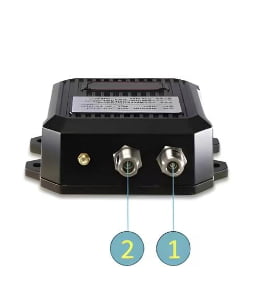
A black STD Dual channel base station with two ports on the front, each labeled with blue circles containing numbers 1 and 2.

STD UWB Dual Channel Base Station

The STD UWB Dual-Channel Base Station is an industrial-grade positioning device designed for tunnel, mining, and underground environments.

View Product
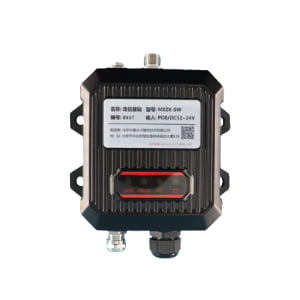
A black SW UWB Anchor device with labeled ports and a sticker showing specs, featuring indicator lights for LWB, GNSS, and 4G.

SW UWB Anchor

The SW UWB Positioning Base Station is an industrial-grade device designed for sub-meter accuracy tracking of personnel, vehicles, and assets in factories, tunnels, and other complex environments.

View Product
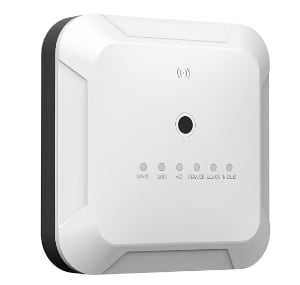
Side view of UWB base station with status indicators.

SN2 UWB PoE Anchor

The SN2 is an industrial‑grade UWB positioning anchor designed for high‑accuracy real‑time location systems. It supports Standard PoE or 12–24 V DC power, delivers sub‑meter performance (<30 cm LoS), and features an IP66 enclosure for harsh indoor/outdoor environments. Multiple mounting options (ceiling, wall, pole clamp) make deployment easy in factories, warehouses, and tunnels. Optional 4G/Wi‑Fi backhaul, AI video add‑on, and sound‑light alarm extend the anchor’s capability for safety and analytics. (Actual performance depends on anchor density, layout, and site RF conditions.)

View Product
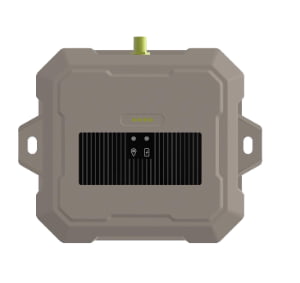
Gray rectangular electronic device with a black panel, LED indicators, and two side mounting flanges; a yellow cable extends from the top—designed as a WX UWB Beacon for advanced positioning applications.

WX UWB Wireless Positioning Beacon

The WX UWB Wireless Positioning Beacon is a battery-powered industrial-grade UWB device designed for wireless deployment without cable installation.

View Product
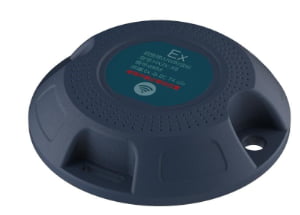
A dark gray, dome-shaped electronic device with a circular label featuring Chinese text and a Wi-Fi signal icon on the top surface.

XB UWB Wireless Positioning Beacon

The XB UWB Wireless Positioning Beacon is a compact, fully wireless, and battery-powered UWB device designed for high-precision positioning without cable deployment.

View Product
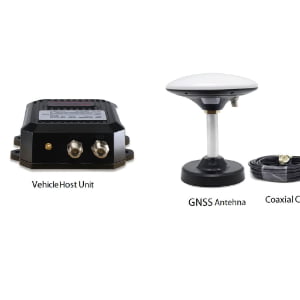
A vehicle host unit, GNSS antenna, and coaxial cable are displayed separately on a white background with labels.

URTC Vehicle-Mounted Hybrid Positioning Terminal

The URTC Vehicle-Mounted Hybrid Positioning Terminal integrates RTK centimeter-level positioning, optional UWB <30 cm indoor positioning, and a GNSS full-constellation system, enabling high-precision positioning for industrial vehicles, engineering machinery, cranes, and fleet applications. With a separated-module design using coaxial cable connection, the URTC terminal achieves RTK accuracy of ±3 cm, supports 4G full-netcom communication, anti-collision functions, and performs reliably in harsh industrial environments with IP67 protection, wide temperature tolerance, and strong signal reception.

View Product
A small, dome-shaped electronic device with a white top, black base, control buttons, and USB port, shown on a dark surface.

BQ Vehicle-Mounted Positioning Terminal

The BQ Vehicle-Mounted Positioning Terminal is an industrial-grade hybrid positioning device designed for vehicles operating in mines, construction sites, ports, transportation fleets, and harsh outdoor environments. It integrates UWB high-precision positioning, RTK centimeter-level positioning, GNSS multi-system outdoor tracking, 4G full-network communication, and features strong magnetic adsorption, anti-disassembly alarm, motion detection, TTS voice, and optional LoRa/5G modules. With a rugged IP66 design and a built-in 3000mAh rechargeable battery (optional 5000mAh), the BQ terminal ensures reliable real-time tracking and vehicle safety management in demanding industrial conditions.

View Product
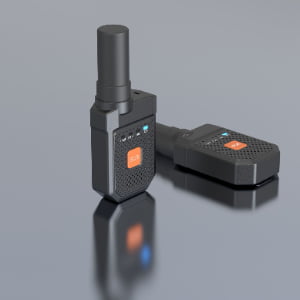
Two black handheld communication devices with visible SOS buttons and indicator lights are placed on a reflective gray surface.

URT Hybrid Positioning Terminal

The URT Hybrid Positioning Terminal is an industrial-grade wearable tracking device that integrates UWB high-precision positioning, RTK centimeter-level positioning, GPS outdoor positioning, and 4G wireless communication. It provides real-time personnel tracking, SOS emergency alerts, TTS voice broadcasting, motion detection, and optional NFC/Lora/5G expansion. With an IP66 rugged design and a 3000mAh magnetic-charging battery, the URT terminal is ideal for complex industrial environments such as factories, tunnels, construction sites, rail transit, and energy facilities.

View Product
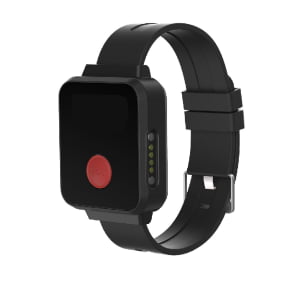
A black smartwatch with a rectangular face, black band, and a prominent red SOS button on the front.

SH UWB Positioning Wristband Tag

The SH UWB Positioning Wristband Tag is a high-precision wearable device designed for real-time personnel tracking and safety monitoring in industrial environments such as factories, construction sites, and tunnels.

View Product
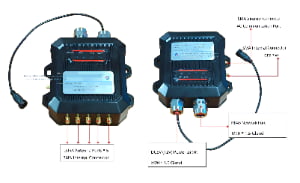
English-labeled diagram showing TXWG communication gateway ports including SMA, 4G, GPS, RJ45, LORA antenna ports, and power input.

TXWG Industrial Communication Gateway

A high-performance LPWAN-based industrial communication gateway designed for long-distance, low-power IoT communication. It supports LORA self-organizing networking, 4G cloud transmission, GPS time sync, multi-channel data forwarding, and explosion-proof applications.

View Product

Bill of Materials

Example BOM (based on the recommended architecture above)

ModelSummary
STD UWB Dual Channel Base StationThe STD UWB Dual-Channel Base Station is an industrial-grade positioning device designed for tunnel, mining, and underground environments.
SW UWB AnchorThe SW UWB Positioning Base Station is an industrial-grade device designed for sub-meter accuracy tracking of personnel, vehicles, and assets in factories, tunnels, and other complex environments.
SN2 UWB PoE AnchorThe SN2 is an industrial‑grade UWB positioning anchor designed for high‑accuracy real‑time location systems. It supports Standard PoE or 12–24 V DC power, delivers sub‑meter performance (<30 cm LoS), and features an IP66 enclosure for harsh indoor/outdoor environments. Multiple mounting options (ceiling, wall, pole clamp) make deployment easy in factories, warehouses, and tunnels. Optional 4G/Wi‑Fi backhaul, AI video add‑on, and sound‑light alarm extend the anchor’s capability for safety and analytics. (Actual performance depends on anchor density, layout, and site RF conditions.)
WX UWB Wireless Positioning BeaconThe WX UWB Wireless Positioning Beacon is a battery-powered industrial-grade UWB device designed for wireless deployment without cable installation.
XB UWB Wireless Positioning BeaconThe XB UWB Wireless Positioning Beacon is a compact, fully wireless, and battery-powered UWB device designed for high-precision positioning without cable deployment.
URTC Vehicle-Mounted Hybrid Positioning TerminalThe URTC Vehicle-Mounted Hybrid Positioning Terminal integrates RTK centimeter-level positioning, optional UWB <30 cm indoor positioning, and a GNSS full-constellation system, enabling high-precision positioning for industrial vehicles, engineering machinery, cranes, and fleet applications. With a separated-module design using coaxial cable connection, the URTC terminal achieves RTK accuracy of ±3 cm, supports 4G full-netcom communication, anti-collision functions, and performs reliably in harsh industrial environments with IP67 protection, wide temperature tolerance, and strong signal reception.
BQ Vehicle-Mounted Positioning TerminalThe BQ Vehicle-Mounted Positioning Terminal is an industrial-grade hybrid positioning device designed for vehicles operating in mines, construction sites, ports, transportation fleets, and harsh outdoor environments. It integrates UWB high-precision positioning, RTK centimeter-level positioning, GNSS multi-system outdoor tracking, 4G full-network communication, and features strong magnetic adsorption, anti-disassembly alarm, motion detection, TTS voice, and optional LoRa/5G modules. With a rugged IP66 design and a built-in 3000mAh rechargeable battery (optional 5000mAh), the BQ terminal ensures reliable real-time tracking and vehicle safety management in demanding industrial conditions.
URT Hybrid Positioning TerminalThe URT Hybrid Positioning Terminal is an industrial-grade wearable tracking device that integrates UWB high-precision positioning, RTK centimeter-level positioning, GPS outdoor positioning, and 4G wireless communication. It provides real-time personnel tracking, SOS emergency alerts, TTS voice broadcasting, motion detection, and optional NFC/Lora/5G expansion. With an IP66 rugged design and a 3000mAh magnetic-charging battery, the URT terminal is ideal for complex industrial environments such as factories, tunnels, construction sites, rail transit, and energy facilities.
SH UWB Positioning Wristband TagThe SH UWB Positioning Wristband Tag is a high-precision wearable device designed for real-time personnel tracking and safety monitoring in industrial environments such as factories, construction sites, and tunnels.
TXWG Industrial Communication GatewayA high-performance LPWAN-based industrial communication gateway designed for long-distance, low-power IoT communication. It supports LORA self-organizing networking, 4G cloud transmission, GPS time sync, multi-channel data forwarding, and explosion-proof applications.

Example Configuration

GNSS Differential Reference Station (Provides centimetre-level correction data for all RTK-capable vehicle and personnel terminals across the mine.)
Qty: 1
URTC Vehicle-Mounted Hybrid Positioning Terminal (Installed on haul trucks, loaders and other heavy equipment to provide RTK + UWB positions and support man–vehicle interaction analysis.)
Qty: 25
BQ Vehicle-Mounted Positioning Terminal (Installed on light vehicles and service trucks to track movements, support dispatch and enforce speed and route rules.)
Qty: 15
STD UWB Dual Channel Base Station (Deployed around pit edges, waste dumps, crushers and main intersections to provide wide-area UWB coverage and assist positioning where satellite visibility is limited.)
Qty: 20
WX UWB Wireless Positioning Beacon (Battery-powered UWB beacons installed along underground ramps, temporary headings and scaffolded areas where cabling is difficult.)
Qty: 40
AQM Hybrid Positioning Safety Helmet (Issued to supervisors, maintenance crews, contractors and blasting teams for personnel tracking, zone control and emergency response.)
Qty: 100
TXWG Industrial Communication Gateway (Provides long-range low-power links for UWB beacons and terminals in remote parts of the mine where direct connections to the server are not possible.)
Qty: 8

Compliance & Regulations

Support for mine safety zoning and restricted areas

Traceable records for incident investigation and audits

Data residency and network segregation

🌍 Industries using this solution

Related Technical Resources

FAQs

Ready to Deploy?

Planning to digitalise personnel safety and fleet dispatch in your mine? Share your pit layout, underground ramps and fleet mix, and our engineers will prepare a GPS RTK + UWB RTLS design and example BOM tailored to your site.

Contact Sales
Procurement (Device & Data Layer)

Shortlisting devices? Get an RFQ-ready BOM path.

Move from product selection to an actionable RFQ: scope boundaries, terms, lead time, and deliverables.

Contact Sales

Ready to Deploy RTLS?

Share your site layout and accuracy needs--we'll suggest a practical setup.

Contact Us