Skip to content
Industrial UWB RTLS for Real-Time Visibility
Menu

Indoor–Outdoor Seamless Positioning (UWB + GPS RTK)

Large industrial sites rarely fit into a simple “indoor” or “outdoor” box. Operators move between workshops, pipe racks, tunnels, tank farms, yards and office buildings in the same shift. Standard GPS stops working the moment someone steps into a building or tunnel, while traditional indoor RTLS has no visibility once personnel or vehicles leave the UWB coverage area.

The result is fragmented positioning. Safety and operations teams use one system for indoor RTLS, another for outdoor GPS tracking, and often rely on radio calls and CCTV to understand what is actually happening at the boundary between buildings and open areas. During an emergency or a drill, it is difficult to know exactly who is still inside, who has already reached an assembly point, and which vehicles are still moving.

Solution Details

Category
Positioning Infrastructure
Industries
Manufacturing Mining Oil & Gas Transportation & Rail
Environments
Factory Warehouse Tunnel Yard Underground Outdoor
Implementation
complex

Overview

Large industrial sites rarely fit into a simple “indoor” or “outdoor” box. Operators move between workshops, pipe racks, tunnels, tank farms, yards and office buildings in the same shift. Standard GPS stops working the moment someone steps into a building or tunnel, while traditional indoor RTLS has no visibility once personnel or vehicles leave the UWB coverage area.

The result is fragmented positioning. Safety and operations teams use one system for indoor RTLS, another for outdoor GPS tracking, and often rely on radio calls and CCTV to understand what is actually happening at the boundary between buildings and open areas. During an emergency or a drill, it is difficult to know exactly who is still inside, who has already reached an assembly point, and which vehicles are still moving.

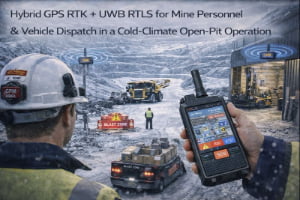
The Indoor–Outdoor Seamless Positioning solution combines UWB RTLS indoors with GPS RTK outdoors, using hybrid terminals that automatically switch between the two technologies. Indoors, UWB anchors or beacons provide sub-metre accuracy under roofs, in tunnels and in pipe-rack corridors. Outdoors, GPS RTK with a reference station delivers centimetre-level positioning across open yards, roads and tank farms. All data is fused in one positioning platform with a single coordinate system and a unified map.

This architecture allows one worker badge, smart safety helmet or vehicle terminal to provide continuous location from underground areas to open hillsides, without gaps at building entrances, stairwells or doors. It forms a positioning infrastructure that can be reused by multiple applications: personnel safety, vehicle dispatching, work-permit zones, slope and tank monitoring, and more.
Pain Points

Indoor and outdoor positioning systems are isolated

Many sites run a UWB or Wi-Fi RTLS for indoor buildings and a separate GPS tracking system for vehicles and remote workers. The two systems use different maps, IDs and coordinate systems, so it is impossible to follow a person or vehicle continuously as they move between buildings, tunnels and yards.

Blind spots at building entrances, tunnels and stairwells

Exactly where it matters most – doors, corridors, stairwells and tunnel portals – there are often gaps in coverage. GPS loses lock before someone fully enters a building, while indoor systems may not yet have enough anchors to position them. During emergencies or confined-space work, this uncertainty slows down decisions.

No single source of truth for location data

Operations, HSE, security and maintenance departments each maintain their own positioning or tracking tools. Without a unified positioning infrastructure and API, it is hard to integrate data into dispatching systems, CMMS, digital twins or alarm workflows, and even harder to maintain consistent rules and geofences.

Limited accuracy for critical outdoor tasks

Standard GPS accuracy of a few metres is not sufficient for some outdoor activities, such as working near slopes, tanks, high-voltage yards or along narrow haul roads. Without centimetre-level RTK accuracy and a stable reference station, it is difficult to define reliable danger zones or to monitor small deviations.

Complex hardware stacks and high lifecycle costs

Running separate devices for indoor UWB tags, outdoor GPS trackers and vehicle terminals increases hardware, charging and maintenance costs. Different batteries, chargers and SIM contracts complicate operations and make it harder to scale the system to thousands of workers and hundreds of vehicles.

System Architectures & Topology

Hybrid Plant / Campus Positioning (UWB + GPS RTK)

Architecture ID: hybrid_plant_campus

Factory Warehouse Yard Outdoor Hazardous / Tank Farm
  • Indoor workshops and control rooms are equipped with PoE UWB anchors and, where needed, wireless beacons. Personnel badges, smart helmets and vehicle terminals use UWB indoors and switch to GPS RTK when they move outdoors into yards, roads or tank farms. A GPS RTK reference station on a building roof provides centimetre-level corrections across the site. All positions are fused in the RTLS server and displayed on a single plant map with layers for buildings, roads and hazardous zones.

Key Advantages

  • One infrastructure for both indoor and outdoor positioning across the plant
  • Smooth roaming with hybrid terminals – no need to switch devices at doors
  • High accuracy in critical indoor and outdoor zones, including tank farms and substations
  • Flexible enough to support multiple applications: safety, dispatching, monitoring

Limitations / When Not To Use

  • Requires a suitable location for the GPS RTK reference station with clear sky view
  • Outdoor performance depends on GNSS reception; very dense structures may need alternative designs
  • Battery-powered devices and beacons require periodic maintenance and replacement

Notes: Recommended as the standard positioning architecture for complex industrial campuses that need a single source of truth for personnel and vehicle locations across buildings, tunnels and outdoor areas.

Architecture Components / Layers

Indoor layer – UWB anchors and beacons

Provides sub-metre positioning in workshops, control rooms, corridors and stairwells. PoE UWB anchors are installed on ceilings or walls, while wireless beacons cover areas where cabling is difficult, such as temporary structures or pipe racks.

Outdoor layer – GPS RTK coverage

A GPS RTK reference station provides differential corrections for hybrid terminals in yards, access roads, tank farms and open areas. Terminals achieve centimetre-level positioning where line-of-sight to the sky is available.

Vehicle layer – hybrid vehicle positioning

Vehicle terminals combine GPS RTK outdoors with UWB ranging where anchors are available, enabling accurate tracking of forklifts, service vehicles and heavy equipment near buildings and loading areas.

Gateway & server layer

Communication gateways collect data from wireless beacons and remote outdoor devices, forwarding it to the RTLS server. The server runs the fusion algorithms, stores history, and exposes APIs for safety and operations systems.

Linear Asset & Tunnel Hybrid Positioning

Architecture ID: hybrid_tunnel_linear

Tunnel Underground Outdoor
  • This architecture is aimed at long tunnels, pipe corridors, conveyor galleries and haul roads that transition between underground and open areas. UWB anchors or dual-channel base stations provide one-dimensional or two-dimensional positioning inside tunnels and galleries, while GPS RTK covers the open sections. Hybrid terminals on workers and vehicles switch automatically between UWB and GPS RTK, so control rooms see continuous tracks along the entire route.

Key Advantages

  • Designed for routes that combine underground and open-air segments
  • Reduces blind spots around tunnel portals, galleries and haul roads
  • Supports both personnel safety and vehicle dispatching along the same corridor
  • Can be rolled out in phases as tunnels or routes are extended

Limitations / When Not To Use

  • Requires careful RF design in long tunnels to avoid reflections and dead zones
  • GPS RTK requires good visibility of the sky in open segments
  • In very small or purely indoor sites, a simpler UWB-only architecture may be sufficient

Notes: This architecture is well suited to mines, metro projects, pipeline corridors and large industrial conveyors where workers and vehicles repeatedly move between underground infrastructure and outdoor areas.

Architecture Components / Layers

Tunnel and gallery layer – UWB anchors and dual-channel base stations

Provides reliable positioning in long, narrow spaces where GPS is unavailable. Depending on accuracy requirements, the layout can use one-dimensional positioning for cost efficiency or full two-dimensional positioning at critical junctions and chambers.

Open section layer – GPS RTK for roads and slopes

GPS RTK is used on open haul roads, benches, slopes and yards connected to the tunnel or gallery. This ensures smooth transitions when personnel or vehicles exit underground areas and continue along outdoor routes.

Hybrid terminal layer – workers and vehicles

Hybrid terminal layer – workers and vehicles

Platform layer – unified route and asset view

The positioning platform visualises tunnels, galleries, portals and open sections on one map, with tools to review trip histories, speeds and dwell times at refuges, bays and loading points. APIs expose this data to dispatching and safety systems.

Workflow

This workflow applies to all architecture options above. Specific hardware selection varies depending on the chosen architecture.

1

Site survey and common coordinate system design

Start by reviewing the site layout, including indoor buildings, tunnels, pipe racks, tank farms, open pits and yards. Define a single plant-wide coordinate system and decide where to place the GPS RTK reference station. Align this coordinate frame with existing CAD or GIS maps so that all indoor and outdoor positions can be visualised on the same base map.

Estimated time: 2–3 weeks
2

Indoor UWB coverage and beacon design

Design UWB coverage for workshops, control rooms, tunnels and underground areas using a mix of PoE anchors and wireless beacons. Focus on corridors, stairwells and doors leading to outdoor areas to minimise blind spots. For long tunnels or corridors, consider one‑dimensional positioning layouts optimised for cost while still providing reliable tracking.

Estimated time: 3–4 weeks including detailed survey
3

GPS RTK coverage and reference station deployment

Install a GPS RTK reference station on a stable structure such as a building roof or mast. Configure the station to stream differential corrections over the internal network. Deploy hybrid handhelds, helmets and vehicle terminals in outdoor working areas, haul roads and tank farms, using RTK corrections to achieve centimetre-level positioning.

Estimated time: 3–5 weeks
4

Hybrid terminals and seamless switching tests

Equip workers, supervisors and vehicles with hybrid terminals that support both UWB and GPS RTK. Configure automatic mode switching: UWB indoors and in tunnels, GPS RTK outdoors. Test roaming paths across typical transition points — building entrances, stairwells, tunnel portals — and fine‑tune parameters to ensure the trajectory remains stable and continuous.

Estimated time: 2–4 weeks for pilot paths
5

Platform integration and rollout

Deploy the positioning platform with layered maps, 3D views and geofences. Integrate APIs with RTLS applications: personnel safety, vehicle dispatching, geofenced work permits or slope monitoring dashboards. After validating performance, roll out hybrid positioning to additional units, routes and contractors, and establish standard procedures for device management and map maintenance.

Estimated time: Ongoing; typically 3–6 months for a full site

Key Outcomes

-80–90% reduction
Tracking gaps when crossing between indoor and outdoor areas
Continuous positioning from UWB indoors and GPS RTK outdoors eliminates most blind spots at doors, stairwells and tunnel portals, significantly reducing periods where personnel or vehicles are “unknown”.
-40–60% reduction
Time to locate a person or vehicle across the entire site
Control-room operators can search by name, asset ID or device and instantly see the latest position on a unified map, without switching between multiple tracking systems.
>80% coverage
Share of operational area with sub-metre or cm-level accuracy
By combining indoor UWB and outdoor GPS RTK, most high‑risk and high-activity areas of the plant can be monitored with sub‑metre accuracy indoors and centimetre-level accuracy outdoors.
-30–50% reduction
Number of positioning devices per user or vehicle
Hybrid terminals replace separate indoor tags and outdoor GPS trackers, reducing hardware, charging and lifecycle management overhead.

Recommended Products

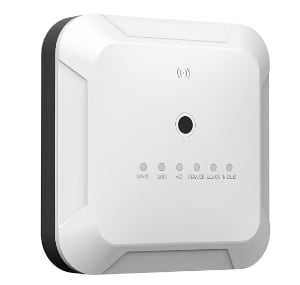
Side view of UWB base station with status indicators.

SN2 UWB PoE Anchor

The SN2 is an industrial‑grade UWB positioning anchor designed for high‑accuracy real‑time location systems. It supports Standard PoE or 12–24 V DC power, delivers sub‑meter performance (<30 cm LoS), and features an IP66 enclosure for harsh indoor/outdoor environments. Multiple mounting options (ceiling, wall, pole clamp) make deployment easy in factories, warehouses, and tunnels. Optional 4G/Wi‑Fi backhaul, AI video add‑on, and sound‑light alarm extend the anchor’s capability for safety and analytics. (Actual performance depends on anchor density, layout, and site RF conditions.)

View Product
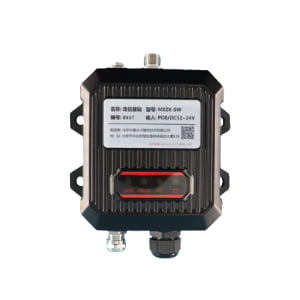
A black SW UWB Anchor device with labeled ports and a sticker showing specs, featuring indicator lights for LWB, GNSS, and 4G.

SW UWB Anchor

The SW UWB Positioning Base Station is an industrial-grade device designed for sub-meter accuracy tracking of personnel, vehicles, and assets in factories, tunnels, and other complex environments.

View Product
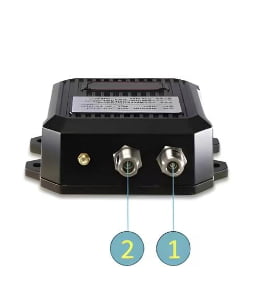
A black STD Dual channel base station with two ports on the front, each labeled with blue circles containing numbers 1 and 2.

STD UWB Dual Channel Base Station

The STD UWB Dual-Channel Base Station is an industrial-grade positioning device designed for tunnel, mining, and underground environments.

View Product
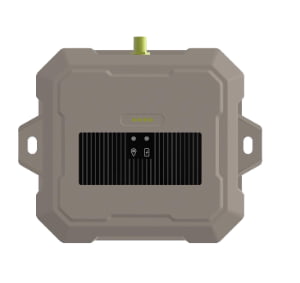
Gray rectangular electronic device with a black panel, LED indicators, and two side mounting flanges; a yellow cable extends from the top—designed as a WX UWB Beacon for advanced positioning applications.

WX UWB Wireless Positioning Beacon

The WX UWB Wireless Positioning Beacon is a battery-powered industrial-grade UWB device designed for wireless deployment without cable installation.

View Product
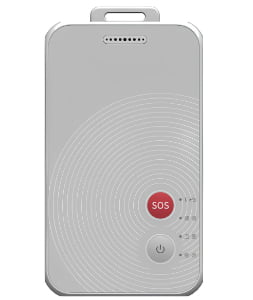
A white emergency alert device with a large red SOS button, a power button, indicator lights, and a speaker grille at the top.

UBK UWB + GPS Hybrid Positioning Badge

The UBK UWB + GPS Hybrid Positioning Badge is a rugged industrial-grade personnel tracking card designed for high-precision positioning in factories, warehouses, tunnels, and other demanding environments. It integrates UWB centimeter-level positioning with GPS outdoor positioning, features SOS emergency button, motion detection, TTS voice broadcast, 4G cellular communication, and optional NFC functionality. Equipped with a 3000mAh rechargeable battery and an IP66 protection rating, the UBK badge ensures reliable real-time personnel visibility and safety monitoring both indoors and outdoors.

View Product
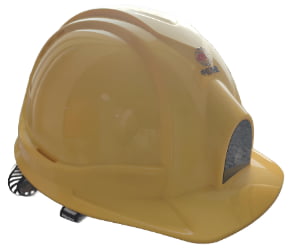
A yellow construction hard hat with a small transparent window on the front and an adjustable strap at the back.

AQM Hybrid Positioning Safety Helmet

The AQM Hybrid Positioning Safety Helmet is an industrial-grade smart helmet integrating UWB high-precision positioning, RTK centimeter-level positioning, GPS outdoor positioning, and 4G full-network communication. Designed for worker safety and real-time visibility, it features SOS emergency alerts, TTS voice, motion/static detection, low-battery warnings, and optional NFC / LoRa / 5G communication. With an IP56 rugged rating and a built-in 3000mAh rechargeable battery, the AQM helmet is ideal for construction sites, tunnels, factories, mining, ports, and hazardous environments requiring precise personnel tracking and safety protection.

View Product
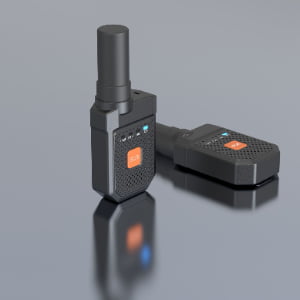
Two black handheld communication devices with visible SOS buttons and indicator lights are placed on a reflective gray surface.

URT Hybrid Positioning Terminal

The URT Hybrid Positioning Terminal is an industrial-grade wearable tracking device that integrates UWB high-precision positioning, RTK centimeter-level positioning, GPS outdoor positioning, and 4G wireless communication. It provides real-time personnel tracking, SOS emergency alerts, TTS voice broadcasting, motion detection, and optional NFC/Lora/5G expansion. With an IP66 rugged design and a 3000mAh magnetic-charging battery, the URT terminal is ideal for complex industrial environments such as factories, tunnels, construction sites, rail transit, and energy facilities.

View Product
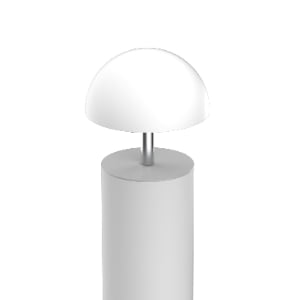
A modern white table lamp with a cylindrical base and a dome-shaped shade, shown against a plain white background.

GNSS Differential Reference Station

A high-precision GNSS/Beidou differential reference station that provides centimeter-level RTK corrections and sub-meter static accuracy. Supports RTCM differential data output, 4G/WiFi backhaul, UWB optional transmission, and fully integrates with positioning platforms for mining, ports, factories, and outdoor infrastructure.

View Product
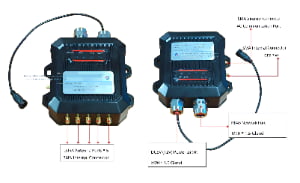
English-labeled diagram showing TXWG communication gateway ports including SMA, 4G, GPS, RJ45, LORA antenna ports, and power input.

TXWG Industrial Communication Gateway

A high-performance LPWAN-based industrial communication gateway designed for long-distance, low-power IoT communication. It supports LORA self-organizing networking, 4G cloud transmission, GPS time sync, multi-channel data forwarding, and explosion-proof applications.

View Product

Bill of Materials

Example BOM (based on the recommended architecture above)

ModelSummary
SN2 UWB PoE AnchorThe SN2 is an industrial‑grade UWB positioning anchor designed for high‑accuracy real‑time location systems. It supports Standard PoE or 12–24 V DC power, delivers sub‑meter performance (<30 cm LoS), and features an IP66 enclosure for harsh indoor/outdoor environments. Multiple mounting options (ceiling, wall, pole clamp) make deployment easy in factories, warehouses, and tunnels. Optional 4G/Wi‑Fi backhaul, AI video add‑on, and sound‑light alarm extend the anchor’s capability for safety and analytics. (Actual performance depends on anchor density, layout, and site RF conditions.)
SW UWB AnchorThe SW UWB Positioning Base Station is an industrial-grade device designed for sub-meter accuracy tracking of personnel, vehicles, and assets in factories, tunnels, and other complex environments.
STD UWB Dual Channel Base StationThe STD UWB Dual-Channel Base Station is an industrial-grade positioning device designed for tunnel, mining, and underground environments.
WX UWB Wireless Positioning BeaconThe WX UWB Wireless Positioning Beacon is a battery-powered industrial-grade UWB device designed for wireless deployment without cable installation.
UBK UWB + GPS Hybrid Positioning BadgeThe UBK UWB + GPS Hybrid Positioning Badge is a rugged industrial-grade personnel tracking card designed for high-precision positioning in factories, warehouses, tunnels, and other demanding environments. It integrates UWB centimeter-level positioning with GPS outdoor positioning, features SOS emergency button, motion detection, TTS voice broadcast, 4G cellular communication, and optional NFC functionality. Equipped with a 3000mAh rechargeable battery and an IP66 protection rating, the UBK badge ensures reliable real-time personnel visibility and safety monitoring both indoors and outdoors.
AQM Hybrid Positioning Safety HelmetThe AQM Hybrid Positioning Safety Helmet is an industrial-grade smart helmet integrating UWB high-precision positioning, RTK centimeter-level positioning, GPS outdoor positioning, and 4G full-network communication. Designed for worker safety and real-time visibility, it features SOS emergency alerts, TTS voice, motion/static detection, low-battery warnings, and optional NFC / LoRa / 5G communication. With an IP56 rugged rating and a built-in 3000mAh rechargeable battery, the AQM helmet is ideal for construction sites, tunnels, factories, mining, ports, and hazardous environments requiring precise personnel tracking and safety protection.
URT Hybrid Positioning TerminalThe URT Hybrid Positioning Terminal is an industrial-grade wearable tracking device that integrates UWB high-precision positioning, RTK centimeter-level positioning, GPS outdoor positioning, and 4G wireless communication. It provides real-time personnel tracking, SOS emergency alerts, TTS voice broadcasting, motion detection, and optional NFC/Lora/5G expansion. With an IP66 rugged design and a 3000mAh magnetic-charging battery, the URT terminal is ideal for complex industrial environments such as factories, tunnels, construction sites, rail transit, and energy facilities.
GNSS Differential Reference StationA high-precision GNSS/Beidou differential reference station that provides centimeter-level RTK corrections and sub-meter static accuracy. Supports RTCM differential data output, 4G/WiFi backhaul, UWB optional transmission, and fully integrates with positioning platforms for mining, ports, factories, and outdoor infrastructure.
TXWG Industrial Communication GatewayA high-performance LPWAN-based industrial communication gateway designed for long-distance, low-power IoT communication. It supports LORA self-organizing networking, 4G cloud transmission, GPS time sync, multi-channel data forwarding, and explosion-proof applications.

Example Configuration

SN2 UWB PoE Anchor (Installed in workshops, control rooms and main indoor corridors to provide dense UWB coverage with PoE power and Ethernet backhaul.)
Qty: 60
STD UWB Dual Channel Base Station (Used in semi-outdoor pipe racks, tunnel portals and long corridors where robust housings and extended coverage are required.)
Qty: 30
WX UWB Wireless Positioning Beacon (Battery-powered beacons for areas where running cables is difficult – temporary structures, remote corners of tank farms and access roads.)
Qty: 40
UBK UWB + GPS Hybrid Positioning Badge (Hybrid personnel devices for workers and supervisors, switching between UWB indoors and GPS RTK outdoors, with SOS and motion detection.)
Qty: 200
URT Hybrid Positioning Terminal (Portable hybrid terminals for engineers, survey teams and HSE inspectors who spend time in both buildings and remote outdoor areas.)
Qty: 20
BQ Vehicle-Mounted Positioning Terminal (Hybrid positioning for vehicles and heavy equipment, combining GPS RTK outdoors with UWB where available, supporting dispatch and safety functions.)
Qty: 30
GNSS Differential Reference Station (Reference station providing differential corrections for GPS RTK across the plant or mine, enabling centimetre-level positioning outdoors.)
Qty: 1
TXWG Industrial Communication Gateway (Backhauls data from wireless beacons and remote hybrid terminals in areas without direct network access, using LPWAN links to the server.)
Qty: 3

Compliance & Regulations

Supports emergency response and muster procedures

Enhanced safety controls for work in high-risk zones

Traceability for contractors and mobile equipment

🌍 Industries using this solution

Related Technical Resources

FAQs

Ready to Deploy?

If your operations span workshops, tunnels and open yards, we can help you design a hybrid UWB + GPS RTK positioning layer that ties everything together. Share a simple layout and a list of key routes or risk areas, and our engineers will prepare a draft design, coverage concept and example BOM for your site.

Contact Sales
Procurement (Device & Data Layer)

Shortlisting devices? Get an RFQ-ready BOM path.

Move from product selection to an actionable RFQ: scope boundaries, terms, lead time, and deliverables.

Contact Sales

Ready to Deploy RTLS?

Share your site layout and accuracy needs--we'll suggest a practical setup.

Contact Us