Skip to content
Industrial UWB RTLS for Real-Time Visibility
Menu

Gantry Crane & Yard Stacker RTK Precision Positioning

Gantry cranes and yard stackers are the core equipment in container yards, steel coil yards and large outdoor storage areas. Operators move heavy loads between blocks, lanes and stacks under time pressure, often with limited visibility of exact positions. Yard management systems may know which task should be executed, but not always where the crane or stacker actually is at the moment of pick and drop.

The Gantry Crane & Yard Stacker RTK Precision Positioning solution uses GPS/GNSS RTK combined with UWB to provide lane-, block- and stack-level positioning for mobile yard equipment. A site RTK base station broadcasts correction data, and each crane or stacker carries a vehicle-mounted RTK terminal that calculates its precise position in the yard coordinate system. UWB anchors or beacons can be added around stacks, rails and key structures to stabilise performance near tall stacks, buildings and under crane girders, where satellite geometry is challenged.

Solution Details

Category
Asset RTLS & Anti-Collision
Industries
Manufacturing Transportation & Rail Warehousing & Logistics
Environments
Warehouse Yard Outdoor
Implementation
complex

Overview

Gantry cranes and yard stackers are the core equipment in container yards, steel coil yards and large outdoor storage areas. Operators move heavy loads between blocks, lanes and stacks under time pressure, often with limited visibility of exact positions. Yard management systems may know which task should be executed, but not always where the crane or stacker actually is at the moment of pick and drop.

The Gantry Crane & Yard Stacker RTK Precision Positioning solution uses GPS/GNSS RTK combined with UWB to provide lane-, block- and stack-level positioning for mobile yard equipment. A site RTK base station broadcasts correction data, and each crane or stacker carries a vehicle-mounted RTK terminal that calculates its precise position in the yard coordinate system. UWB anchors or beacons can be added around stacks, rails and key structures to stabilise performance near tall stacks, buildings and under crane girders, where satellite geometry is challenged.

With accurate positions available in real time, the system can automatically record pick/drop locations, highlight deviations from planned slots, and feed live positions into your TOS, WMS or yard management system. Over time, managers gain objective data on crane utilisation, rehandles, slow zones and bottlenecks, and can adjust yard layout and operating rules based on facts rather than estimates.
Pain Points

Inaccurate or missing position data for yard cranes and stackers

Many container and steel yards still rely on driver input, rough block identifiers or manual notes to record where loads are picked and dropped. Standard GPS is not accurate enough to distinguish lanes or stack rows, especially between high stacks or close to buildings and gantry structures.

Misplacements and extra rehandles in busy yards

When the system “thinks” a container or coil is in one slot but it is actually in another, operators waste time searching and performing extra rehandles. This reduces productivity, increases fuel consumption and can delay truck or train departures.

Limited visibility of crane and stacker utilisation patterns

Yard managers may know theoretical crane assignments, but not the actual paths, waiting times and working cycles of each gantry crane or stacker. Without objective movement data, it is hard to balance workload, redesign block assignments or justify investments in new equipment.

Difficult to analyse incidents and near-misses with heavy equipment

When a yard vehicle hits a structure, damages a container or has a near-miss with another vehicle, reconstructing the exact positions and movements is time-consuming. CCTV rarely covers all areas, and TOS logs do not show continuous movement between jobs.

System Architectures & Topology

RTK-Centric Positioning for Gantry Cranes & Yard Stackers

Architecture ID: yard_rtk_core

Factory Warehouse Yard Outdoor Indoor
  • A GPS/GNSS RTK base station provides correction data to gantry cranes and yard stackers equipped with RTK-capable on-board terminals. Each machine calculates its precise position in the yard coordinate system and reports it to the yard positioning server and, via interfaces, to TOS/WMS. A limited number of UWB reference points are installed in critical areas to improve robustness near tall stacks and buildings. The focus is on accurate vehicle positioning and automatic pick/drop confirmation rather than full RTLS for every object in the yard.

Key Advantages

  • Uses a well-understood RTK approach as the backbone of positioning
  • Requires limited UWB infrastructure, reducing initial complexity
  • Directly targets misplacement, rehandles and visibility of crane/stacker movements
  • Provides a clear upgrade path towards deeper RTLS features later

Limitations / When Not To Use

  • Performance of RTK alone will degrade in environments with extreme obstructions, heavy rain/snow, or high stacking, requiring appropriate UWB assistance.
  • The primary goal is not to achieve full RTLS coverage for personnel, forklifts, or other assets.
  • In ultra-large, multi-layered, or structurally complex stacking yards, more comprehensive UWB coverage may be necessary.

Notes: Recommended as a first step for yards that primarily want to improve the accuracy of crane and stacker operations and reduce slot errors, without immediately deploying a full RTLS grid.

Architecture Components / Layers

RTK reference layer – Site base station

The RTK base station generates correction data tied to the yard coordinate system and broadcasts it to all participating vehicles, enabling high-accuracy positioning across the yard.

Vehicle layer – RTK terminals on gantry cranes and yard stackers

RTK-capable terminals on cranes and stackers calculate their position based on satellite data and RTK corrections, and interface with in-cab displays, PLCs and on-board systems for job management and safety aids.

Assistance layer – UWB reference points in critical areas

Selected UWB anchors or beacons are installed around problematic zones (tall stacks, building edges, under crane structures) to stabilise and cross-check positions when RTK geometry is weak.

Positioning server & integration layer**

A yard positioning server receives positions from RTK terminals, applies quality filters and converts coordinates into block/lane/slot identifiers for TOS/WMS. It also provides live maps and historical traces for operations and engineering teams.

GPS RTK + UWB Yard RTLS for Cranes, Stackers & Personnel

Architecture ID: yard_rtk_uwb_full

Factory Warehouse Yard Outdoor
  • This architecture combines RTK for cranes and yard vehicles with a UWB RTLS grid across key yard blocks and travel lanes. Cranes and stackers use RTK as their primary positioning source and UWB as a secondary reference in challenging areas. Personnel and smaller vehicles can be equipped with UWB tags that interact with the same infrastructure. The RTLS server fuses all data into a live yard map, supports anti-collision logic, and provides deep analytics on movements, interactions and utilisation across the entire yard.

Key Advantages

  • Provides a rich, unified RTLS view of cranes, yard stackers, other vehicles and personnel
  • Combines RTK accuracy with UWB robustness near structures and tall stacks
  • Enables advanced use cases such as interaction analytics and zone-based safety rules
  • Creates a long-term digital backbone for continuous improvement across yard operations

Limitations / When Not To Use

  • Higher initial investment and engineering effort than a pure RTK-only positioning setup
  • Requires careful RF and infrastructure design to cover all critical blocks and lanes
  • Best suited for sites with a clear plan to use RTLS broadly for both safety and efficiency

Notes: Recommended for yards that treat crane/vehicle positioning as part of a broader RTLS strategy for safety, efficiency and digitalisation, and want a platform that can grow with future requirements.

Architecture Components / Layers

RTK + vehicle positioning layer

Gantry cranes, yard stackers and key yard vehicles are equipped with RTK-capable terminals, providing high-accuracy positions that are continuously fed to the RTLS server.

UWB anchor and beacon layer – Yard RTLS grid

A network of UWB anchors and beacons is installed across important yard blocks, lanes and intersections. This supports not only RTK assistance for cranes, but also RTLS for personnel and other assets, creating a common positioning backbone for the site.

Personnel & auxiliary asset layer

Personnel working in the yard and critical auxiliary vehicles (e.g. maintenance trucks, yard tractors) carry UWB tags. This enables monitoring of presence in hazardous zones and analysis of interactions between people, cranes and vehicles.

RTLS / analytics & integration layer

The RTLS server fuses RTK and UWB data into a unified coordinate frame, manages zones and rules, records events and provides visual dashboards. Interfaces to TOS/WMS and BI tools support operational decision-making and long-term optimisation.

Workflow

This workflow applies to all architecture options above. Specific hardware selection varies depending on the chosen architecture.

1

Yard survey and coordinate system design

Map the yard layout with operations and planning teams: container or material blocks, lanes, stack rows and tiers, rails for gantry cranes, travel lanes for reach stackers and yard tractors, and surrounding buildings. Decide how positions should be represented in your systems—site coordinate system, block/lane/slot identifiers—and define the required accuracy for each type of equipment and zone.

Estimated time: 1–2 weeks for a typical yard
2

RTK base station and reference network deployment

Install a GPS/GNSS RTK base station at a suitable location with clear sky view and stable power/network. Configure the site coordinate system and broadcast RTK corrections to cranes and stackers over radio, Wi‑Fi or cellular networks. Where required, define additional reference points using survey procedures to ensure alignment between RTK coordinates and existing yard survey data.

Estimated time: 3–7 days including survey and integration tests
3

On-board RTK terminal installation on gantry cranes and yard stackers

Equip rubber-tyred gantry cranes (RTG), rail-mounted gantry cranes (RMG), reach stackers and other yard vehicles with RTK-capable positioning terminals. Install antennas at suitable locations on the crane or vehicle and connect terminals to on-board power and the operator HMI or PLC interface. Calibrate offsets between antenna and spreader/twistlock or lifting point, so that the calculated position reflects the load position rather than just the vehicle chassis.

Estimated time: 0.5–1 day per machine after standards are defined
4

UWB assistance and integration with yard systems

Where yard geometry or high stacks make satellite reception more difficult, install UWB anchors or beacons around critical blocks, lanes and under gantry structures. Configure the RTK + UWB fusion logic in the vehicle terminals and RTLS server. Integrate real-time positions with your TOS, WMS or yard management system via APIs so that job assignments, pick/drop confirmations and inventory locations are updated automatically from positioning data.

Estimated time: 2–4 weeks including anchor deployment and interface testing
5

Pilot, tuning and yard-wide roll-out

Start with a pilot area—one or two blocks and a limited number of cranes or stackers. Validate position accuracy at block, lane and stack level under real operations and weather conditions. Check the integration with TOS/WMS and verify that operators’ workload does not increase. Tune parameters such as correction frequency, quality filters and slot decision logic. Once stable, extend to the remaining yard blocks and fleets, and enable analytics dashboards for rehandles, search time and crane utilisation.

Estimated time: 4–8 weeks from pilot to stable operation

Key Outcomes

-30–60% reduction
Unplanned container / material searches and rehandles
Accurate position records reduce misplacements and rehandles, especially in busy peak periods.
< 0.5 lane/row deviation (typical)
Slot location errors at pick/drop**
RTK-level accuracy allows the system to distinguish which lane and row the crane or stacker is operating in for most jobs.
-50–80% reduction
Manual data entry for yard jobs**
Automatic position capture at pick/drop reduces the need for operators to type or confirm slot IDs manually.
-40–60% reduction
Time to reconstruct yard incidents and disputes
Position histories and job traces make it faster to understand what happened and who handled which load.

Recommended Products

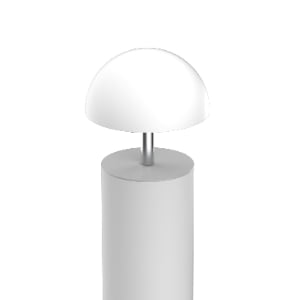
A modern white table lamp with a cylindrical base and a dome-shaped shade, shown against a plain white background.

GNSS Differential Reference Station

A high-precision GNSS/Beidou differential reference station that provides centimeter-level RTK corrections and sub-meter static accuracy. Supports RTCM differential data output, 4G/WiFi backhaul, UWB optional transmission, and fully integrates with positioning platforms for mining, ports, factories, and outdoor infrastructure.

View Product
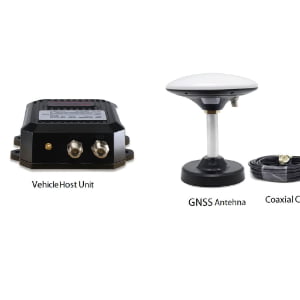
A vehicle host unit, GNSS antenna, and coaxial cable are displayed separately on a white background with labels.

URTC Vehicle-Mounted Hybrid Positioning Terminal

The URTC Vehicle-Mounted Hybrid Positioning Terminal integrates RTK centimeter-level positioning, optional UWB <30 cm indoor positioning, and a GNSS full-constellation system, enabling high-precision positioning for industrial vehicles, engineering machinery, cranes, and fleet applications. With a separated-module design using coaxial cable connection, the URTC terminal achieves RTK accuracy of ±3 cm, supports 4G full-netcom communication, anti-collision functions, and performs reliably in harsh industrial environments with IP67 protection, wide temperature tolerance, and strong signal reception.

View Product
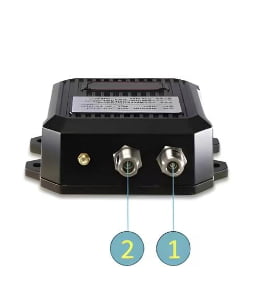
A black STD Dual channel base station with two ports on the front, each labeled with blue circles containing numbers 1 and 2.

STD UWB Dual Channel Base Station

The STD UWB Dual-Channel Base Station is an industrial-grade positioning device designed for tunnel, mining, and underground environments.

View Product
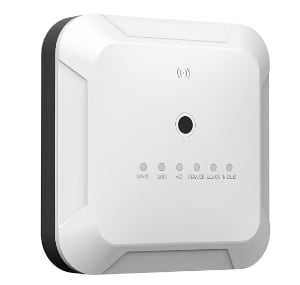
Side view of UWB base station with status indicators.

SN2 UWB PoE Anchor

The SN2 is an industrial‑grade UWB positioning anchor designed for high‑accuracy real‑time location systems. It supports Standard PoE or 12–24 V DC power, delivers sub‑meter performance (<30 cm LoS), and features an IP66 enclosure for harsh indoor/outdoor environments. Multiple mounting options (ceiling, wall, pole clamp) make deployment easy in factories, warehouses, and tunnels. Optional 4G/Wi‑Fi backhaul, AI video add‑on, and sound‑light alarm extend the anchor’s capability for safety and analytics. (Actual performance depends on anchor density, layout, and site RF conditions.)

View Product
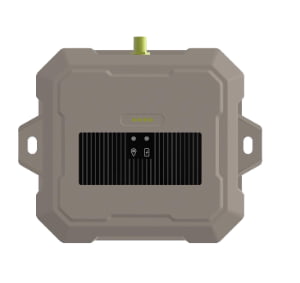
Gray rectangular electronic device with a black panel, LED indicators, and two side mounting flanges; a yellow cable extends from the top—designed as a WX UWB Beacon for advanced positioning applications.

WX UWB Wireless Positioning Beacon

The WX UWB Wireless Positioning Beacon is a battery-powered industrial-grade UWB device designed for wireless deployment without cable installation.

View Product
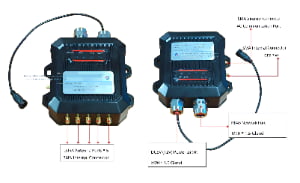
English-labeled diagram showing TXWG communication gateway ports including SMA, 4G, GPS, RJ45, LORA antenna ports, and power input.

TXWG Industrial Communication Gateway

A high-performance LPWAN-based industrial communication gateway designed for long-distance, low-power IoT communication. It supports LORA self-organizing networking, 4G cloud transmission, GPS time sync, multi-channel data forwarding, and explosion-proof applications.

View Product

Bill of Materials

Example BOM (based on the recommended architecture above)

ModelSummary
GNSS Differential Reference StationA high-precision GNSS/Beidou differential reference station that provides centimeter-level RTK corrections and sub-meter static accuracy. Supports RTCM differential data output, 4G/WiFi backhaul, UWB optional transmission, and fully integrates with positioning platforms for mining, ports, factories, and outdoor infrastructure.
URTC Vehicle-Mounted Hybrid Positioning TerminalThe URTC Vehicle-Mounted Hybrid Positioning Terminal integrates RTK centimeter-level positioning, optional UWB <30 cm indoor positioning, and a GNSS full-constellation system, enabling high-precision positioning for industrial vehicles, engineering machinery, cranes, and fleet applications. With a separated-module design using coaxial cable connection, the URTC terminal achieves RTK accuracy of ±3 cm, supports 4G full-netcom communication, anti-collision functions, and performs reliably in harsh industrial environments with IP67 protection, wide temperature tolerance, and strong signal reception.
STD UWB Dual Channel Base StationThe STD UWB Dual-Channel Base Station is an industrial-grade positioning device designed for tunnel, mining, and underground environments.
SN2 UWB PoE AnchorThe SN2 is an industrial‑grade UWB positioning anchor designed for high‑accuracy real‑time location systems. It supports Standard PoE or 12–24 V DC power, delivers sub‑meter performance (<30 cm LoS), and features an IP66 enclosure for harsh indoor/outdoor environments. Multiple mounting options (ceiling, wall, pole clamp) make deployment easy in factories, warehouses, and tunnels. Optional 4G/Wi‑Fi backhaul, AI video add‑on, and sound‑light alarm extend the anchor’s capability for safety and analytics. (Actual performance depends on anchor density, layout, and site RF conditions.)
WX UWB Wireless Positioning BeaconThe WX UWB Wireless Positioning Beacon is a battery-powered industrial-grade UWB device designed for wireless deployment without cable installation.
TXWG Industrial Communication GatewayA high-performance LPWAN-based industrial communication gateway designed for long-distance, low-power IoT communication. It supports LORA self-organizing networking, 4G cloud transmission, GPS time sync, multi-channel data forwarding, and explosion-proof applications.

Example Configuration

GNSS Differential Reference Station (Provides RTK correction data for all cranes and yard vehicles, defining the yard coordinate frame for precise positioning.)
Qty: 1
URTC Vehicle-Mounted Hybrid Positioning Terminal (Installed on RTGs/RMGs and yard stackers to calculate precise positions using GPS RTK and optional UWB assistance, and to interface with in-cab displays or PLCs.)
Qty: 10
STD UWB Dual Channel Base Station (Installed along gantry rails and major yard travel lanes to provide UWB reference points for positioning and RTLS, especially near tall stacks and buildings.)
Qty: 20
SN2 UWB PoE Anchor (Mounted near block edges, gate lanes and critical intersections to stabilise UWB coverage and support RTLS-based analytics.)
Qty: 16
WX UWB Wireless Positioning Beacon (Used for remote or temporary areas of the yard where cables are difficult to install, such as overflow stacks and temporary laydown areas.)
Qty: 8

Compliance & Regulations

Support for yard operating procedures and safety rules

Traceable records for customer and authority audits**

Data security and integration control

🌍 Industries using this solution

Related Technical Resources

FAQs

Ready to Deploy?

Running gantry cranes or yard stackers in busy yards and want accurate, lane-level positioning? Share your yard layout, block structure and fleet mix, and our engineers will propose a GPS RTK + UWB positioning design and example BOM tailored to your operations.

Contact Sales
Procurement (Device & Data Layer)

Shortlisting devices? Get an RFQ-ready BOM path.

Move from product selection to an actionable RFQ: scope boundaries, terms, lead time, and deliverables.

Contact Sales

Ready to Deploy RTLS?

Share your site layout and accuracy needs--we'll suggest a practical setup.

Contact Us