Skip to content
Industrial UWB RTLS for Real-Time Visibility
Menu

Forklift & Industrial Vehicle Collision Avoidance (UWB RTLS)

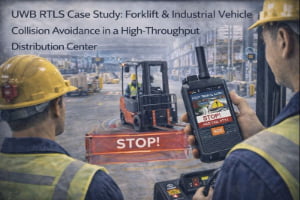
Forklifts and industrial vehicles are essential for moving materials, but they also create some of the highest risks in warehouses and factories. Drivers work under time pressure in narrow aisles and busy yards; pedestrians step into shared lanes; visibility is often limited by racks, stacked pallets and trailers. Most incidents are not due to equipment failure, but to a momentary lack of awareness.

The Forklift & Industrial Vehicle Collision Avoidance solution combines UWB real-time location with on-vehicle devices and worker tags. Forklifts, tuggers, pallet trucks and other industrial vehicles are equipped with UWB-based on-board units that continuously measure distance to nearby pedestrian tags and other vehicles. When someone enters a configurable warning or danger zone, the driver receives audible and visual alerts, and—where allowed—speed can be reduced automatically in high-risk areas.

Solution Details

Category
Asset RTLS & Anti-Collision
Industries
Construction Manufacturing Warehousing & Logistics
Environments
Factory Warehouse Yard Outdoor
Implementation
complex

Overview

Forklifts and industrial vehicles are essential for moving materials, but they also create some of the highest risks in warehouses and factories. Drivers work under time pressure in narrow aisles and busy yards; pedestrians step into shared lanes; visibility is often limited by racks, stacked pallets and trailers. Most incidents are not due to equipment failure, but to a momentary lack of awareness.

The Forklift & Industrial Vehicle Collision Avoidance solution combines UWB real-time location with on-vehicle devices and worker tags. Forklifts, tuggers, pallet trucks and other industrial vehicles are equipped with UWB-based on-board units that continuously measure distance to nearby pedestrian tags and other vehicles. When someone enters a configurable warning or danger zone, the driver receives audible and visual alerts, and—where allowed—speed can be reduced automatically in high-risk areas.

At the same time, the same UWB infrastructure can feed a central RTLS platform, so safety and operations teams can see how vehicles and people move through the site: which aisles see the most interaction, where near-misses cluster, and whether speed and zone rules are respected. This solution can be introduced step by step: starting with local vehicle–pedestrian alerts, and then adding RTLS-based analytics and reporting as needed.

Pain Points

Limited awareness of pedestrians in blind spots

Forklift and industrial vehicle drivers often cannot see pedestrians behind racks, corners, trailers or stacks. Mirrors and floor markings help but cannot adapt to dynamic traffic, and cameras only show where someone is looking at the screen.

No objective data on near-misses and risky zones

Most near-misses are never recorded. Safety teams know that “some aisles are dangerous” but lack hard data on where people and vehicles are frequently too close, how fast vehicles are driving and how often rules are violated.

Inconsistent enforcement of speed limits and no-go areas

Speed limits and one-way rules are written in procedures and painted on the floor, but they rely on driver self-discipline and occasional supervision. There is no automatic, real-time mechanism that adapts to actual traffic or enforces different behaviours in mixed zones, crossings and blind corners.

Difficult accident and incident reconstruction

When a collision or near-miss occurs, it is hard to reconstruct the exact positions and speeds of vehicles and pedestrians before the event. Investigations depend on subjective statements, camera angles and partial access logs, which makes it hard to learn from incidents and to close out corrective actions.

System Architectures & Topology

Local UWB Collision Avoidance for Forklifts and Industrial Vehicles

Architecture ID: forklift_local_anticollision

Factory Warehouse
  • Forklifts and industrial vehicles are equipped with UWB on-board units. Workers who operate on foot wear compact UWB tags on the wrist, belt or badge. Vehicles and tags continuously exchange UWB signals and calculate distance in real time. When a pedestrian or another vehicle enters a configurable warning or danger zone around the vehicle, the on-board unit triggers audible and visual alerts, and optional relays can slow the vehicle in defined cases. No fixed anchors are required for basic functionality, which makes this architecture fast to deploy on existing sites where you want to start with local collision avoidance first.

Key Advantages

  • No need to install fixed anchors for initial deployment
  • Focused directly on preventing collisions between vehicles and pedestrians
  • Shorter implementation time and limited interference with building structure
  • Good starting point for sites that want to prove the concept before investing in full RTLS

Limitations / When Not To Use

  • Provides limited or no map-based RTLS visibility; analytics are mainly distance and alert based
  • Does not directly show paths, heatmaps or zone occupancy for vehicles and pedestrians
  • Extending to full RTLS later requires adding anchors and server capabilities

Notes: Recommended for customers who want to start with focused forklift collision avoidance, and later have the option to extend to full RTLS and analytics.

Architecture Components / Layers

Vehicle layer – On-board UWB units

On-board devices installed on forklifts and other industrial vehicles provide UWB ranging, driver alerts and optional outputs for speed control or warning lights. They are powered from the vehicle and designed for vibration and industrial conditions.

Pedestrian tag layer – Wearables for workers

Workers close to vehicle traffic wear UWB tags on wrists, badges or helmets. Tags broadcast short signals that nearby vehicles can detect, allowing the system to calculate distance and direction-independent warning zones.

Configuration & monitoring layer

A configuration tool or central platform allows safety teams to set distance thresholds, select which interactions are enabled (vehicle–pedestrian, vehicle–vehicle) and update firmware and parameters over time. Basic dashboards show device status and simple event counts.

Site-Wide RTLS with Zone-Based Forklift & Industrial Vehicle Collision Avoidance

Architecture ID: forklift_full_rtls_anticollision

Factory Warehouse
  • Fixed UWB anchors are installed across warehouses, production areas and yards to create a site-wide RTLS infrastructure. Vehicles and pedestrians use UWB tags that communicate both with anchors (for RTLS) and directly with each other (for short-range collision avoidance). The RTLS server calculates real-time positions for all moving assets, applying zone-level speed rules, people–vehicle separation policies and analytics. Anti-collision warnings are still generated on the vehicle, but are now enriched with information about zone type, direction of movement and historical context for safety improvement.

Key Advantages

  • Combines immediate collision avoidance with full RTLS visibility and analytics
  • Enables zone-specific speed rules, separation policies and targeted layout improvements
  • Provides strong, data-driven evidence for safety programmes and investment decisions
  • Scales across multiple buildings and sites under a single RTLS platform

Limitations / When Not To Use

  • Higher initial investment and project scope than local anti-collision only
  • Requires planning for anchor placement, cabling and network segmentation
  • Best suited to sites with long-term commitment to RTLS-based safety and operations

Notes: Recommended for customers who already plan to deploy RTLS for personnel or assets and want to use the same infrastructure to achieve a deeper, data-driven forklift and industrial vehicle safety programme.

Architecture Components / Layers

UWB anchor layer – Site-wide positioning grid

SN2, SW and, where appropriate, WX anchors form a positioning grid covering key aisles, crossings, production lines and yard lanes. This grid enables continuous RTLS for both people and vehicles, supporting maps, heatmaps and detailed analysis.

Vehicle & pedestrian tag layer

Vehicle on-board units and pedestrian tags serve two roles: local ranging for direct collision avoidance, and RTLS sensing for map-based tracking when anchors are present. Tag profiles can be tuned by role—for example more frequent updates for fast-moving forklifts and slightly lower frequency for pedestrians.

RTLS server and analytics layer

The RTLS server maintains live maps of people and vehicles, applies zone-level rules, and records detailed interaction histories. Dashboards show near-miss distributions, high-risk corridors, typical driving patterns and rule violations, providing a strong basis for targeted safety improvements.

Integration & reporting layer

RTLS events and statistics can be exported to safety management systems, BI tools or WMS/production systems. For example, sites can correlate near-miss data with workload, shift patterns or process changes.

Workflow

This workflow applies to all architecture options above. Specific hardware selection varies depending on the chosen architecture.

1

Site survey and risk mapping

Survey warehouses, production areas and yards to identify where people and vehicles interact: shared aisles, cross-aisles, intersections, loading bays, production lines and outdoor transfer lanes. Classify zones by risk level—for example “pedestrian-only”, “mixed traffic” and “vehicle-only”—and list typical vehicle types and speeds in each area. This forms the basis for anti-collision rules and hardware placement.

Estimated time: 2–5 days per site
2

Vehicle on-board unit installation

Equip forklifts, pallet trucks, reach trucks and other industrial vehicles with UWB-based on-board units. These units are powered from the vehicle, integrate UWB antennas and provide sound/light feedback to the driver. For some models, relay outputs can be connected to speed control or warning lights. During installation, each vehicle is registered in the system and assigned to a fleet category, such as “indoor forklift”, “yard truck” or “AGV”.

Estimated time: 1–2 hours per vehicle after mechanical standards are defined
3

Worker tag deployment and role mapping

Issue UWB tags in the form of wristbands, badge tags or belt devices to pedestrians who work near moving vehicles: pickers, line operators, maintenance staff, quality inspectors, cleaning staff and visitors. Map tag IDs to roles and departments so that the system can distinguish between, for example, forklift drivers, ground staff and supervisors, and apply different logic if necessary.

Estimated time: 1–2 weeks including registration and safety briefings
4

Collision avoidance rules and zones configuration

Configure distance thresholds and warning logic between vehicles and pedestrians, and between vehicles themselves. Define different warning distances for low-speed indoor aisles versus faster yard operations. Set zone-based behaviours—for example stronger alerts and lower speed thresholds in mixed crossings and near emergency exits, and reduced sensitivity in low-risk, wide-open areas. If RTLS anchors are available, link anti-collision rules with map zones to create smarter behaviours and high-risk heatmaps.

Estimated time: 1–3 weeks including tuning with real traffic
5

Pilot, driver training and roll-out

Run a pilot in one warehouse or production hall with a subset of vehicles and staff. Fine-tune alarm levels and filter settings to avoid nuisance alerts while maintaining safety. Train drivers and pedestrians on what the alerts mean and how to react. Once behaviour and performance are acceptable, extend installation to additional vehicles, shifts and sites, and start using RTLS reports to identify risky zones and support continuous improvement.

Estimated time: 4–8 weeks from pilot to steady state

Key Outcomes

+80–90% events captured
Recorded people–vehicle near-miss events
More events are detected and recorded compared to relying only on self-reporting and CCTV review, giving a better basis for proactive improvement.
-30–50% reduction
Serious collision and contact incidents
Typical reduction when anti-collision systems, training and layout improvements are combined over time.
-30–60% reduction
Time spent investigating incidents and disputes
Objective tracks and distance histories help reconstruct events more quickly and accurately.
-20–40% reduction
Manual supervision effort in high-risk zones
Automatic alerts and zone rules reduce the need for continuous physical supervision at crossings and shared lanes.

Recommended Products

A small, dome-shaped electronic device with a white top, black base, control buttons, and USB port, shown on a dark surface.

BQ Vehicle-Mounted Positioning Terminal

The BQ Vehicle-Mounted Positioning Terminal is an industrial-grade hybrid positioning device designed for vehicles operating in mines, construction sites, ports, transportation fleets, and harsh outdoor environments. It integrates UWB high-precision positioning, RTK centimeter-level positioning, GNSS multi-system outdoor tracking, 4G full-network communication, and features strong magnetic adsorption, anti-disassembly alarm, motion detection, TTS voice, and optional LoRa/5G modules. With a rugged IP66 design and a built-in 3000mAh rechargeable battery (optional 5000mAh), the BQ terminal ensures reliable real-time tracking and vehicle safety management in demanding industrial conditions.

View Product
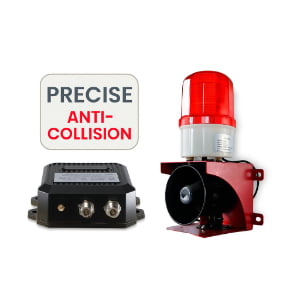
Main product image of the FZ anti-collision radar and audio-visual alarm with ‘Precise Anti-Collision’ label.

FZ Industrial Collision Avoidance Radar

The FZ Collision Avoidance Radar is a high-precision industrial anti-collision device designed for vehicles, loaders, forklifts, cranes, and mining trucks. It supports a detection distance over 100 meters, 30 cm accuracy, dual-relay output, strong anti-interference capability, and IP67 protection for harsh industrial environments.

View Product
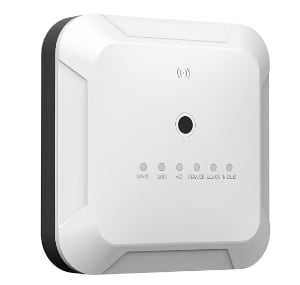
Side view of UWB base station with status indicators.

SN2 UWB PoE Anchor

The SN2 is an industrial‑grade UWB positioning anchor designed for high‑accuracy real‑time location systems. It supports Standard PoE or 12–24 V DC power, delivers sub‑meter performance (<30 cm LoS), and features an IP66 enclosure for harsh indoor/outdoor environments. Multiple mounting options (ceiling, wall, pole clamp) make deployment easy in factories, warehouses, and tunnels. Optional 4G/Wi‑Fi backhaul, AI video add‑on, and sound‑light alarm extend the anchor’s capability for safety and analytics. (Actual performance depends on anchor density, layout, and site RF conditions.)

View Product
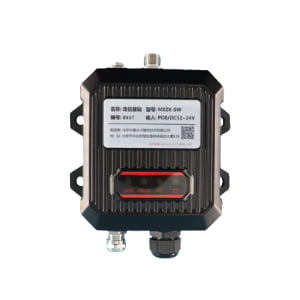
A black SW UWB Anchor device with labeled ports and a sticker showing specs, featuring indicator lights for LWB, GNSS, and 4G.

SW UWB Anchor

The SW UWB Positioning Base Station is an industrial-grade device designed for sub-meter accuracy tracking of personnel, vehicles, and assets in factories, tunnels, and other complex environments.

View Product
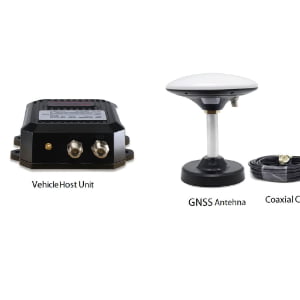
A vehicle host unit, GNSS antenna, and coaxial cable are displayed separately on a white background with labels.

URTC Vehicle-Mounted Hybrid Positioning Terminal

The URTC Vehicle-Mounted Hybrid Positioning Terminal integrates RTK centimeter-level positioning, optional UWB <30 cm indoor positioning, and a GNSS full-constellation system, enabling high-precision positioning for industrial vehicles, engineering machinery, cranes, and fleet applications. With a separated-module design using coaxial cable connection, the URTC terminal achieves RTK accuracy of ±3 cm, supports 4G full-netcom communication, anti-collision functions, and performs reliably in harsh industrial environments with IP67 protection, wide temperature tolerance, and strong signal reception.

View Product
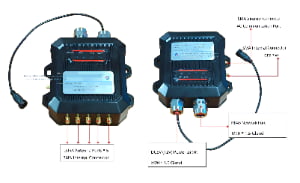
English-labeled diagram showing TXWG communication gateway ports including SMA, 4G, GPS, RJ45, LORA antenna ports, and power input.

TXWG Industrial Communication Gateway

A high-performance LPWAN-based industrial communication gateway designed for long-distance, low-power IoT communication. It supports LORA self-organizing networking, 4G cloud transmission, GPS time sync, multi-channel data forwarding, and explosion-proof applications.

View Product

Bill of Materials

Example BOM (based on the recommended architecture above)

ModelSummary
BQ Vehicle-Mounted Positioning TerminalThe BQ Vehicle-Mounted Positioning Terminal is an industrial-grade hybrid positioning device designed for vehicles operating in mines, construction sites, ports, transportation fleets, and harsh outdoor environments. It integrates UWB high-precision positioning, RTK centimeter-level positioning, GNSS multi-system outdoor tracking, 4G full-network communication, and features strong magnetic adsorption, anti-disassembly alarm, motion detection, TTS voice, and optional LoRa/5G modules. With a rugged IP66 design and a built-in 3000mAh rechargeable battery (optional 5000mAh), the BQ terminal ensures reliable real-time tracking and vehicle safety management in demanding industrial conditions.
FZ Industrial Collision Avoidance RadarThe FZ Collision Avoidance Radar is a high-precision industrial anti-collision device designed for vehicles, loaders, forklifts, cranes, and mining trucks. It supports a detection distance over 100 meters, 30 cm accuracy, dual-relay output, strong anti-interference capability, and IP67 protection for harsh industrial environments.
SN2 UWB PoE AnchorThe SN2 is an industrial‑grade UWB positioning anchor designed for high‑accuracy real‑time location systems. It supports Standard PoE or 12–24 V DC power, delivers sub‑meter performance (<30 cm LoS), and features an IP66 enclosure for harsh indoor/outdoor environments. Multiple mounting options (ceiling, wall, pole clamp) make deployment easy in factories, warehouses, and tunnels. Optional 4G/Wi‑Fi backhaul, AI video add‑on, and sound‑light alarm extend the anchor’s capability for safety and analytics. (Actual performance depends on anchor density, layout, and site RF conditions.)
SW UWB AnchorThe SW UWB Positioning Base Station is an industrial-grade device designed for sub-meter accuracy tracking of personnel, vehicles, and assets in factories, tunnels, and other complex environments.
URTC Vehicle-Mounted Hybrid Positioning TerminalThe URTC Vehicle-Mounted Hybrid Positioning Terminal integrates RTK centimeter-level positioning, optional UWB <30 cm indoor positioning, and a GNSS full-constellation system, enabling high-precision positioning for industrial vehicles, engineering machinery, cranes, and fleet applications. With a separated-module design using coaxial cable connection, the URTC terminal achieves RTK accuracy of ±3 cm, supports 4G full-netcom communication, anti-collision functions, and performs reliably in harsh industrial environments with IP67 protection, wide temperature tolerance, and strong signal reception.
TXWG Industrial Communication GatewayA high-performance LPWAN-based industrial communication gateway designed for long-distance, low-power IoT communication. It supports LORA self-organizing networking, 4G cloud transmission, GPS time sync, multi-channel data forwarding, and explosion-proof applications.

Example Configuration

BQ Vehicle-Mounted Positioning Terminal (Installed on forklifts, pallet trucks and yard tractors to detect nearby tags and display warnings to drivers.)
Qty: 40
SH UWB Positioning Wristband Tag (Assigned to warehouse operators, production workers, maintenance staff and other pedestrians working around vehicles.)
Qty: 300
GP UWB Positioning Employee Card (Used by supervisors, engineers, quality inspectors and visitors who need to be protected and included in analytics.)
Qty: 80
SN2 UWB PoE Anchor (Ceiling or rack-mounted anchors covering warehouse aisles, production lines and main internal traffic routes for full RTLS visibility.)
Qty: 40
WX UWB Wireless Positioning Beacon (Wireless beacons covering yard areas and outdoor loading zones where cabling is difficult.)
Qty: 10

Compliance & Regulations

Support for internal traffic and pedestrian safety policies

Objective records for incident investigations

🌍 Industries using this solution

Related Technical Resources

FAQs

Ready to Deploy?

Operating forklifts and industrial vehicles in busy warehouses or plants? Share your layout, traffic patterns and safety priorities with us, and our engineers will propose a phased collision avoidance and RTLS design tailored to your site.

Contact Sales
Procurement (Device & Data Layer)

Shortlisting devices? Get an RFQ-ready BOM path.

Move from product selection to an actionable RFQ: scope boundaries, terms, lead time, and deliverables.

Contact Sales

Ready to Deploy RTLS?

Share your site layout and accuracy needs--we'll suggest a practical setup.

Contact Us