Skip to content
Industrial UWB RTLS for Real-Time Visibility
Menu

Factory Tool & Material Tracking RTLS

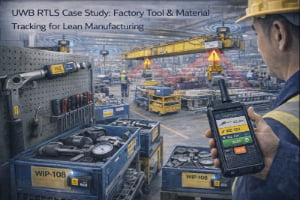
In most factories there are hundreds or thousands of movable tools and material carriers that are critical for everyday production: special jigs and fixtures, torque tools, calibration instruments, welding equipment, lifting gear, returnable containers, pallets and kitting carts. These assets move between tool cribs, workshops, production lines and maintenance areas all day long.

When a key tool goes missing, a line can be blocked for minutes or hours while people search the last known locations. High-value tools and gauges occasionally disappear or are left in the wrong area. Inventory audits depend on manual counts and paper lists. It is also difficult to prove how intensively each tool is used, or whether it has stayed too long in a repair bay.

Solution Details

Category
Asset RTLS & Anti-Collision
Industries
Industrial Maintenance & Utilities Manufacturing
Environments
Factory Warehouse
Implementation
moderate

Overview

In most factories there are hundreds or thousands of movable tools and material carriers that are critical for everyday production: special jigs and fixtures, torque tools, calibration instruments, welding equipment, lifting gear, returnable containers, pallets and kitting carts. These assets move between tool cribs, workshops, production lines and maintenance areas all day long.

When a key tool goes missing, a line can be blocked for minutes or hours while people search the last known locations. High-value tools and gauges occasionally disappear or are left in the wrong area. Inventory audits depend on manual counts and paper lists. It is also difficult to prove how intensively each tool is used, or whether it has stayed too long in a repair bay.

The Factory Tool & Material Tracking RTLS solution uses UWB anchors and wireless beacons installed across the plant, combined with rugged UWB asset tags mounted on tools, tool carts and material carriers. The system shows the live location of tagged items on a plant map, with search functions, zone-based rules and dwell-time analytics. Engineers and supervisors can quickly find the nearest available tool, see where kitting carts are parked, and receive alerts when assets are misplaced or stay too long in critical areas.

For greenfield factories the RTLS can share the same infrastructure as personnel and vehicle tracking. For existing plants, wireless beacons and battery-powered asset tags make it possible to retrofit without extensive cabling.
Pain Points

Time wasted searching for tools, fixtures and carts

Operators and maintenance technicians often lose minutes or even hours per shift walking the shop floor to look for torque tools, jigs, welding machines or kitting carts that “should” be in a certain area. This delay directly impacts line changeovers and trouble-shooting response times.

Missing or unreturned tools and materials

High-value tools, shared gauges and special fixtures are frequently left on lines, in maintenance bays or in temporary storage areas. Over time some of them are lost or damaged, but it is difficult to know exactly when and where this happened, or who last used the asset.

Limited visibility of WIP and material staging in the plant

Even with a good ERP or MES, it is hard to see where specific pallets, bins or totes are physically located. WIP carriers may be parked in aisles or buffer zones without being scanned, leading to double-handling, local congestion and occasional stock-outs at the line.

Manual inventory counts and poor utilisation data

Tool cribs and stores often perform periodic counts using spreadsheets or printed lists. This is labour-intensive and still leaves gaps. At the same time, maintenance and operations teams lack objective data on which tools are heavily used, which sit idle and where additional sets are truly needed.

Difficult to enforce tool control and calibration rules

Many factories must ensure that torque tools, gauges and inspection instruments are calibrated and stored correctly. When assets travel freely between lines and departments, it becomes difficult to ensure that non-calibrated tools are not used on critical operations or taken outside of controlled areas.

System Architectures & Topology

Wired UWB RTLS for High-Value Tools and Materials

Architecture ID: factory_tools_uwb_wired

Factory Warehouse
  • PoE-powered UWB anchors are installed along main aisles, tool cribs, work areas and staging zones in the factory. Anchors connect via industrial switches and Ethernet or fibre to the RTLS server in the control room. High-value tools, fixtures, carts and material carriers are equipped with UWB asset tags that periodically report their presence and distance to nearby anchors. The RTLS platform computes positions, displays them on the plant map and provides search, zone monitoring and history replay.

Key Advantages

  • Stable, low-latency infrastructure suitable for high-traffic areas and 24/7 production
  • Supports dense positioning and history storage for many tagged assets
  • Shares the same wired network backbone as personnel and vehicle RTLS where available
  • Well suited for long-term deployments where cabling is acceptable

Limitations / When Not To Use

  • Requires Ethernet cabling and network access in most areas where tools and materials move
  • Less convenient for temporary buildings, mezzanines or outdoor storage that change frequently
  • Planning and installation take more time compared with purely wireless beacons

Notes: Recommended for factories that already have good industrial networking in place and want a robust, long-lived RTLS infrastructure for tool and material tracking.

Architecture Components / Layers

Infrastructure layer – PoE UWB anchors and switches

Provides stable UWB coverage in all critical storage and work areas. Anchors are powered via PoE or DC and backhauled over Ethernet to the RTLS server, following the wired architecture used in many industrial deployments.

Asset layer – UWB tags on tools, fixtures and carriers

Tools, fixtures, kitting carts and returnable containers are equipped with rugged UWB asset tags, typically magnet-mounted or strapped. The tags periodically transmit UWB pulses so that the system can compute positions and detect motion or dwell time.

Application layer – RTLS server and search dashboards

The RTLS server fuses anchor and tag data into a plant map, manages geofences and business rules, and exposes search and reporting interfaces. Tool crib attendants and supervisors can see asset positions, recent locations and alarms.

Wireless UWB Beacon Architecture for Fast Retrofit

Architecture ID: factory_tools_uwb_wireless

Factory Warehouse
  • Battery-powered UWB beacons are mounted on walls, columns and racks in the factory, forming lightweight location cells without new cabling. Asset tags on tools and carts communicate with the nearest beacons, and data is forwarded via LPWAN gateways or existing 4G/5G routers to the RTLS server. This architecture is well suited for brownfield plants, temporary workshops and areas where power and Ethernet are difficult to provide.

Key Advantages

  • Minimal impact on existing infrastructure – no new Ethernet cabling required in most areas
  • Very fast installation; beacons can be mounted and moved with basic tools
  • Ideal for brownfield factories, temporary workshops and areas undergoing frequent layout changes
  • Can be combined with wired anchors in high-traffic or high-precision zones

Limitations / When Not To Use

  • Depends on battery life and periodic beacon replacement or maintenance
  • Positioning granularity may be coarser than dense wired deployments in very large halls
  • Requires careful planning of gateway coverage and data backhaul in RF‑noisy environments

Notes: Best suited for factories that want to start quickly with tool and material tracking, or where production layouts change frequently and cabling is not practical.

Architecture Components / Layers

Beacon layer – battery-powered UWB beacons

Provides wireless positioning reference points in aisles, storage zones and temporary areas. Beacons are battery-powered and can run for several years, allowing flexible deployment and re-layouts with minimal effort.

Asset layer – UWB tags on tools and carriers

UWB asset tags attached to tools, fixtures and carriers exchange ranging messages with nearby beacons. Tag data is sent via 4G / LPWAN to the RTLS server through communication gateways.

Gateway & server layer

Communication gateways collect messages from beacons and tags and forward them securely to the RTLS server. The server calculates positions, manages rules and interfaces with higher-level systems.

Workflow

This workflow applies to all architecture options above. Specific hardware selection varies depending on the chosen architecture.

1

Asset mapping and process walk-through

Work with production, maintenance and quality teams to list the main classes of tools, fixtures and material carriers that are worth tracking. Walk through typical flows: where each asset is stored, how it moves between lines and workshops, and which locations are considered “normal use”, “temporary parking” or “off-limits”. This step sets priorities for which assets to tag first.

Estimated time: 1–2 weeks for a single plant
2

UWB coverage design (wired and wireless options)

Design UWB coverage for the target buildings using a mix of PoE-powered anchors along main aisles, tool cribs and work areas, and battery-powered wireless beacons in locations where cabling is difficult, such as mezzanines or outdoor racks. The goal is to get reliable positioning in areas where tools and materials are stored or frequently parked, not necessarily every corner of the facility.

Estimated time: 2–3 weeks including on-site testing
3

Tag selection, mounting and labelling standards

Select appropriate UWB asset tags for different classes of tools and carriers. For example, magnetic rechargeable tags for tool carts and fixtures, compact tags for handheld tools, and more rugged tags for mobile equipment. Define mounting standards (magnetic, bolted, strapped or adhesive) and asset ID label formats so that RTLS IDs match existing tool or material codes in your ERP or CMMS.

Estimated time: Pilot in one area within 2–4 weeks
4

RTLS platform configuration and business rules

Configure floor plans and geofences on the RTLS platform: tool cribs, calibration labs, production lines, maintenance bays, temporary staging zones and “no parking” areas. Create search views for tool crib attendants and line leaders, along with rules for alerts, such as “tool left outside tool crib for more than 24 hours” or “fixture parked in wrong line area”. Optionally, integrate asset IDs with ERP, MES or CMMS so that users can search by existing asset numbers.

Estimated time: 3–6 weeks including integration and user feedback
5

Rollout to additional areas and continuous improvement

After validating the pilot, extend coverage and tagging to more lines, warehouses and tool cribs. Use data from the RTLS—such as dwell-time per zone and utilisation of critical tools—to adjust stock levels, re-organise staging areas and refine rules. Train supervisors, planners and maintenance teams to use location data in daily stand-ups and problem-solving.

Estimated time: Ongoing; typically 3–6 months to cover a full factory

Key Outcomes

-40–80% reduction
Time spent searching for tools and carts
Operators and technicians can locate tagged tools and carriers within seconds using RTLS search, instead of walking the plant to ask colleagues.
-30–70% reduction
Lost or untraceable tools and fixtures
History traces and zone rules make it much harder for high-value assets to disappear without a record of where they were last seen.
-20–40% reduction
Line stoppages caused by missing tools or materials
Better visibility of tool and material locations shortens recovery time when something is not in the expected place during changeovers or maintenance.
-50–70% reduction
Effort to perform inventory counts and audits
Instead of walking through the facility with clipboards, teams can use RTLS views and reports to confirm where tagged assets are and identify exceptions for manual follow-up.

Recommended Products

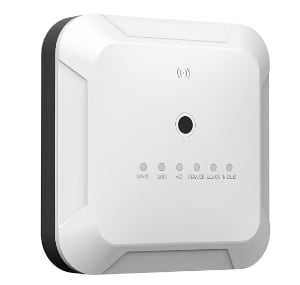
Side view of UWB base station with status indicators.

SN2 UWB PoE Anchor

The SN2 is an industrial‑grade UWB positioning anchor designed for high‑accuracy real‑time location systems. It supports Standard PoE or 12–24 V DC power, delivers sub‑meter performance (<30 cm LoS), and features an IP66 enclosure for harsh indoor/outdoor environments. Multiple mounting options (ceiling, wall, pole clamp) make deployment easy in factories, warehouses, and tunnels. Optional 4G/Wi‑Fi backhaul, AI video add‑on, and sound‑light alarm extend the anchor’s capability for safety and analytics. (Actual performance depends on anchor density, layout, and site RF conditions.)

View Product
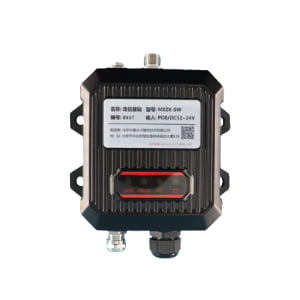
A black SW UWB Anchor device with labeled ports and a sticker showing specs, featuring indicator lights for LWB, GNSS, and 4G.

SW UWB Anchor

The SW UWB Positioning Base Station is an industrial-grade device designed for sub-meter accuracy tracking of personnel, vehicles, and assets in factories, tunnels, and other complex environments.

View Product
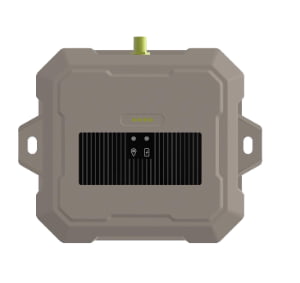
Gray rectangular electronic device with a black panel, LED indicators, and two side mounting flanges; a yellow cable extends from the top—designed as a WX UWB Beacon for advanced positioning applications.

WX UWB Wireless Positioning Beacon

The WX UWB Wireless Positioning Beacon is a battery-powered industrial-grade UWB device designed for wireless deployment without cable installation.

View Product
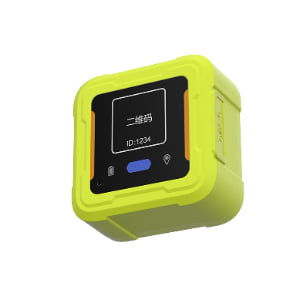
A small, square, yellow electronic device with a black display screen showing Chinese characters and the ID:1234. The device has rounded edges and minimal buttons.

WZ UWB Asset Positioning Tag

The WZ UWB Asset Positioning Tag is a high-precision industrial tracking device designed for vehicles, tools, pallets, and other assets. It features a built-in 1800mAh rechargeable battery, powerful magnetic mounting, IP67 protection, and UWB sub-meter (<30cm) positioning accuracy. With a wireless communication range of over 100 meters, smart sleep mode, beeping alerts, and low-battery alarm, the WZ tag enables reliable asset visibility and loss prevention across factories, logistics hubs, rail workshops, and heavy-equipment environments.

View Product
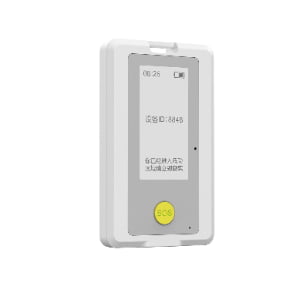
A rectangular white device with a screen displaying Chinese text, a time reading 08:26, an ID number, and a yellow SOS button below the display.

GP UWB Positioning Employee Card

The GP UWB Positioning Employee Card is a compact, intelligent badge-style positioning device designed for industrial personnel management and safety monitoring. Built on UWB (Ultra-Wideband) technology, it achieves 10–30 cm accuracy, supports real-time location tracking, and enables instant SOS alerts via a one-touch button. The device includes vibration reminders, motion/static detection, and optional NFC/RFID, E-ink display, and LoRa communication modules. With an IP66-rated enclosure and 900 mAh rechargeable battery, it operates continuously in demanding environments such as factories, construction sites, logistics parks, and tunnels.

View Product
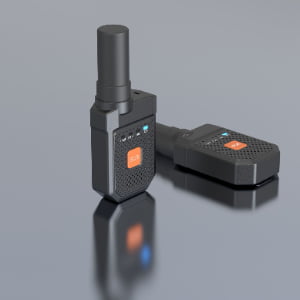
Two black handheld communication devices with visible SOS buttons and indicator lights are placed on a reflective gray surface.

URT Hybrid Positioning Terminal

The URT Hybrid Positioning Terminal is an industrial-grade wearable tracking device that integrates UWB high-precision positioning, RTK centimeter-level positioning, GPS outdoor positioning, and 4G wireless communication. It provides real-time personnel tracking, SOS emergency alerts, TTS voice broadcasting, motion detection, and optional NFC/Lora/5G expansion. With an IP66 rugged design and a 3000mAh magnetic-charging battery, the URT terminal is ideal for complex industrial environments such as factories, tunnels, construction sites, rail transit, and energy facilities.

View Product
English-labeled diagram showing TXWG communication gateway ports including SMA, 4G, GPS, RJ45, LORA antenna ports, and power input.

TXWG Industrial Communication Gateway

A high-performance LPWAN-based industrial communication gateway designed for long-distance, low-power IoT communication. It supports LORA self-organizing networking, 4G cloud transmission, GPS time sync, multi-channel data forwarding, and explosion-proof applications.

View Product

Bill of Materials

Example BOM (based on the recommended architecture above)

ModelSummary
SN2 UWB PoE AnchorThe SN2 is an industrial‑grade UWB positioning anchor designed for high‑accuracy real‑time location systems. It supports Standard PoE or 12–24 V DC power, delivers sub‑meter performance (<30 cm LoS), and features an IP66 enclosure for harsh indoor/outdoor environments. Multiple mounting options (ceiling, wall, pole clamp) make deployment easy in factories, warehouses, and tunnels. Optional 4G/Wi‑Fi backhaul, AI video add‑on, and sound‑light alarm extend the anchor’s capability for safety and analytics. (Actual performance depends on anchor density, layout, and site RF conditions.)
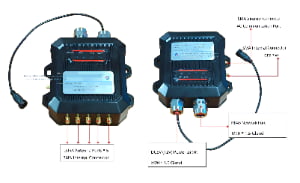
SW UWB AnchorThe SW UWB Positioning Base Station is an industrial-grade device designed for sub-meter accuracy tracking of personnel, vehicles, and assets in factories, tunnels, and other complex environments.
WX UWB Wireless Positioning BeaconThe WX UWB Wireless Positioning Beacon is a battery-powered industrial-grade UWB device designed for wireless deployment without cable installation.
WZ UWB Asset Positioning TagThe WZ UWB Asset Positioning Tag is a high-precision industrial tracking device designed for vehicles, tools, pallets, and other assets. It features a built-in 1800mAh rechargeable battery, powerful magnetic mounting, IP67 protection, and UWB sub-meter (<30cm) positioning accuracy. With a wireless communication range of over 100 meters, smart sleep mode, beeping alerts, and low-battery alarm, the WZ tag enables reliable asset visibility and loss prevention across factories, logistics hubs, rail workshops, and heavy-equipment environments.
GP UWB Positioning Employee CardThe GP UWB Positioning Employee Card is a compact, intelligent badge-style positioning device designed for industrial personnel management and safety monitoring. Built on UWB (Ultra-Wideband) technology, it achieves 10–30 cm accuracy, supports real-time location tracking, and enables instant SOS alerts via a one-touch button. The device includes vibration reminders, motion/static detection, and optional NFC/RFID, E-ink display, and LoRa communication modules. With an IP66-rated enclosure and 900 mAh rechargeable battery, it operates continuously in demanding environments such as factories, construction sites, logistics parks, and tunnels.
URT Hybrid Positioning TerminalThe URT Hybrid Positioning Terminal is an industrial-grade wearable tracking device that integrates UWB high-precision positioning, RTK centimeter-level positioning, GPS outdoor positioning, and 4G wireless communication. It provides real-time personnel tracking, SOS emergency alerts, TTS voice broadcasting, motion detection, and optional NFC/Lora/5G expansion. With an IP66 rugged design and a 3000mAh magnetic-charging battery, the URT terminal is ideal for complex industrial environments such as factories, tunnels, construction sites, rail transit, and energy facilities.
TXWG Industrial Communication GatewayA high-performance LPWAN-based industrial communication gateway designed for long-distance, low-power IoT communication. It supports LORA self-organizing networking, 4G cloud transmission, GPS time sync, multi-channel data forwarding, and explosion-proof applications.

Example Configuration

SN2 UWB PoE Anchor (Mounted on ceilings or columns along main aisles, tool cribs and work areas to provide UWB coverage for tagged tools and material carriers.)
Qty: 35
WX UWB Wireless Positioning Beacon (Battery-powered beacons used in mezzanines, assembly cells and temporary storage areas where power and cabling are difficult or expensive.)
Qty: 20
WZ UWB Asset Positioning Tag (Attached to high-value tools, fixtures, carts, dollies and special containers to provide location and history information and support “find nearest” searches.)
Qty: 200
GP UWB Positioning Employee Card (Issued to tool crib staff, maintenance engineers and logistics supervisors for personal positioning and for locating mobile diagnostic or calibration equipment.)
Qty: 40
TXWG Industrial Communication Gateway (Backhauls data from wireless beacons and remote areas into the plant network where direct cabling to the RTLS server is not available.)
Qty: 4

Compliance & Regulations

Support for tool control and foreign object risk reduction

Calibration and inspection discipline

Traceability for audits and customer investigations

🌍 Industries using this solution

Related Technical Resources

FAQs

Ready to Deploy?

Struggling with missing tools and material carts in your factory? Share a simple layout and a list of high-value assets, and our engineers will propose a UWB-based RTLS design and example BOM tailored to your production lines and tool cribs.

Contact Sales
Procurement (Device & Data Layer)

Shortlisting devices? Get an RFQ-ready BOM path.

Move from product selection to an actionable RFQ: scope boundaries, terms, lead time, and deliverables.

Contact Sales

Ready to Deploy RTLS?

Share your site layout and accuracy needs--we'll suggest a practical setup.

Contact Us