Skip to content
Industrial UWB RTLS for Real-Time Visibility
Menu

Factory Personnel Real-Time Location System (UWB RTLS)

Factory Personnel Real-Time Location System (RTLS)

Real-time personnel visibility is essential for modern industrial plants, especially in complex facilities with multiple workshops, hazardous zones, and mixed operations involving people, forklifts, cranes, and automated equipment.

Solution Details

Category
People RTLS & Safety
Industries
Manufacturing Warehousing & Logistics
Environments
Factory Warehouse Tunnel Yard Underground
Implementation
moderate

Overview

Factory Personnel Real-Time Location System (RTLS)

Real-time personnel visibility is essential for modern industrial plants, especially in complex facilities with multiple workshops, hazardous zones, and mixed operations involving people, forklifts, cranes, and automated equipment.

This solution uses UWB centimeter-level positioning + optional GPS RTK fusion, combined with personnel wearables, UWB anchors, and a cloud/on-premise location platform to provide real-time tracking, safety protection, and intelligent management for factory workers.

The system has been deployed in steel plants, power plants, chemical plants, manufacturing workshops, logistics centers, and tunnel environments.
Pain Points

Lack of real-time visibility of workers inside workshops or hazardous areas.

Traditional factories rely on manual supervision, CCTV monitoring, or periodic check-ins to confirm worker locations, which is inefficient and often inaccurate. Without real-time positioning, it is difficult to ensure staff safety in large workshops, multi-level buildings, or restricted zones.

Difficulty locating workers quickly during emergency response.

During accidents, gas leaks, or equipment failures, supervisors cannot instantly determine the exact location of workers. This delay significantly increases rescue time and operational risk, especially in complex industrial environments such as tunnels, steel plants, and chemical processing areas.

No automated safety alerts for entering restricted or dangerous zones.

Factories often have hazardous areas that require controlled access. Without automated geofencing, workers may accidentally enter high-risk zones without triggering warnings, causing potential injuries, equipment shutdowns, or compliance violations.

Inability to track the movement and dwell time of workers for compliance.

Manual attendance or paper logs are prone to errors. Without location-based data, it is impossible to analyze efficiency, optimize work routes, or verify time spent in specific work areas for compliance and productivity management.

System Architectures & Topology

Wired UWB RTLS (PoE Factory Deployment)

Architecture ID: wired_uwb_poe

Factory Warehouse Yard Hazardous / Tank Farm
  • UWB anchors (SN2 / SW) are deployed in a grid above workshops, corridors and critical areas, powered by PoE industrial switches.
  • Workers wear UWB wristbands, employee cards and hybrid safety helmets; each tag periodically sends UWB blinks and SOS events.
  • Anchor data is aggregated through PoE and core switches to an on-premise RTLS server without using any public network.
  • The positioning engine calculates <30 cm indoor accuracy and pushes positions, alarms and status to the GridRTLS platform.
  • The platform provides 2D/3D maps, geofencing, emergency mustering, historical replay and safety analytics for HSE teams.
Click to enlarge architecture diagram

Key Advantages

  • Highest reliability and lowest latency for large factories with existing Ethernet / PoE.
  • No dependence on public mobile networks; all traffic stays in the plant OT/IT network.
  • Best option for greenfield projects where cabling can be planned together with construction.
  • Supports high tag density and frequent updates for real-time worker visibility.

Limitations / When Not To Use

  • Requires cable routing and PoE switch installation; retrofits in old plants may be costly.
  • Not ideal for remote tank farms or outdoor areas where running cables is difficult.

Notes: Use this architecture as the default choice for new plants and critical production workshops where a stable wired network is available.

Architecture Components / Layers

Sensing layer – Worker tags & hybrid devices

Workers wear UWB wristbands, employee cards and hybrid safety helmets. Tags send UWB blinks every 1–2 seconds, support SOS button, motion detection and optional GNSS for outdoor tracking.

Anchor layer – Fixed UWB anchors

SN2 ceiling anchors and SW industrial anchors are mounted 5–8 m above the floor in a grid. They receive UWB signals from tags, timestamp them and forward raw data to the network layer.

Network layer – PoE switching & aggregation

Industrial PoE switches power all anchors and backhaul data via copper or fiber to the aggregation switch and RTLS server room. No public network is required; traffic stays in the plant network.

Server & platform layer – RTLS engine and HSE applications

The RTLS server runs the positioning engine, alarm rules and APIs. The GridRTLS web platform visualizes live locations on 2D/3D maps, manages geofences, emergency mustering, reports and integrations.

Wireless UWB RTLS with 4G Backhaul

Architecture ID: uwb_4g_wireless

Factory Yard Outdoor Hazardous / Tank Farm
  • Battery-powered UWB beacons (WX / XB) are installed on poles, walls and structures without any cabling.
  • Workers carry the same UWB tags and hybrid helmets; tags communicate with nearby wireless beacons.
  • Beacons send ranging data to the RTLS server over 4G, enabling rapid deployment in brownfield plants and tank farms.
  • The system still provides <30 cm indoor accuracy in covered zones and uses the same GridRTLS platform and APIs.
  • Ideal for retrofit projects, remote tank areas and outdoor facilities where running cables is difficult or impossible.
Click to enlarge architecture diagram

Key Advantages

  • No cabling required; ideal for brownfield plants and remote tank farms.
  • Short deployment time – anchors can be installed and commissioned within days.
  • Easy to expand coverage by simply adding more battery beacons

Limitations / When Not To Use

  • Requires stable 4G coverage or private LTE network; performance depends on operator quality.
  • Beacon batteries need periodic replacement (e.g. every 3–5 years depending on reporting rate).
  • Not ideal for extremely high tag density or sub-second update rates.

Notes: Choose this architecture for retrofit projects, temporary deployments and remote outdoor areas where cabling is not feasible.

Architecture Components / Layers

Sensing layer – Worker tags & hybrid devices

Same tag family as the wired UWB architecture: wristbands, employee cards, hybrid helmets and portable terminals. Tags support SOS, motion and optional GNSS.

Wireless anchor layer – Battery-powered UWB beacons

WX / XB UWB beacons are mounted in coverage zones using brackets or magnetic mounts. They are battery-powered, so no cabling is required, and communicate wirelessly with nearby tags.

Backhaul layer – 4G connectivity

Each beacon sends positioning data to the central server via 4G. This enables rapid deployment over wide areas such as tank farms and open yards without building a dedicated wired network.

Server & platform layer – RTLS engine and applications

Same RTLS server and GridRTLS platform as the wired architecture, reusing all maps, geofences, rules and reports.

Workflow

This workflow applies to all architecture options above. Specific hardware selection varies depending on the chosen architecture.

1

Step 1 — Site Survey & Anchor Layout Design

Conduct a full on-site survey to analyze plant layout, ceiling height, material impact, hazardous zones, tunnels, and movement paths. Determine whether the deployment requires 2D, 3D, corridor-based 1D positioning, or mixed indoor–outdoor fusion. Prepare network and power availability (POE/DC), and create a complete anchor positioning map.

2

Step 2 — UWB Anchor Installation

Install SN2, SW, or STD UWB anchors on ceilings or walls based on the design plan. Ensure appropriate spacing (typically 25–50 meters), verify line-of-sight coverage, minimize NLOS interference, and perform multi-anchor synchronization testing. Configure gateways if offline or hybrid network support is required.

3

Step 3 — Personnel Tag Distribution

Assign UWB wearable devices such as SH wristbands, GP badges, or AQM smart helmets to workers, supervisors, and contractors. Configure device IDs, worker roles, and emergency/SOS permissions. Verify tag performance in actual working areas and hazardous zones.

4

Step 4 — Platform Configuration

Import the plant floor plan, define electronic fences, create access control rules, configure alarm triggers (SOS, no-movement, zone entry/exit, stay duration), and set user permissions. Set up data dashboards, attendance rules, and safety compliance reports.

5

Step 5 — System Go-Live

Activate the full RTLS system with real-time location monitoring, heatmaps, track playback, video linkage, and safety alert automation. Conduct pilot tests, refine sensitivity settings, confirm emergency response paths, and finalize operator training before full deployment.

Key Outcomes

<30 cm
Real-time positioning accuracy
Verified using SN2 anchors
1–20 Hz
Location refresh rate
Adjustable based on density requirements
-40% reduction
Emergency response time
Faster rescue locating stranded workers
99% area
Monitoring coverage
Includes workshops, corridors, tunnels, hazardous zones

Recommended Products

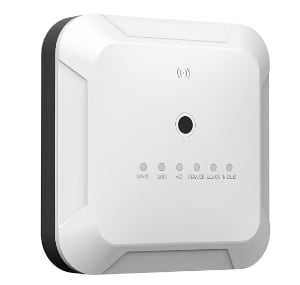
Side view of UWB base station with status indicators.

SN2 UWB PoE Anchor

The SN2 is an industrial‑grade UWB positioning anchor designed for high‑accuracy real‑time location systems. It supports Standard PoE or 12–24 V DC power, delivers sub‑meter performance (<30 cm LoS), and features an IP66 enclosure for harsh indoor/outdoor environments. Multiple mounting options (ceiling, wall, pole clamp) make deployment easy in factories, warehouses, and tunnels. Optional 4G/Wi‑Fi backhaul, AI video add‑on, and sound‑light alarm extend the anchor’s capability for safety and analytics. (Actual performance depends on anchor density, layout, and site RF conditions.)

View Product
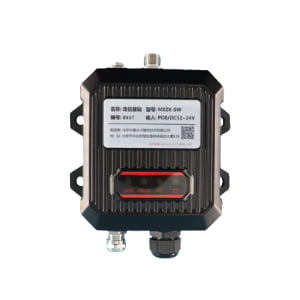
A black SW UWB Anchor device with labeled ports and a sticker showing specs, featuring indicator lights for LWB, GNSS, and 4G.

SW UWB Anchor

The SW UWB Positioning Base Station is an industrial-grade device designed for sub-meter accuracy tracking of personnel, vehicles, and assets in factories, tunnels, and other complex environments.

View Product
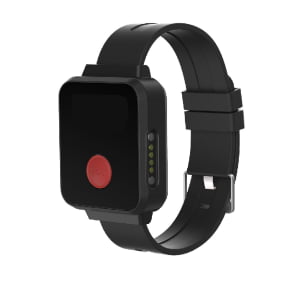
A black smartwatch with a rectangular face, black band, and a prominent red SOS button on the front.

SH UWB Positioning Wristband Tag

The SH UWB Positioning Wristband Tag is a high-precision wearable device designed for real-time personnel tracking and safety monitoring in industrial environments such as factories, construction sites, and tunnels.

View Product
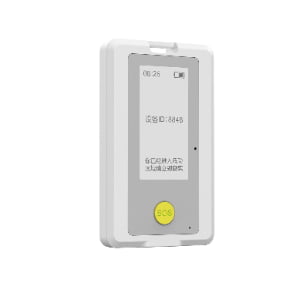
A rectangular white device with a screen displaying Chinese text, a time reading 08:26, an ID number, and a yellow SOS button below the display.

GP UWB Positioning Employee Card

The GP UWB Positioning Employee Card is a compact, intelligent badge-style positioning device designed for industrial personnel management and safety monitoring. Built on UWB (Ultra-Wideband) technology, it achieves 10–30 cm accuracy, supports real-time location tracking, and enables instant SOS alerts via a one-touch button. The device includes vibration reminders, motion/static detection, and optional NFC/RFID, E-ink display, and LoRa communication modules. With an IP66-rated enclosure and 900 mAh rechargeable battery, it operates continuously in demanding environments such as factories, construction sites, logistics parks, and tunnels.

View Product

Bill of Materials

Example BOM (based on the recommended architecture above)

ModelSummary
SN2 UWB PoE AnchorThe SN2 is an industrial‑grade UWB positioning anchor designed for high‑accuracy real‑time location systems. It supports Standard PoE or 12–24 V DC power, delivers sub‑meter performance (<30 cm LoS), and features an IP66 enclosure for harsh indoor/outdoor environments. Multiple mounting options (ceiling, wall, pole clamp) make deployment easy in factories, warehouses, and tunnels. Optional 4G/Wi‑Fi backhaul, AI video add‑on, and sound‑light alarm extend the anchor’s capability for safety and analytics. (Actual performance depends on anchor density, layout, and site RF conditions.)
SW UWB AnchorThe SW UWB Positioning Base Station is an industrial-grade device designed for sub-meter accuracy tracking of personnel, vehicles, and assets in factories, tunnels, and other complex environments.
SH UWB Positioning Wristband TagThe SH UWB Positioning Wristband Tag is a high-precision wearable device designed for real-time personnel tracking and safety monitoring in industrial environments such as factories, construction sites, and tunnels.
GP UWB Positioning Employee CardThe GP UWB Positioning Employee Card is a compact, intelligent badge-style positioning device designed for industrial personnel management and safety monitoring. Built on UWB (Ultra-Wideband) technology, it achieves 10–30 cm accuracy, supports real-time location tracking, and enables instant SOS alerts via a one-touch button. The device includes vibration reminders, motion/static detection, and optional NFC/RFID, E-ink display, and LoRa communication modules. With an IP66-rated enclosure and 900 mAh rechargeable battery, it operates continuously in demanding environments such as factories, construction sites, logistics parks, and tunnels.

Example Configuration

SN2 UWB PoE Anchor (Installed across workshops A/B/C)
Qty: 12
SH UWB Positioning Wristband Tag (Assigned to factory workers)
Qty: 350
GP UWB Positioning Employee Card (Used for contractors/visitors)
Qty: 60

🌍 Industries using this solution

FAQs

Ready to Deploy?

Improve factory safety and workforce visibility with centimeter-level UWB positioning. Contact us for a deployment plan and quotation.

Contact Sales
Procurement (Device & Data Layer)

Shortlisting devices? Get an RFQ-ready BOM path.

Move from product selection to an actionable RFQ: scope boundaries, terms, lead time, and deliverables.

Contact Sales

Ready to Deploy RTLS?

Share your site layout and accuracy needs--we'll suggest a practical setup.

Contact Us