Skip to content
Industrial UWB RTLS for Real-Time Visibility
Menu

Campus & Hospital Personnel Real-Time Location System (UWB RTLS)

Hospitals and large campuses operate like small cities. Clinical staff move between wards, operating theatres and diagnostic labs; security and maintenance teams patrol multiple buildings and car parks; students and visitors come and go throughout the day. When an emergency happens, it is difficult to know where key staff are or how long it will take them to reach a patient or incident.

The Campus & Hospital Personnel RTLS uses UWB real-time location technology to provide accurate, room-level visibility of staff and critical responders. Anchors are installed in corridors, wards and key service areas, while tags are embedded into ID badges, wristbands or hybrid safety devices. Positions are updated in seconds and displayed on floor plans, supporting faster response, safer working practices and better utilisation of skilled staff.

Solution Details

Category
People RTLS & Safety
Industries
Education & Campuses Healthcare
Environments
Outdoor Campus Hospital Indoor
Implementation
moderate

Overview

Hospitals and large campuses operate like small cities. Clinical staff move between wards, operating theatres and diagnostic labs; security and maintenance teams patrol multiple buildings and car parks; students and visitors come and go throughout the day. When an emergency happens, it is difficult to know where key staff are or how long it will take them to reach a patient or incident.

The Campus & Hospital Personnel RTLS uses UWB real-time location technology to provide accurate, room-level visibility of staff and critical responders. Anchors are installed in corridors, wards and key service areas, while tags are embedded into ID badges, wristbands or hybrid safety devices. Positions are updated in seconds and displayed on floor plans, supporting faster response, safer working practices and better utilisation of skilled staff.

The system is designed to fit into existing IT and clinical workflows. It can support use cases such as nurse call and response time analytics, lone-worker protection in isolated labs, security escort requests on campus, and digital muster lists for fire alarms—without forcing a change to medical devices or core HIS/EHR systems.
Pain Points

Difficulty locating the right staff at the right time

In hospitals and large campuses, doctors, nurses, technicians and security staff are constantly on the move. When a critical task appears, coordinators often have to call or message several people in sequence because they do not know who is closest or currently available.

Limited protection for lone workers

Staff working alone in mental health wards, remote labs, plant rooms or night-shift campus patrols face higher risks. Traditional panic buttons and radios do not always report precise location, which slows down response when an alarm is raised.

Slow and manual muster during fire alarms

During fire alarms or evacuation drills, roll calls are often done manually by checking paper lists at assembly points. It can take many minutes to confirm whether all staff and contractors have left the affected building or whether someone is still inside.

Lack of objective data for process and staffing decisions

Without accurate movement data, it is hard to understand how much time is spent walking between departments, which wards experience the highest congestion, or how long it takes to respond to nurse calls and security incidents. Decisions about layout and staffing rely heavily on anecdotal feedback.

System Architectures & Topology

Wired UWB RTLS for Hospitals and Campus Buildings

Campus Hospital Indoor
  • UWB anchors are mounted in hospital corridors, wards, labs and campus buildings, powered by PoE switches and connected to the RTLS server in the data center. Staff carry UWB-enabled badges or wristbands; the system calculates their location with room or corridor-level accuracy and displays it on building floor plans. All communication stays inside the hospital or campus network, under the control of IT and security teams.

Key Advantages

  • Provides consistent indoor coverage with predictable performance and low latency.
  • Reuses existing structured cabling and network infrastructure under IT control.
  • Well suited for permanent hospital and campus deployments with high availability requirements.
  • Supports high tag density without relying on public mobile networks.

Limitations / When Not To Use

  • Requires cabling work in ceilings and risers; retrofits in very old or crowded buildings may be more complex.
  • Less attractive for small clinics or satellite buildings where only a few rooms need tracking.
  • For large open outdoor areas and remote campus sites, additional wireless beacons or hybrid badges may be more appropriate.

Notes: Recommended as the primary architecture for main hospital buildings and core campus facilities where long-term RTLS coverage is required.

Architecture Components / Layers

Sensing layer — Staff badges and wristbands

Badge tags for clinicians and administrative staff; wristbands or belt devices for security, maintenance and lone workers. Devices can include SOS buttons and motion sensors for man-down detection.

Anchor layer — Ceiling and wall-mounted UWB anchors

PoE-powered UWB anchors installed along corridors and in key rooms such as nurse stations, ED and ICUs. Anchors receive UWB signals from tags and forward timestamped measurements to the server for position calculation.

Network layer — Hospital / campus IT infrastructure

Existing Ethernet and fibre networks carry RTLS traffic from anchors to the data center. RTLS components can be placed in dedicated VLANs and monitored like other critical systems.

Server & platform layer — RTLS engine and applications

The RTLS server runs the location engine, zone rules, alarm logic and web dashboards. It integrates with alarm servers, security operations centers or other middleware according to hospital policies.

Hybrid Campus RTLS with Wireless Beacons and Outdoor Coverage

Architecture ID: campus_hosp_hybrid_wireless

Outdoor Campus Hospital
  • Indoor buildings use the same wired UWB anchors as the hospital architecture, while outdoor walkways, car parks and remote campus buildings are covered by wireless UWB beacons or hybrid GPS/UWB badges. Beacons are mounted on lamp posts or building facades and use gateways or 4G backhaul to send data to the RTLS server, extending visibility beyond the main buildings.

Key Advantages

  • Extends personnel visibility beyond main buildings into car parks, walkways and remote campus sites.
  • Requires minimal civil work; wireless beacons can be deployed quickly on existing poles and structures.
  • Uses the same tag family indoors and outdoors, avoiding device swaps between areas.
  • Good fit for universities and hospital campuses with multiple buildings and open spaces.

Limitations / When Not To Use

  • Wireless beacons and GPS badges depend on suitable outdoor coverage and may require additional gateways.
  • Battery-powered devices introduce some maintenance overhead for replacement.
  • For very small, purely indoor clinics or offices, a fully wired indoor system may be sufficient.

Notes: Recommended for large campuses and hospitals with multiple buildings and outdoor movement between them, where a purely indoor RTLS would leave blind spots.

Architecture Components / Layers

Indoor sensing & anchor layer

Shares the same tags and PoE anchors as the wired hospital architecture for wards, labs and classrooms, ensuring consistent indoor behaviour.

Outdoor beacon layer

Wireless UWB beacons installed on lamp posts, external walls or campus landmarks provide coverage in open areas, staff car parks and between buildings, without requiring new cabling.

Hybrid GPS/UWB badges (optional)

For very large campuses, hybrid GPS/UWB badges provide coarse outdoor location using GPS and switch to UWB for precise indoor positioning near buildings and in high-priority zones.

Backhaul and RTLS server

Gateways or 4G routers backhaul beacon and badge data to the same RTLS server used by indoor buildings, giving security and operations teams a single map for the whole campus.

Workflow

This workflow applies to all architecture options above. Specific hardware selection varies depending on the chosen architecture.

1

Facility survey and zoning

Work with clinical, security and facilities teams to map out buildings, floors and outdoor areas. Identify priority zones such as emergency departments, intensive care units, wards, labs, plant rooms, dormitories and high-traffic public spaces. Decide where room-level accuracy is required and where corridor or zone-level positioning is sufficient.

Estimated time: 3–5 days for a medium-size hospital or campus
2

UWB anchor deployment

Install UWB anchors in corridors, ward ceilings and key locations such as nurse stations, ED, ICUs and main lobbies. In outdoor areas or car parks, mount anchors or wireless beacons on poles or building facades. Connect wired anchors via PoE switches to the RTLS server, and perform calibration walks to verify accuracy in critical zones.

Estimated time: 1–3 weeks depending on number of buildings
3

Tag assignment and role mapping

Issue badge-style tags to doctors, nurses and administrative staff, and wristbands or belt-clipped devices to security, maintenance and lone workers. Map each tag ID to a person and role category, such as nurse, doctor, porter, security guard or engineer. Configure which user groups are in scope for each use case—for example, clinical response vs. security vs. facility management.

Estimated time: 1–2 weeks including registration and awareness sessions
4

Safety rules, workflows and integrations

Define rules and workflows such as nurse call response tracking, panic/SOS alerts for lone workers, geofences around restricted technical rooms, and campus security escort requests. Integrate RTLS events with existing systems where appropriate—for example, sending location-enriched alerts to the command center, or linking to existing nurse call or alarm servers.

Estimated time: 1–2 weeks including testing with pilot departments
5

Pilot, training and phased rollout

Start with a limited pilot, for example one hospital wing or a subset of campus buildings. Validate accuracy, user experience and alarm behaviours. Train charge nurses, security supervisors and coordinators on RTLS dashboards and reports, then gradually roll out to additional departments and buildings based on feedback and priority.

Estimated time: 4–8 weeks for full rollout depending on scope

Key Outcomes

15–30% reduction
Average nurse call response time
Typical improvement when RTLS is used to route calls and visualise which staff are closest to the patient.
≤ 1 minute
Time to locate a critical staff member
From request to locating the nearest doctor, nurse or security officer on the RTLS map.
-30–50% reduction
Lone worker alarm response time
Shorter time from alarm to arrival of assistance in labs, mental health wards and remote plant rooms.
-40% reduction
Evacuation headcount completion time
Digital muster lists help coordinators confirm who has left the building and who is missing much faster than manual roll calls.

Recommended Products

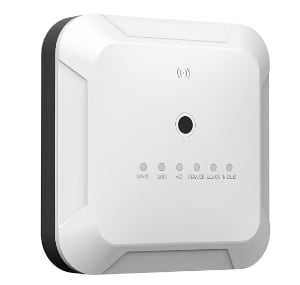
Side view of UWB base station with status indicators.

SN2 UWB PoE Anchor

The SN2 is an industrial‑grade UWB positioning anchor designed for high‑accuracy real‑time location systems. It supports Standard PoE or 12–24 V DC power, delivers sub‑meter performance (<30 cm LoS), and features an IP66 enclosure for harsh indoor/outdoor environments. Multiple mounting options (ceiling, wall, pole clamp) make deployment easy in factories, warehouses, and tunnels. Optional 4G/Wi‑Fi backhaul, AI video add‑on, and sound‑light alarm extend the anchor’s capability for safety and analytics. (Actual performance depends on anchor density, layout, and site RF conditions.)

View Product
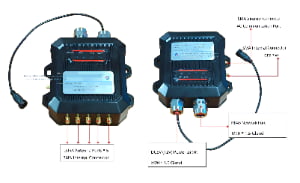
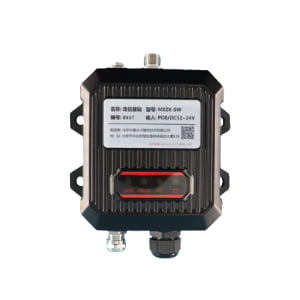
A black SW UWB Anchor device with labeled ports and a sticker showing specs, featuring indicator lights for LWB, GNSS, and 4G.

SW UWB Anchor

The SW UWB Positioning Base Station is an industrial-grade device designed for sub-meter accuracy tracking of personnel, vehicles, and assets in factories, tunnels, and other complex environments.

View Product
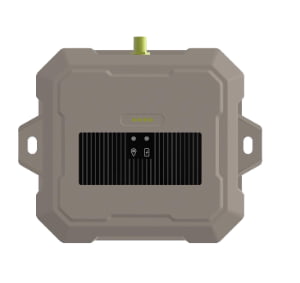
Gray rectangular electronic device with a black panel, LED indicators, and two side mounting flanges; a yellow cable extends from the top—designed as a WX UWB Beacon for advanced positioning applications.

WX UWB Wireless Positioning Beacon

The WX UWB Wireless Positioning Beacon is a battery-powered industrial-grade UWB device designed for wireless deployment without cable installation.

View Product
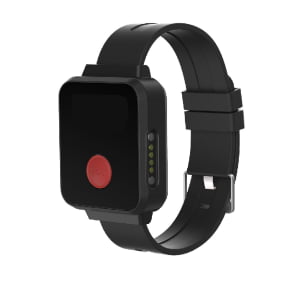
A black smartwatch with a rectangular face, black band, and a prominent red SOS button on the front.

SH UWB Positioning Wristband Tag

The SH UWB Positioning Wristband Tag is a high-precision wearable device designed for real-time personnel tracking and safety monitoring in industrial environments such as factories, construction sites, and tunnels.

View Product
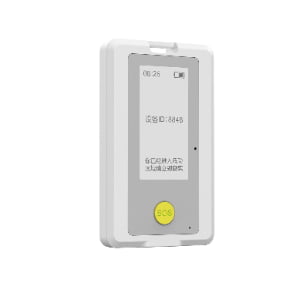
A rectangular white device with a screen displaying Chinese text, a time reading 08:26, an ID number, and a yellow SOS button below the display.

GP UWB Positioning Employee Card

The GP UWB Positioning Employee Card is a compact, intelligent badge-style positioning device designed for industrial personnel management and safety monitoring. Built on UWB (Ultra-Wideband) technology, it achieves 10–30 cm accuracy, supports real-time location tracking, and enables instant SOS alerts via a one-touch button. The device includes vibration reminders, motion/static detection, and optional NFC/RFID, E-ink display, and LoRa communication modules. With an IP66-rated enclosure and 900 mAh rechargeable battery, it operates continuously in demanding environments such as factories, construction sites, logistics parks, and tunnels.

View Product
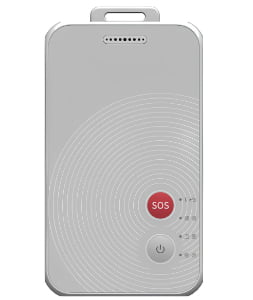
A white emergency alert device with a large red SOS button, a power button, indicator lights, and a speaker grille at the top.

UBK UWB + GPS Hybrid Positioning Badge

The UBK UWB + GPS Hybrid Positioning Badge is a rugged industrial-grade personnel tracking card designed for high-precision positioning in factories, warehouses, tunnels, and other demanding environments. It integrates UWB centimeter-level positioning with GPS outdoor positioning, features SOS emergency button, motion detection, TTS voice broadcast, 4G cellular communication, and optional NFC functionality. Equipped with a 3000mAh rechargeable battery and an IP66 protection rating, the UBK badge ensures reliable real-time personnel visibility and safety monitoring both indoors and outdoors.

View Product
English-labeled diagram showing TXWG communication gateway ports including SMA, 4G, GPS, RJ45, LORA antenna ports, and power input.

TXWG Industrial Communication Gateway

A high-performance LPWAN-based industrial communication gateway designed for long-distance, low-power IoT communication. It supports LORA self-organizing networking, 4G cloud transmission, GPS time sync, multi-channel data forwarding, and explosion-proof applications.

View Product
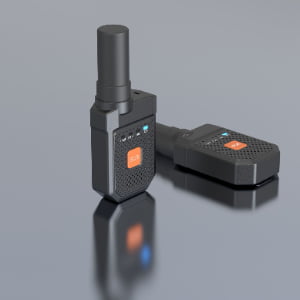
Two black handheld communication devices with visible SOS buttons and indicator lights are placed on a reflective gray surface.

URT Hybrid Positioning Terminal

The URT Hybrid Positioning Terminal is an industrial-grade wearable tracking device that integrates UWB high-precision positioning, RTK centimeter-level positioning, GPS outdoor positioning, and 4G wireless communication. It provides real-time personnel tracking, SOS emergency alerts, TTS voice broadcasting, motion detection, and optional NFC/Lora/5G expansion. With an IP66 rugged design and a 3000mAh magnetic-charging battery, the URT terminal is ideal for complex industrial environments such as factories, tunnels, construction sites, rail transit, and energy facilities.

View Product

Bill of Materials

Example BOM (based on the recommended architecture above)

ModelSummary
SN2 UWB PoE AnchorThe SN2 is an industrial‑grade UWB positioning anchor designed for high‑accuracy real‑time location systems. It supports Standard PoE or 12–24 V DC power, delivers sub‑meter performance (<30 cm LoS), and features an IP66 enclosure for harsh indoor/outdoor environments. Multiple mounting options (ceiling, wall, pole clamp) make deployment easy in factories, warehouses, and tunnels. Optional 4G/Wi‑Fi backhaul, AI video add‑on, and sound‑light alarm extend the anchor’s capability for safety and analytics. (Actual performance depends on anchor density, layout, and site RF conditions.)
SW UWB AnchorThe SW UWB Positioning Base Station is an industrial-grade device designed for sub-meter accuracy tracking of personnel, vehicles, and assets in factories, tunnels, and other complex environments.
WX UWB Wireless Positioning BeaconThe WX UWB Wireless Positioning Beacon is a battery-powered industrial-grade UWB device designed for wireless deployment without cable installation.
SH UWB Positioning Wristband TagThe SH UWB Positioning Wristband Tag is a high-precision wearable device designed for real-time personnel tracking and safety monitoring in industrial environments such as factories, construction sites, and tunnels.
GP UWB Positioning Employee CardThe GP UWB Positioning Employee Card is a compact, intelligent badge-style positioning device designed for industrial personnel management and safety monitoring. Built on UWB (Ultra-Wideband) technology, it achieves 10–30 cm accuracy, supports real-time location tracking, and enables instant SOS alerts via a one-touch button. The device includes vibration reminders, motion/static detection, and optional NFC/RFID, E-ink display, and LoRa communication modules. With an IP66-rated enclosure and 900 mAh rechargeable battery, it operates continuously in demanding environments such as factories, construction sites, logistics parks, and tunnels.
UBK UWB + GPS Hybrid Positioning BadgeThe UBK UWB + GPS Hybrid Positioning Badge is a rugged industrial-grade personnel tracking card designed for high-precision positioning in factories, warehouses, tunnels, and other demanding environments. It integrates UWB centimeter-level positioning with GPS outdoor positioning, features SOS emergency button, motion detection, TTS voice broadcast, 4G cellular communication, and optional NFC functionality. Equipped with a 3000mAh rechargeable battery and an IP66 protection rating, the UBK badge ensures reliable real-time personnel visibility and safety monitoring both indoors and outdoors.
TXWG Industrial Communication GatewayA high-performance LPWAN-based industrial communication gateway designed for long-distance, low-power IoT communication. It supports LORA self-organizing networking, 4G cloud transmission, GPS time sync, multi-channel data forwarding, and explosion-proof applications.
URT Hybrid Positioning TerminalThe URT Hybrid Positioning Terminal is an industrial-grade wearable tracking device that integrates UWB high-precision positioning, RTK centimeter-level positioning, GPS outdoor positioning, and 4G wireless communication. It provides real-time personnel tracking, SOS emergency alerts, TTS voice broadcasting, motion detection, and optional NFC/Lora/5G expansion. With an IP66 rugged design and a 3000mAh magnetic-charging battery, the URT terminal is ideal for complex industrial environments such as factories, tunnels, construction sites, rail transit, and energy facilities.

Example Configuration

SN2 UWB PoE Anchor (Ceiling anchors covering hospital corridors, wards and key service areas across several floors.)
Qty: 60
SW UWB Anchor (Robust anchors for entrance halls, emergency department, lobby and other high-ceiling or wide spaces.)
Qty: 12
WX UWB Wireless Positioning Beacon (Wireless beacons for outdoor walkways, staff entrances and campus areas where cabling is difficult.)
Qty: 10
GP UWB Positioning Employee Card (Badge tags for doctors, nurses and administrative staff.)
Qty: 300
SH UWB Positioning Wristband Tag (Wristbands for security officers, maintenance and other lone workers.)
Qty: 80
URT Hybrid Positioning Terminal (On-prem RTLS server hosting location engine, maps and safety applications.)
Qty: 1

Compliance & Regulations

Support for hospital safety and lone-worker policies

Electronic logs for incident review and accreditation

Data privacy and access control

🌍 Industries using this solution

FAQs

Ready to Deploy?

Planning to improve staff safety and response times in a hospital or campus? Share your floor plans and high-priority use cases, and our engineers can propose a practical RTLS design and roll-out plan.

Contact Sales
Procurement (Device & Data Layer)

Shortlisting devices? Get an RFQ-ready BOM path.

Move from product selection to an actionable RFQ: scope boundaries, terms, lead time, and deliverables.

Contact Sales

Ready to Deploy RTLS?

Share your site layout and accuracy needs--we'll suggest a practical setup.

Contact Us