Skip to content
Industrial UWB RTLS for Real-Time Visibility
Menu
Industry Solutions

Tunnel & Underground
RTLS & Safety Solutions

Real-time safety and positioning for complex tunnel and underground environments.

Road tunnels, metro lines, utility galleries and cable tunnels are confined, high‑risk spaces where visibility is limited and conditions change daily. GridRTLS combines tunnel‑grade UWB positioning with GPS outdoors to give operators live visibility of workers, vehicles and assets along the entire underground alignment.

Tunnel and underground projects involve long, narrow spaces with poor natural lighting, constrained escape routes and heavy construction equipment. Crews, vehicles and materials move through headings, cross passages, shafts, staging caverns and portal areas under tight programme and safety constraints. Line‑of‑sight is often obscured by curves and slopes, radio propagation is difficult, and traditional methods — tag boards, radios, paper checklists and CCTV at a few locations — struggle to provide continuous situational awareness.

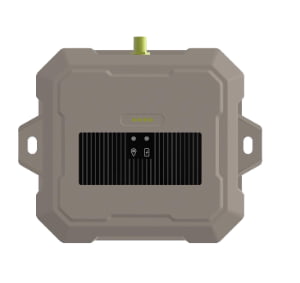
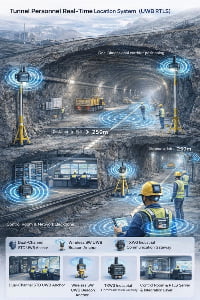
GridRTLS deploys rugged UWB anchors designed specifically for tunnels and underground spaces. Single tunnel anchors can cover up to hundreds of metres along the tunnel with sub‑meter accuracy, and dual‑channel devices support long‑reach coverage with typical indoor accuracy better than 30 cm in line‑of‑sight segments.

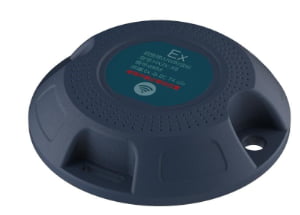
Battery‑powered “wire‑free” UWB beacons allow rapid expansion of coverage without cabling, with multi‑year battery life at 1 Hz reporting — ideal for temporary headings and advancing faces.

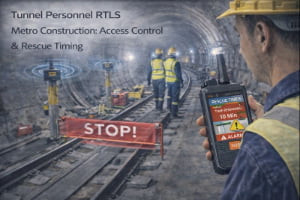
Wearable tags (badges, wristbands, smart helmets) and vehicle‑mounted devices provide real‑time positions for workers and machines underground, while GPS / RTK receivers extend tracking on the surface for portals, staging areas and spoil transport. For long, linear assets such as single‑bore tunnels and galleries, the system can operate in 1D “along‑tunnel” mode to reduce anchor count while still giving accurate per‑crew location.

On top of the positioning layer, GridRTLS enables geofences around blast zones and unsupported areas, man‑down and SOS alerts, evacuation and refuge monitoring, and optional structural‑movement monitoring with mm‑level GPS/RTK sensors on slopes, portals and surface structures.

📊 Key stats for this industry

Typical Tunnel Coverage
3–30 km of tunnels

Combined length of road, rail, cable and utility tunnels instrumented with RTLS.

Concurrent Underground Workforce
50–800 personnel

Workers, supervisors and contractors active in headings, galleries and shafts.

Tracked Vehicles & Equipment
20–200 units

Trucks, loaders, road‑headers, shotcrete rigs, utility vehicles and mobile plant.

Typical Underground Accuracy
<30 cm

UWB positioning accuracy in line‑of‑sight tunnel segments for people and vehicle tracking.

⚠︎

Operational challenges

Poor visibility and limited situational awareness underground

Curved tunnels, dust and low lighting make it hard for supervisors to know exactly where crews and vehicles are located, how close they are to each other and whether they remain inside safe work limits.
High risk of person–vehicle collisions in confined tunnels

Trucks, loaders and service vehicles share narrow roadways with pedestrians. Mirrors and radios cannot fully remove blind spots, especially on curves and ramps.

Managing access to blast zones and unsupported headings

Before and after blasting, or when ground support is incomplete, only authorised crews should enter the zone. Manual checks and paper permits are difficult to enforce over long distances.

Emergency evacuation and refuge chamber management

During fires, smoke events or flooding, control rooms must quickly determine who is underground, who has reached refuge chambers or exits, and which routes remain safe. Manual tag boards and radio calls may be too slow.

Locating tools, cables and temporary equipment across long alignments

Critical items such as fans, pumps, drilling equipment, cable drums and safety barriers are frequently relocated. Without location tracking, crews waste time searching and risk project delays.

Business drivers

Reduce underground safety incidents and near‑misses

Real-time visibility, geofencing, man‑down and collision‑avoidance alerts help prevent incidents and support “zero harm” objectives for underground projects

Improve utilisation of crews and mobile equipment

Knowing where teams and machines actually work, wait and travel enables better shift planning, reduced idle time and more accurate productivity reporting.

Support emergency planning and regulatory compliance

RTLS provides auditable records of underground presence, exposure times and evacuation performance for regulators, owners and insurers.

Enable data-driven planning and digital‑twin projects

High‑resolution movement data for people, vehicles and materials feeds digital‑twin models, schedule simulations and optimisation tools.

📜 Regulations & safety expectations

Tunnel and underground work is typically governed by stringent regulations related to ventilation, blast management, emergency egress, electrical safety and confined‑space entry. RTLS complements — but does not replace — these controls by providing accurate, time‑stamped location data for people and assets.

Hardware used in tunnels must withstand vibration, moisture, dust and aggressive temperatures. GridRTLS uses IP66–IP67‑rated UWB anchors and beacons designed for industrial and tunnel environments, with operating ranges roughly from –40 °C to +80 °C and strong resistance to electromagnetic interference. System design and zone logic should be reviewed with project safety teams and local regulators to ensure alignment with standards and owner requirements.

🧩 Typical RTLS use cases

Common positioning and tracking scenarios for this industry.

Tunnel Worker Tracking & Safe Work Limits

Workers and contractors wear UWB or hybrid UWB + GPS tags as they move through portals, ramps and headings. Control rooms see live positions by chainage and heading, receive alerts when people cross virtual work limits or enter blast and unsupported zones, and use history for exposure and productivity analysis.

Environment
mixed
Accuracy
0.3–1 m along the tunnel alignment and in caverns.
Update rate
1–3 s for personnel tracking.
Tracked objects
personnel, visitors_contractors
Typical integrations: Permit‑to‑work and shift‑management systems, ventilation and gas‑monitoring platforms, access control, CCTV where available, safety dashboards.

Underground Vehicle & Equipment Collision Avoidance

Haul trucks, loaders, utility vehicles and road‑headers are equipped with RTLS devices that continuously measure distance to worker tags and other vehicles. When separation falls below configured thresholds, in‑cab and wearable alerts warn operators and pedestrians, and near‑miss data is logged.

Environment
indoor
Accuracy
<30 cm for person–vehicle proximity; 1–3 m for general tracking.
Update rate
0.5–1 s for collision‑avoidance logic.
Tracked objects
personnel, vehicles, mobile_equipment
Typical integrations: Fleet‑management or dispatch systems, equipment telematics, CCTV / VMS at portals and key intersections, safety dashboards.

Emergency Evacuation & Refuge Chamber Monitoring

In drills or real emergencies, RTLS shows how many people are at each portal, shaft, cross passage or refuge chamber, and who is still unaccounted for. Control rooms can see last‑known positions and preferred escape routes, improving coordination with rescue teams.

Environment
mixed
Accuracy
0.5–1 m around refuge chambers, cross passages and escape routes.
Update rate
1–2 s during alarms and drills.
Tracked objects
personnel, visitors_contractors
Typical integrations: Fire and gas systems, emergency‑alert and paging systems, access control, CCTV / VMS, mine/tunnel control‑room software.

Structural & Surface Displacement Monitoring

High‑precision GPS/RTK displacement sensors are installed on portals, retaining walls, slopes or buildings above the tunnel alignment. They measure mm‑level movement over time, and can be combined with RTLS data for correlation with construction stages and traffic patterns.

Environment
outdoor
Accuracy
1–5 mm for displacement measurement
Update rate
30–300 s depending on risk level and monitoring requirements.
Tracked objects
mobile_equipment, other
Typical integrations: Structural‑health monitoring platforms, geotechnical databases, SCADA / DCS where relevant, project‑management and reporting systems.

📋 RTLS requirements for this industry

Typical coverage
Multi‑kilometre road or rail tunnels (single or twin bore), utility galleries, cable and pipe tunnels, cross passages and shafts, plus surface areas around portals, staging yards and ventilation buildings. Coverage may start with high‑risk sections and extend with tunnel advance.
Personnel scale
Typically 50–300 underground workers on standard shifts and up to 800 personnel during peak construction phases or multiple concurrent headings, including contractors and visitors.
Assets & vehicles
20–200 tracked vehicles and mobile machines (trucks, loaders, jumbo drills, shotcrete rigs, utility vehicles) plus hundreds of tagged tools, fans, pumps, cable drums, barriers and containers as needed.
Environment constraints
Tunnels and underground spaces have long, narrow geometries, curves, varying cross‑sections, high humidity, dust and vibration. RTLS hardware must tolerate these conditions with IP66–IP67 protection, wide operating temperatures and strong resistance to electromagnetic interference from power and ventilation equipment. Battery‑powered, wire‑free UWB beacons reduce cabling requirements and allow quick deployment in new headings

🛡️ Safety & reliability expectations

Because tunnel environments are safety‑critical, RTLS for worker protection and collision‑avoidance must provide sub‑meter accuracy, update intervals of 0.5–2 seconds and high system availability (target ≥99.99% for core safety functions). UWB anchors and tags can deliver <30 cm accuracy at up to 10 Hz refresh rates in line‑of‑sight segments, while GPS / RTK devices provide centimetre‑level accuracy for surface monitoring and displacement sensors.

System design should include redundant communication paths, local data buffering for temporary link loss, continuous device‑health monitoring and clear processes for issuing, charging and maintaining tags and beacons over long project durations.

🛰️ RTLS solutions for this industry

📦 Devices and infrastructure used in this industry

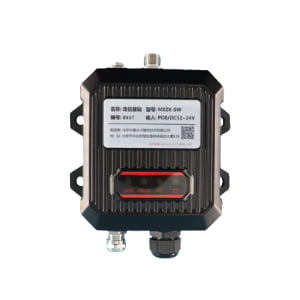
SW UWB Anchor

SW UWB Anchor

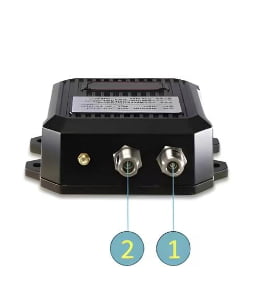
The SW UWB Positioning Base Station is an industrial-grade device designed for sub-meter accuracy tracking of personnel, vehicles, and assets in factories, tunnels, and other complex environments.

View product
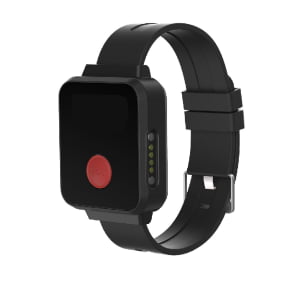
SH UWB Positioning Wristband Tag

SH UWB Positioning Wristband Tag

The SH UWB Positioning Wristband Tag is a high-precision wearable device designed for real-time personnel tracking and safety monitoring in industrial environments such as factories, construction sites, and tunnels.

View product
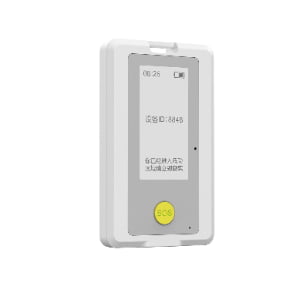
GP UWB Positioning Employee Card

GP UWB Positioning Employee Card

The GP UWB Positioning Employee Card is a compact, intelligent badge-style positioning device designed for industrial personnel management and safety monitoring. Built on UWB (Ultra-Wideband) technology, it achieves 10–30 cm accuracy, supports real-time location tracking, and enables instant SOS alerts via a one-touch button. The device includes vibration reminders, motion/static detection, and optional NFC/RFID, E-ink display, and LoRa communication modules. With an IP66-rated enclosure and 900 mAh rechargeable battery, it operates continuously in demanding environments such as factories, construction sites, logistics parks, and tunnels.

View product
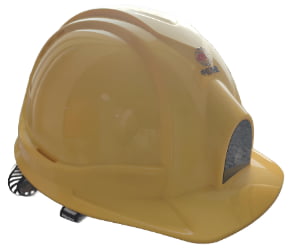
AQM Hybrid Positioning Safety Helmet

AQM Hybrid Positioning Safety Helmet

The AQM Hybrid Positioning Safety Helmet is an industrial-grade smart helmet integrating UWB high-precision positioning, RTK centimeter-level positioning, GPS outdoor positioning, and 4G full-network communication. Designed for worker safety and real-time visibility, it features SOS emergency alerts, TTS voice, motion/static detection, low-battery warnings, and optional NFC / LoRa / 5G communication. With an IP56 rugged rating and a built-in 3000mAh rechargeable battery, the AQM helmet is ideal for construction sites, tunnels, factories, mining, ports, and hazardous environments requiring precise personnel tracking and safety protection.

View product

Frequently asked questions

How is tunnel RTLS different from standard indoor positioning? +
Tunnel RTLS uses long‑reach UWB anchors and corridor‑specific positioning modes that are optimised for narrow, linear spaces. Single anchors can cover long stretches of tunnel, and the system can operate in 1D “chainage” mode when only the along‑tunnel position is needed, reducing hardware and cost.
Can RTLS work during tunnelling advance when the layout changes frequently? +
Yes. Battery‑powered, wire‑free UWB beacons can be quickly moved and re‑configured as headings advance. This allows coverage to follow the face without waiting for permanent cabling or civil works.
Does RTLS interfere with ventilation, communication or signalling systems? +
UWB operates at very low power with ultra‑short pulses and is designed to coexist with other radio systems. Hardware is built to industrial EMC standards, and deployments include site surveys and testing to ensure compatibility with existing tunnel communications and control systems.
How do workers use RTLS underground? +
Typically each worker carries a small tag, badge or smart helmet with UWB + GPS and SOS capability. Devices automatically connect to UWB anchors underground and GPS outdoors, sending data over 4G/5G or local gateways to the RTLS platform without manual interaction.
Can RTLS data be used after project completion? +
Yes. Once the tunnel is in operation, the same infrastructure can support maintenance‑crew safety, inspection tracking, emergency response drills and asset management for fans, pumps and other critical equipment.

Related Technical Resources

Make your tunnel and underground projects safer and more transparent.

Share your tunnel alignment, construction method and safety priorities, and we’ll design a UWB + GPS RTLS solution — from worker tracking and collision avoidance to emergency evacuation and structural monitoring — tailored to your underground environment.

48hr Response Time
Complete Integration Docs
Remote Setup Support

Ready to Deploy RTLS?

Share your site layout and accuracy needs--we'll suggest a practical setup.

Contact Us