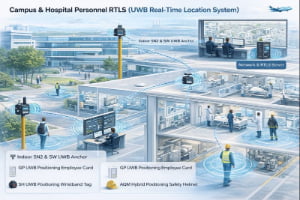
Delays locating critical equipment
Nurses and technicians often spend valuable time searching for available pumps, wheelchairs, monitors and beds. Manual systems cannot show the real‑time location or utilisation of mobile devices across departments.
Hospitals and healthcare campuses are high‑risk, high‑pressure environments where seconds matter. GridRTLS uses UWB indoor positioning and GPS outdoors to give clinical teams live visibility of patients, staff, equipment and vehicles, strengthening safety, infection control and operational efficiency.
Healthcare facilities combine emergency departments, inpatient wards, ICUs, operating theatres, imaging suites, pharmacies, labs, plant rooms, parking areas and ambulance bays — all operating 24/7. Patients, clinical staff, visitors and contractors move constantly through these spaces, often under time pressure. Traditional tools like call bells, radios and manual searches cannot always answer critical questions quickly: Where is the nearest infusion pump? Has this patient wandered off the ward? Who was in contact with an infectious case?
GridRTLS deploys UWB anchors and beacons across key areas of the hospital, with wearable tags for patients and staff, and rugged tags for beds, pumps, wheelchairs and other mobile assets. Indoor accuracy typically reaches around 30 cm in open conditions, with update rates from 1–10 Hz for safety‑critical workflows.
Outdoors, GPS / RTK devices provide precise tracking for ambulances and service vehicles, and can be combined with UWB in underground car parks or covered areas.
The platform supports live maps, geofences and alarm logic, enabling patient‑flow dashboards, infant security, wandering‑patient protection, staff duress alerts and automated equipment‑utilisation reports. Integration with HIS / EHR, nurse call, building‑management systems and video platforms turns location data into a shared, trusted layer for safety, quality improvement and cost control.
Combined coverage across wards, ORs, diagnostic departments, plant areas and car parks.
Patients, clinical staff, visitors and contractors monitored during peak operation.
Beds, infusion pumps, ventilators, wheelchairs, monitors and other equipment.
UWB-based positioning accuracy in line-of-sight clinical areas, suitable for safety and workflow automation.
Nurses and technicians often spend valuable time searching for available pumps, wheelchairs, monitors and beds. Manual systems cannot show the real‑time location or utilisation of mobile devices across departments.
High‑risk patients, such as those with dementia or behavioural conditions, may leave wards or enter restricted areas unnoticed. Traditional checks and CCTV cannot reliably prevent elopement or falls outside monitored zones.
Hospitals must protect newborns from abduction and mix‑ups, ensuring babies are always associated with the correct mother and do not leave secure zones without authorisation.
Healthcare workers face a growing number of aggression and assault incidents. Without precise, indoor location and fast alarm routing, security teams may struggle to respond in time.
Outbreaks and multi‑drug resistant organisms require rapid identification of exposure paths. Manual reconstruction of who crossed which area and when is slow and often incomplete.
Wander management, infant protection, fall detection and emergency response workflows all benefit from real‑time location and historical movement records.
Less time spent searching for equipment and colleagues, faster response to duress alarms, and clearer workflows help reduce stress and support retention.
Detailed utilisation data for mobile devices supports right‑sizing equipment fleets, reducing unnecessary rentals and purchases.
RTLS data helps document safety practices, asset maintenance and infection‑control investigations for internal audits, insurers and regulators.
Hospitals must comply with strict regulations related to patient safety, medical‑device management, infection control and privacy. RTLS does not replace clinical protocols or accreditation frameworks but provides higher‑quality data to support them — from incident reconstruction and asset history to evacuation timing and exposure analysis.
Because location data can be considered health‑related information, deployments should follow privacy‑by‑design principles: clear governance, role‑based access, encryption, and retention periods tailored to each data type. Projects should be reviewed with information‑security, legal and clinical‑risk teams to ensure alignment with local healthcare regulations.
Common positioning and tracking scenarios for this industry.
Patients at risk of wandering or falls wear lightweight RTLS tags. Geofences around wards, exits and danger zones trigger alerts when patients leave approved areas or remain in high‑risk locations for too long, giving staff more time to intervene.
Newborn infants and mothers receive paired RTLS tags. The system continuously checks proximity and zone rules, alerting staff if a baby approaches an exit without authorised staff, or if pairing does not match during handover or transfer.
Rugged asset tags are attached to infusion pumps, ventilators, wheelchairs, beds and diagnostic carts. Staff can locate the closest available device, view utilisation and maintenance status, and reduce rental and over‑purchase of equipment.
Clinicians, security officers and technicians carry RTLS badges or wearables with SOS buttons and man‑down detection. When activated, the system sends the user’s precise location and identity to security and nearby colleagues, and can automatically pull up linked camera views.
Patient‑ and staff‑safety use cases demand high availability (target ≥99.99% for core services), secure communication and predictable latency. UWB anchors and tags typically achieve <30 cm accuracy in open indoor spaces at 1–10 Hz update rates, while GPS / RTK devices on vehicles provide sub‑meter to centimetre‑level accuracy in outdoor areas.
Wearable tags for patients and staff usually run for several weeks to a few months per charge at 1 Hz reporting; asset tags and battery‑powered beacons can operate for years at lower duty cycles, which is important for devices mounted in hard‑to‑reach areas.
System design should include redundancy, automated health monitoring and clear workflows for tag charging, cleaning and re‑issue to maintain trust and readiness.
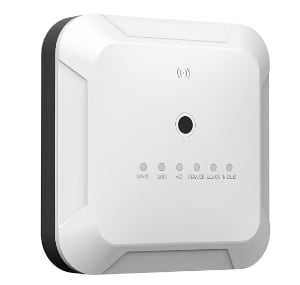
The SN2 is an industrial‑grade UWB positioning anchor designed for high‑accuracy real‑time location systems. It supports Standard PoE or 12–24 V DC power, delivers sub‑meter performance (<30 cm LoS), and features an IP66 enclosure for harsh indoor/outdoor environments. Multiple mounting options (ceiling, wall, pole clamp) make deployment easy in factories, warehouses, and tunnels. Optional 4G/Wi‑Fi backhaul, AI video add‑on, and sound‑light alarm extend the anchor’s capability for safety and analytics. (Actual performance depends on anchor density, layout, and site RF conditions.)
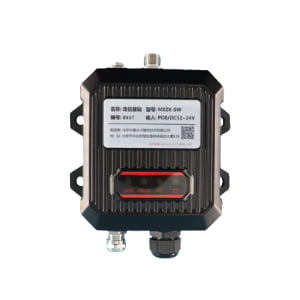
The SW UWB Positioning Base Station is an industrial-grade device designed for sub-meter accuracy tracking of personnel, vehicles, and assets in factories, tunnels, and other complex environments.
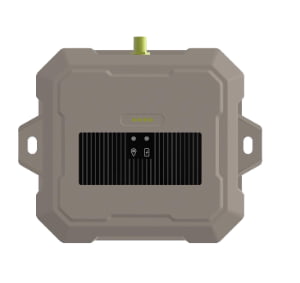
The WX UWB Wireless Positioning Beacon is a battery-powered industrial-grade UWB device designed for wireless deployment without cable installation.
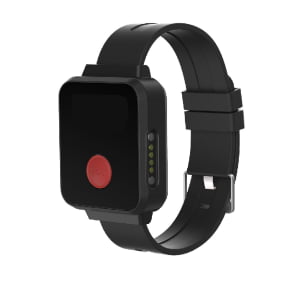
The SH UWB Positioning Wristband Tag is a high-precision wearable device designed for real-time personnel tracking and safety monitoring in industrial environments such as factories, construction sites, and tunnels.
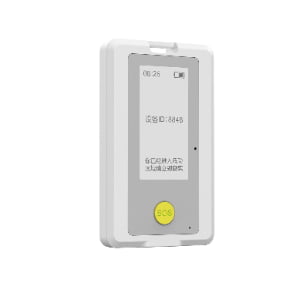
The GP UWB Positioning Employee Card is a compact, intelligent badge-style positioning device designed for industrial personnel management and safety monitoring. Built on UWB (Ultra-Wideband) technology, it achieves 10–30 cm accuracy, supports real-time location tracking, and enables instant SOS alerts via a one-touch button. The device includes vibration reminders, motion/static detection, and optional NFC/RFID, E-ink display, and LoRa communication modules. With an IP66-rated enclosure and 900 mAh rechargeable battery, it operates continuously in demanding environments such as factories, construction sites, logistics parks, and tunnels.
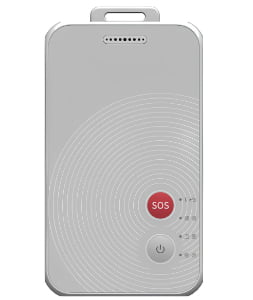
The UBK UWB + GPS Hybrid Positioning Badge is a rugged industrial-grade personnel tracking card designed for high-precision positioning in factories, warehouses, tunnels, and other demanding environments. It integrates UWB centimeter-level positioning with GPS outdoor positioning, features SOS emergency button, motion detection, TTS voice broadcast, 4G cellular communication, and optional NFC functionality. Equipped with a 3000mAh rechargeable battery and an IP66 protection rating, the UBK badge ensures reliable real-time personnel visibility and safety monitoring both indoors and outdoors.
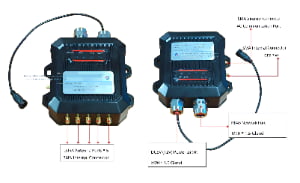
A high-performance LPWAN-based industrial communication gateway designed for long-distance, low-power IoT communication. It supports LORA self-organizing networking, 4G cloud transmission, GPS time sync, multi-channel data forwarding, and explosion-proof applications.
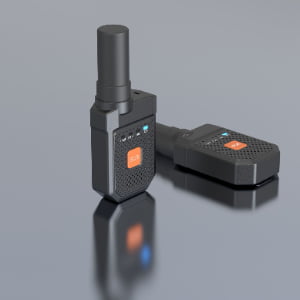
The URT Hybrid Positioning Terminal is an industrial-grade wearable tracking device that integrates UWB high-precision positioning, RTK centimeter-level positioning, GPS outdoor positioning, and 4G wireless communication. It provides real-time personnel tracking, SOS emergency alerts, TTS voice broadcasting, motion detection, and optional NFC/Lora/5G expansion. With an IP66 rugged design and a 3000mAh magnetic-charging battery, the URT terminal is ideal for complex industrial environments such as factories, tunnels, construction sites, rail transit, and energy facilities.
Share your hospital layout, key departments and safety goals, and we’ll design a UWB + GPS RTLS profile — from patient safety and infant security to asset tracking and staff duress protection — aligned with your clinical workflows and IT environment.
Share your site layout and accuracy needs--we'll suggest a practical setup.